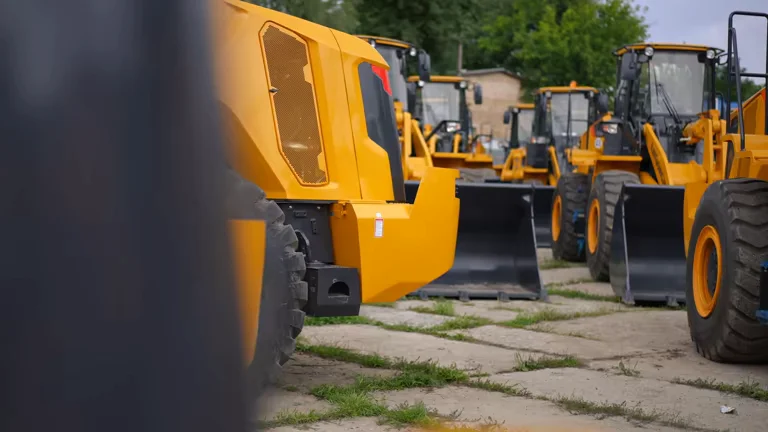
Loaders support many industrial and construction activities. They help teams move materials from one place to another. This movement is an essential part of daily work on site. When materials are handled properly, the workflow remains organized.
Each type of loader is built for a specific purpose. Some machines are designed for heavy outdoor work while others suit controlled indoor tasks. Every site has its own conditions and challenges. When teams understand these differences, they can plan their work in a better way. This helps avoid delays that come from using the wrong equipment and keeps operations steady throughout the day.
Forklift and Its Role in Controlled Handling
A forklift is often the first machine used in material handling areas. It is mainly used to handle palletized items within limited spaces. Warehouses depend on forklifts to keep the flow of inventory organized. The operator can lift loads upward and place them at the required position with accuracy. This helps in storing goods properly and also in preparing them for transport.
This machine is suitable for indoor work where space is restricted and order must be maintained. It keeps the load stable during lifting and reduces the risk of damage. In logistics and distribution centers, it allows goods to move continuously from one stage to another. Forklifts are not meant for digging or rough work. It is built to handle materials with care and precision.
Backhoe Loader and Its Dual Capability
A backhoe loader allows operators to switch between loading and digging without changing equipment. This becomes useful on sites where tasks shift frequently and space does not allow multiple machines to operate together.
The front section performs loading tasks while the rear arm manages excavation work. This arrangement supports activities such as trenching foundation preparation and material transfer. Small to medium-sized projects benefit from this flexibility as it reduces the need for additional machinery.
The backhoe loader also supports a uniform workflow because it handles multiple stages of the task. Instead of waiting for another machine, teams can continue working without interruption with the backhoe loader. This saves the time and cost of the project.
Skid Steer Loader and Precision in Tight Spaces
A skid steer loader operates where space becomes limited and movement requires careful control. Its compact structure allows it to turn within its own footprint. This feature supports work in urban sites, landscaping areas, and confined construction zones.
The machine adapts to different tasks through attachments. It can lift, move, clear, or level materials depending on the requirement. Its flexibility makes it suitable for projects that demand quick adjustments in operation.
Despite its smaller size, the skid steer loader delivers strong performance in restricted conditions. It allows work to continue in areas where larger machines cannot function effectively. This ensures that progress does not stop due to space limitations.
The Role of Wheel Loaders in Efficient Material Handling
Wheel loaders are designed to handle loose materials such as soil, sand, and gravel. These machines support daily operations by loading materials into trucks and shifting them from one point to another.
The machine operates using a front bucket, which carries material. The operator approaches the material, then raises the bucket using a hydraulic system. Once lifted, the load can be transported where it is needed.
Wheel loaders are suitable for sites where the ground is even. Their tires allow smooth movement and help the machine travel quickly across larger areas. This reduces the time required to move between locations.
They also support flexibility through different attachments. The bucket can be replaced depending on the type of material or task. This allows the same machine to perform multiple functions without the need for additional equipment. As a result operations remain simple and well-managed.
Operational Stability and Efficiency
A loader performs well when it is used within its proper limits. Each machine is designed to handle a certain level of load. When this limit is respected, the system remains stable during movement. Balanced loading helps reduce stress on the machine. It also allows the operator to lift and move materials with better control. Even weight distribution is important because it prevents sudden imbalance and supports safe operation.
Operator training plays an important role in maintaining this balance. A trained operator understands how to position the loader before lifting a load. They know how to handle materials in a way that keeps the machine stable. This level of understanding helps prevent mistakes that may affect safety. It also improves the overall efficiency of work on site.
Conclusion
Loaders support the flow of work across different work sites. Each type serves a distinct purpose and responds to specific operational needs. From controlled handling with forklifts to flexible operations with backhoe loaders and precise movement with a skid steer loader, each machine contributes to maintaining steady progress.
When equipment matches the task, it supports efficiency and reduces unnecessary delays. This alignment allows teams to work with clarity and maintain control throughout the project.