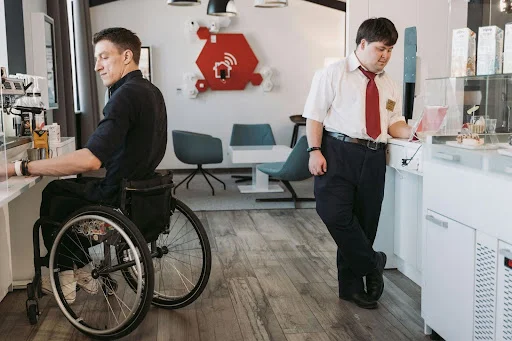
Most companies talk about inclusion now. It’s mentioned in their annual reports, hiring campaigns, and workplace policies. Offices are much more accessible than they used to be. Flexible working is normal for many, but there are still big gaps or Disability inclusion. This is particularly in the case of how disabilities are understood at work.
Conversation tends to focus on things you can immediately see; ramps, accessible parking spaces, automatic doors remove real barriers. At the same time, disability isn’t always as visible. Many neurological or developmental conditions affect how people move, communicate, or manage daily tasks, and it’s not always obvious how. Cerebral palsy is a good example. Data suggests that this condition affects 1.6 per 1,000 live births in high-income countries.
Many Know, But Don’t Understand
Cerebral palsy is a neurological condition. It affects movement and muscle coordination and happens when the brain is injured or doesn’t develop normally before, during or shortly after birth.
The important thing to note is that CP is different for everyone. Some have fairly mild symptoms, while others may need more support in day-to-day life. This is where the misunderstandings can creep in. People tend to picture (or know about) the most severe examples, even though many people with cerebral palsy live independently, build careers and work across a wide range of industries. It’s not just cerebral palsy that’s misunderstood; many other conditions have varying degrees of needs:
- Physical disabilities
- Learning disabilities (classified as mild, moderate, severe or profound)
- Autism
- Epilepsy
- ADHD
- Sensory impairments
- Acquired brain injury
If an employee or applicant has a condition from the list above, it’s impossible to know how that affects them unless they tell you. For example, vision loss might mean some degree of visual impairment, or it could mean total blindness. Autism could mean mild social and communication deficits, a strict need for routine, or a complete inability to live independently or communicate verbally for another.
Work Has Changed Over the Last Few Years
Around five or six years ago, most jobs were still built around being in the office every day. For people with disabilities, this created real barriers. Commuting, building layouts and rigid schedules could make things unnecessarily difficult.
Now, hybrid work opportunities, remote capabilities, and flexible schedules have become much more common. For some employees with disabilities, like cerebral palsy, those changes have made work far more manageable.
Not having to commute every day can remove a huge amount of stress. Flexible hours can help people manage fatigue and medical appointments. Technology means collaboration is possible from almost anywhere, but this flexibility doesn’t fix everything.
Small Adjustments Make the Biggest Difference
A common myth about workplace accommodations is that they’re complicated or expensive. In reality, many of the changes people need are daily simple. It could be:
- An adjustable desk
- Voice-to-text software
- A different schedule
- A more ergonomic chair
- A workstation arranged in a way that works better physically
The bigger challenge is often awareness, not cost. Managers worry about saying the wrong thing or making incorrect assumptions. The hesitation that comes with this can mean important conversations don’t happen. The best approach is:
- Asking the employee what would help them work comfortably and effectively
- Listening to what they have to say
- Making the adjustments
- Keeping the conversation open
It’s Not Just About Policy
Strong policies around inclusion and accessibility are important, but they don’t always reflect what daily working life feels like. If the culture is supportive and flexible, people will feel more comfortable asking for what they need. If the opposite is true, employees might stay quiet, which can lead to people struggling in silence.
Endnote
Talent shortages are affecting many industries. Companies are realizing they can’t afford to overlook capable people simply because workplaces haven’t been designed with everyone in mind. Employees with disabilities bring valuable skills, experience Disability inclusion, and different perspectives. When workplaces remove unnecessary barriers, those strengths become much easier to see.
Discover why this featured post is trending among our readers at Management Works Media.