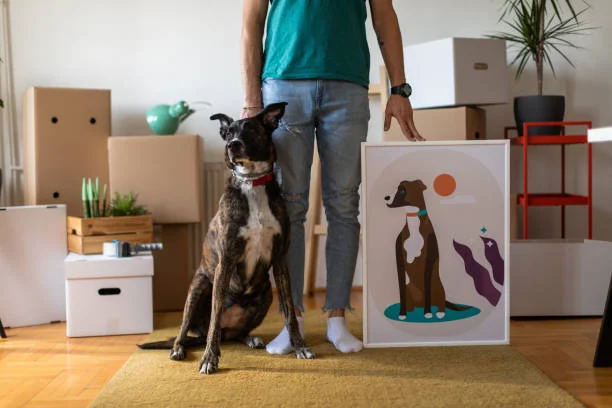
You know that friend who swears their “tiny little cat” is basically a panther, while their 70-pound dog is “just a baby”? That’s pet size perception in the wild, messy, emotional, and weirdly powerful when you’re picking a sofa, planning a layout Pet size perception, or deciding whether that narrow hallway is “fine.”
Design doesn’t happen in a vacuum. It happens while your cat is loafed on your keyboard and your dog is side-eyeing the new rug like it owes him money.
Pet size perception: why your eyes lie (and your floor plan pays for it)
Perceived pet size is the gap between what your brain thinks it sees and what the tape measure would tell you if you ever bothered to grab one, which, let’s be honest, you rarely do until something expensive goes wrong. That gap is fueled by fluff, posture, big eyes, squat legs, breed stereotypes, and the fact that pets move like they own the place. They do.
Your brain does a fast little shortcut: “Big presence = needs big space.” Sometimes that’s true. Sometimes it’s just a fluffy illusion with confidence issues Pet size perception.
The usual culprits (aka why “looks big” isn’t a measurement)
- Coat density: plush cats look chunkier than they are, especially in photos (and mirrors, somehow).
- Round features: round head, round eyes, round vibes = “bigger” in the brain.
- Low-slung body types: stocky pets read as heavy and space-hungry even when their actual footprint is modest.
- Posture and swagger: a tense, alert cat takes up “more room” psychologically than a floppy nap lump.
- Breed mythology: people assume “Maine Coon = monster” (fair) and “any cute cat = small” (not always).
And then you design around the myth. Not the animal.
Design scale is psychology with furniture receipts
When a pet feels larger than it is, people overshoot, giant cat trees wedged into walkways, oversized dog beds that become permanent hallway barricades, litter box “furniture” that eats half a bathroom, you name it. When a pet feels smaller than it is, people undershoot, tiny litter boxes, too-narrow perches, dainty chairs that get bulldozed on day three.
Either way, you end up annoyed. So does your pet.
A quick reality check: measure the pet you actually live with
This isn’t a call to start a spreadsheet obsession Pet size perception. It’s a call to spend five minutes getting numbers before you spend $2,500 on “performance velvet” that performs like a paper towel.
- Body length (nose to base of tail): drives litter box sizing and perch depth.
- Weight range + body condition: “fluffy” and “overweight” look similar from across the room. They’re not.
- Jump height: tells you whether your cat needs steps/ramps or just a better landing zone.
- Turning radius: yes, really, tight corners stress animals out, especially in multi-pet setups.
Do that, and half your “pet-friendly design” questions answer themselves.
Breed spotlight: when cute features distort size judgments
Scottish Folds are a perfect example of perception getting ahead of reality, because the folded ears, round face, and plush coat can make them look like a dense little bowling ball even when their measurements land them squarely in “medium cat” territory. People see the vibe and then buy gear like they’re outfitting a small lynx. That’s how you end up with an apartment dominated by a castle-sized cat condo nobody uses.
If you want the numbers, growth timeline, typical weight ranges, and how they stack up against chunkier-looking cousins, skim this guide on Scottish Fold size, growth, and weight before you commit to furniture dimensions you’ll regret later.
Yes, the “cute face” tax is real. It costs you shelf space.
Design for the pet you’ll have in 12 months (not the one you see today)
Kittens are tiny. Obviously. But people design like the kitten is a permanent state, which is adorable until the “little guy” turns into a long-bodied adult who can’t comfortably fit in the litter box you tucked into a cabinet like a shameful secret. Then the misses start. Then the carpet starts to suffer.
Growth happens fast. Your home shouldn’t lag behind.
Do this instead: build in adjustability
- Litter box rule: aim for box length around 1.5x your cat’s body length. Round “medium” guesses get people in trouble.
- Perch depth: shallow shelves look clean Pet size perception, sure, but adult cats don’t love balancing acts while half-asleep.
- Scratch zones: place at least one vertical scratcher near a “social” area (living room), not just hidden near the laundry like it’s a mop.
- Traffic flow: leave a clean route that’s not blocked by floor poufs, baskets, and “vintage” side tables your pet will absolutely clip at 3 a.m.
You’re not making your home pet-centric. You’re making it not dumb.
Cats don’t need more square footage. They need better routes.
People overestimate how much horizontal space a cat needs because they picture cats like small dogs, pacing around a floor like a living Roomba. Cats think vertically. They want height, choice, and exits, especially in small apartments where “escape” is basically a different chair.
Vertical territory changes everything.
Catification that doesn’t make your living room look like a daycare
- “Cat highway” shelves: a few connected wall shelves beat one giant cat tower that screams “I gave up.”
- Window perches: one safe perch with a view can reduce boredom-driven chaos (aka curtain murder).
- Hidey spots: enclosed beds, a bench with a cutout, even an open cabinet shelf, cats need privacy without being banished.
- Landing zones: cats don’t need constant jumping. They need predictable, stable places to land without slipping.
And yes, renters can do this too. No-drill shelf systems Pet size perception and tension-mounted options exist. They’re not all ugly anymore.
Common design mistakes that start with “he’s not that big”
Here’s where perception quietly empties your wallet: you buy for the imaginary pet, then you replace it all when reality shows up. The fix isn’t “buy tougher stuff.” It’s to stop guessing.
Guessing is expensive.
Mistake #1: undersized litter setups that create stress (and smells)
Cats avoid boxes that feel cramped, exposed, or trapped, especially if another pet can corner them on the way in or out. People blame “behavior” when it’s really the box location and the awkward cabinet they bought for aesthetics.
Fix the setup. Not the cat.
- Give the box an exit path (no dead-end closets with one doorway).
- Don’t cram it next to a loud appliance (washers are jump-scare machines).
- Use larger boxes than your visual guess. Your eyes are not a ruler.
Mistake #2: choosing furniture by looks, not scale
A low-profile modern sofa can look slick online, but if your pet is older, heavier, or just long-bodied, the jump down is rough and the under-sofa clearance becomes a dust-and-toy graveyard. People then block it with flimsy guards, which look worse than just choosing a better height from the start.
Pick a height with intent.
- Higher legs = easier cleaning, less trapped hair, more toy retrieval.
- Lower seats = easier for senior pets, but watch jumping impact.
- Stable arms = double as pet perches (they will be used that way).
Mistake #3: slick flooring that turns pets into cartoon characters
Hardwood and shiny tile look great until your cat hits a corner like a drift car and your dog starts “splaying” every time he stands up from a nap. Slipping isn’t just funny. It’s joint stress, anxiety, and that weird skittery sound at night.
Traction matters. A lot.
- Use runners in main routes (hallways, couch-to-door paths).
- Pick finishes with real texture, not “looks matte in photos.”
- Try washable rugs with grippy pads instead of delicate statement rugs you’ll panic over.
Health and mobility: the part of “pet-friendly” people skip until they can’t
Some pets have joint limitations, some develop them, and some breeds are predisposed, so designing only for the “average healthy adult” is cute in the same way ignoring savings is cute. You can keep a home clean and modern while still making movement easy.
Make the jumps optional.
Low-drama accessibility upgrades
- Ramps and steps that blend: match the wood tone, tuck them by the sofa, stop treating them like medical equipment.
- Low-entry litter boxes for seniors or cats with pain, place them where the cat already likes to go, not where you wish they’d go.
- Multiple water points: cats drink more when it’s convenient and interesting (fountains help), and hydration supports overall health.
- Play zones that encourage movement: short “hops” between stools and shelves beat extreme vertical climbs.
Also, don’t design around an unhealthy baseline weight. If your pet is overweight, making everything “easier” without adding enrichment is how the pattern sticks.
Materials that survive real life (without making your place look like a kennel)
Pet-friendly doesn’t mean industrial. It means you choose materials that forgive you for living with an animal who sheds, scratches, and occasionally throws up on the exact one thing you love.
They always pick the one thing.
Flooring, textiles, and finishes that won’t break your spirit
- Textiles: tight weaves, washable covers, and leathers that patina instead of “stain forever.” Skip loose weaves if claws are in the building.
- Color: match the pet hair tone slightly. Fighting contrast is a lifestyle choice.
- Paint: scrubbable finishes in high-traffic zones (pet routes along walls are real).
- Plants: if you’re a plant person, cross-check toxicity. Your cat is not impressed by your fiddle-leaf fig.
Sustainability-wise, the greenest choice is often the one you won’t replace in two years because it got shredded. Buy once. Cry once.
A simple framework: design by pet profile (not vibes)
If you want a quick checklist that doesn’t require a design degree or a pet behavioral consult, this is the one I’d tape inside a cabinet door.
- Measure: body length, weight range, jump comfort.
- Map routes: door-to-window, couch-to-food, litter-to-hide spot. Where do they actually move?
- Assign stations: food/water, litter, scratching, resting, play, each gets a spot that isn’t in the way.
- Build vertical choice (cats) or clear floor lanes (dogs): pick the dominant need and design around it.
- Plan for change: kitten to adult, adult to senior, lean to “needs a diet.” Life happens.
Do that, and “pet-friendly” stops being a vague Pinterest label and starts being a home that works on a Tuesday night when you’re tired and the cat is sprinting for no reason.
That’s the whole point. A good-looking home is nice. A home that functions with the animals you actually live with is better.
Continue the story with this related read packed with useful takeaways.