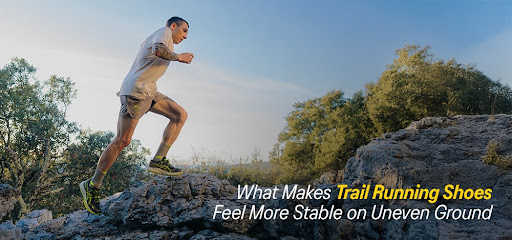
Trail running shoes are built to help runners stay balanced, confident, and in control when the ground isn’t a smooth, flat surface. Stability on trails is about how the shoe works with the foot, the terrain, and the runner’s movement to reduce unwanted wobble while still allowing natural motion.
A Secure Fit That Holds the Foot in Place
One of the first things runners notice about trail shoes is how securely they wrap the foot. On uneven ground, even small amounts of internal foot movement can lead to instability, especially on side slopes or technical descents.
A bit different from regular running shoes for men, trail shoes are designed with reinforced uppers, strategic eyelet placement, and midfoot structures that gently lock the foot down without creating pressure points. This helps the foot feel connected to the shoe, so when the ground shifts, the shoe responds immediately instead of lagging behind the movement.
ASICS focus heavily on lockdown through smart upper design in their trail running shoes, allowing runners to feel supported without sacrificing comfort over longer distances.
Midsole Design That Balances Cushioning and Control
Stability isn’t just about firmness. On trails, too-soft cushioning can feel unstable, while overly firm midsoles can feel harsh and unforgiving. The key is balance.
Trail midsoles are tuned to absorb impact while still providing enough responsiveness to keep runners upright and controlled. Cushioning materials are often paired with design features like midfoot wraps or plates that help guide the foot through uneven steps.
Outsoles That Grip Without Slipping
Grip is one of the biggest contributors to perceived stability. Even the most supportive upper or cushioned midsole won’t feel stable if the outsole can’t hold onto the surface beneath it.
Trail shoes use lug patterns that dig into dirt, mud, gravel, and rock. The shape, depth, and spacing of these lugs are carefully designed to provide traction in multiple directions, especially when running uphill, downhill, or laterally.
ASICSGRIP™ outsoles are designed to deliver reliable traction across a wide variety of surfaces, helping runners feel confident even when conditions change mid-run.
Geometry That Supports Natural Movement
Another often-overlooked factor in trail stability is how the shoe’s geometry supports natural foot motion. A stable trail shoe doesn’t fight the foot. Instead, it guides it smoothly through each step.
Features like slightly wider bases, stable heel platforms, and carefully shaped midsoles help reduce unwanted rolling while still allowing the foot to move naturally. This is especially important for neutral runners and underpronators, who rely on the shoe’s structure to manage impact and alignment on uneven ground.
How ASICS Trail Shoes Deliver Stability on the Trails
Different trails demand different levels of control, speed, and protection. ASICS design their trail running shoes with specific use cases in mind, offering stability through varied design approaches rather than a one-size-fits-all solution.
FUJI LITE™ 6: Control You Can Feel
The FUJI LITE™ 6 is designed for runners who want to feel connected to the trail while maintaining confidence on technical sections. Stability here comes from a combination of secure fit and responsive cushioning.
The FF BLAST™ PLUS cushioning provides lightweight, cloud-like comfort while remaining responsive enough for quick adjustments on uneven terrain. These running shoes for men have a modified midsole with a lateral midfoot wrap that helps hold the foot more securely during sharp turns or off-camber sections. Updated eyestays improve lockdown, creating a snug, controlled fit that feels reassuring on challenging trails.
Paired with an ASICSGRIP™ outsole and terrain-optimized lug design, the FUJI LITE™ 6 helps runners stay balanced while still moving freely and efficiently.
GEL-VENTURE™ 10: Comfort and Stability Across Surfaces
The GEL-VENTURE™ 10 is built for runners who move between roads and trails, offering stability through comfort and durability rather than aggressive race-focused features.
Its AMPLIFOAM™ cushioning and higher stack height create a softer underfoot feel, while rearfoot GEL™ technology helps absorb impact on uneven or harder surfaces. The outsole traction pattern is designed to work across both trail and road environments, providing dependable grip without feeling overly aggressive.
This balance makes the GEL-VENTURE™ 10 feel stable for runners who want versatility, whether they’re exploring light trails or transitioning from pavement to dirt.
FUJISPEED™ 4: Speed With Control
The FUJISPEED™ 4 is designed for trail runners who want to move fast without sacrificing stability. Speed on trails demands confidence, and that confidence comes from how the shoe manages momentum.
A trail-optimized PEBAX plate is sandwiched into the midsole of these trail shoes for men to provide forward propulsion while remaining flexible enough for uneven terrain. This helps runners stay stable on both climbs and descents, where control is critical. The dual-layer FF BLAST™ PLUS cushioning system keeps the ride light and energetic without feeling unstable.
Combined with ASICSGRIP™ outsole rubber and terrain-optimized lug geometry, the FUJISPEED™ 4 helps runners maintain speed while staying in control across technical sections.
Why Stability on Trails Feels Different Than on Roads
Trail stability isn’t about preventing movement, it’s about managing it. Uneven ground requires shoes that adapt quickly, support naturally, and provide grip exactly when it’s needed. That’s why trail shoes often feel more structured than road shoes, even if they’re just as comfortable.
ASICS design their trail running shoes to support confidence rather than restrict motion. Through secure uppers, responsive cushioning, thoughtful geometry, and reliable traction, they help runners stay upright, balanced, and focused on the trail ahead.
When stability works this way, runners don’t think about their shoes at all. They simply trust each step, adjust instinctively, and enjoy the freedom that trail running offers.