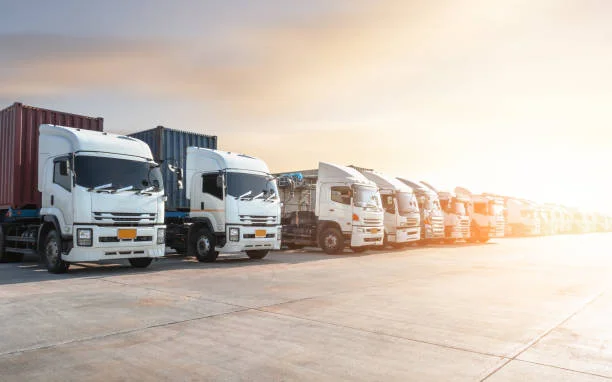
Heavy duty commercial trucks are classified by gross vehicle weight rating (GVWR), which is the maximum weight a vehicle can safely carry including its own weight, cargo, passengers, and fuel. In most jurisdictions, heavy-duty starts at Class 7 (26,001-33,000 lbs GVWR) and includes Class 8 (over 33,000 lbs). These aren’t your typical delivery vans or pickup trucks. We’re talking about semi-trucks, dump trucks, cement mixers Heavy-duty commercial trucks, and other vehicles designed to haul serious weight over long distances or in demanding conditions. The engineering that goes into these machines is substantially different from lighter vehicles because the stresses, operating hours, and reliability requirements are on another level entirely.
Weight Classifications and Legal Limits
Different countries use different classification systems, but the principle is similar everywhere. In North America, the Department of Transportation uses eight classes. Class 8, the heaviest category, includes tractor-trailers that can legally operate at 80,000 lbs (about 36 tonnes) gross combination weight in most states. In Australia, the system is more flexible with various configurations allowing different weights. B-doubles can run at 62.5 tonnes, while road trains in remote areas can exceed 120 tonnes.
These weight limits aren’t arbitrary. They’re based on road infrastructure capacity, bridge loading limits, and safety considerations. Heavier vehicles put more stress on pavement, particularly on corners and at intersections where lateral forces are highest. Road engineers design pavement thickness and composition based on expected heavy vehicle traffic Heavy-duty commercial trucks, which is measured in equivalent single axle loads (ESALs). One pass of a fully loaded Class 8 truck can cause as much pavement damage as thousands of passenger car passes.
The weight distribution matters too. That’s why trucks have multiple axles and why regulations specify maximum axle weights. Spreading the load across more contact patches reduces point loading on the road surface. A typical semi-trailer has five axles: one steer axle on the tractor, two drive axles on the tractor, and two axles on the trailer. Each axle group has weight limits that must be respected.
Powertrain Requirements
Heavy-duty trucks need engines that produce substantial torque at low RPMs. Torque is rotational force, and it’s what actually moves weight. Horsepower is just torque multiplied by rotational speed, so high horsepower numbers don’t mean much if the torque isn’t there Heavy-duty commercial trucks. Most heavy-duty applications use diesel engines in the 11-15 liter displacement range producing 400-600 horsepower and 1,500-2,200 lb-ft of torque.
Diesel is preferred over gasoline for several reasons. Diesel fuel contains more energy per gallon (about 13% more), diesel engines run at higher compression ratios (typically 15:1 to 20:1 versus 9:1 to 11:1 for gasoline), and they’re more thermally efficient. This translates to better fuel economy, which matters enormously when you’re traveling hundreds of thousands of miles per year. A 1-2% improvement in fuel economy can save tens of thousands of dollars annually for a fleet operator.
Transmissions in heavy trucks are also specialized. Many modern heavy-duty trucks use automated manual transmissions with 12-18 forward gears. The high gear count allows the engine to operate in its optimal RPM range across a wide speed range. When you’re climbing a steep grade, you need low gears to multiply torque. On flat highways, you want tall gearing to keep engine speed and fuel consumption low.
Frame and Suspension Design
The frame on a heavy-duty truck is typically constructed from heat-treated steel channel rails that run the length of the vehicle. These aren’t simple beams. They’re engineered to flex under load without cracking or permanently deforming. The frame must withstand vertical loads, lateral forces during cornering, and torsional stress when operating on uneven surfaces.
Frame rail thickness typically ranges from 3/8 inch to 7/16 inch, with depths of 10-12 inches. The rails are usually tapered, meaning they’re deeper and thicker at the front where stresses are highest and taper toward the rear. Crossmembers connect the two rails and provide torsional rigidity. The spacing and design of these crossmembers affects how the frame flexes and distributes loads.
Suspension systems in heavy trucks serve multiple purposes. They isolate the cab and cargo from road shock, they maintain tire contact with the road surface for better traction and braking, and they protect the frame from excessive stress. Most heavy-duty applications use air suspension, which uses air springs (rubber bellows filled with compressed air) instead of steel leaf springs. Air suspension provides a smoother ride, allows for adjustable ride height, and can automatically compensate for varying loads.
Braking Systems and Safety Features
Stopping 80,000 lbs requires serious braking capacity. Heavy trucks use air brakes, which operate on compressed air rather than hydraulic fluid. The basic principle is that compressed air pushes against a diaphragm in a brake chamber, which pushes a rod that activates the brake shoes or pads. Air brakes have several advantages: air is free and unlimited (you can always make more with the compressor), air leaks don’t cause complete brake failure like hydraulic leaks can, and the system can easily be extended to multiple trailers.
Most modern heavy trucks use disc brakes on the front axle and sometimes on the drive axles too. Disc brakes dissipate heat better than drum brakes, they’re self-adjusting, and they provide more consistent stopping power. However, drum brakes are still common on drive axles and trailer axles because they’re cheaper and adequate for those applications.
Anti-lock braking systems (ABS) are mandatory on heavy trucks in most developed countries. ABS prevents wheels from locking during hard braking, which maintains steering control and reduces stopping distances on most surfaces. The system uses wheel speed sensors to detect when a wheel is about to lock, then rapidly pulses the brake pressure to that wheel. Modern systems can modulate brake pressure individually at each wheel multiple times per second.
Highlighted content that brings key takeaways you’ll love at Management Works Media.