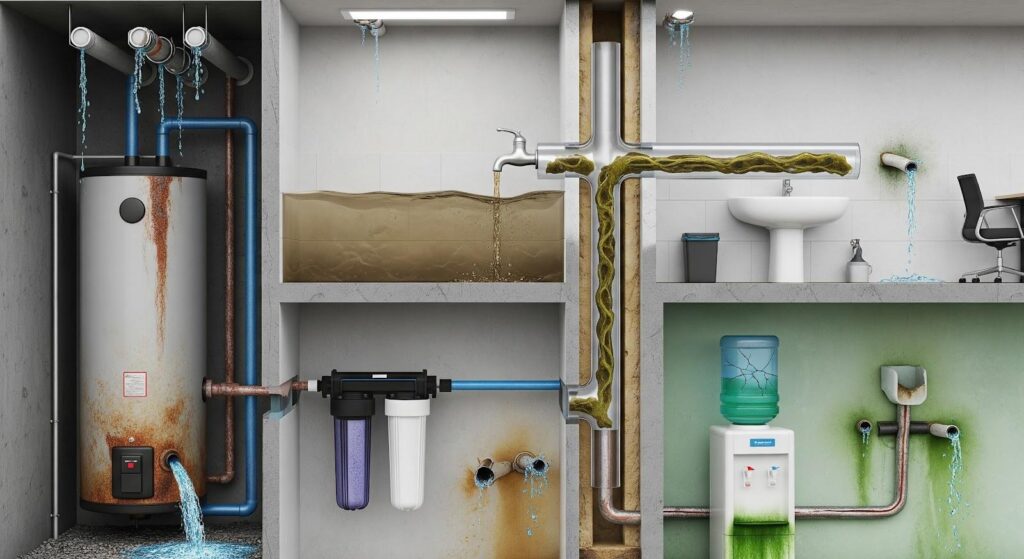
When the water quality becomes poor, when it smells strange, or looks hazy, or even causes people to become sick, it is not a secret very often. It commonly boils down to a handful of usual offenders: the opposite flow of water, the long standing stagnation of water, or the low temperatures falling into a danger zone.
You could be in charge of a building, a business or just on a strata committee and you may save yourself a lot of stress by knowing these basics. This is what is happening behind the scenes.
Cross-Connections and Backflow Prevention Risks
A cross-connection is one of the largest hazards in any business structure.
Simply put, a cross-connection is any place where your clean drinking water comes into contact with something dirty such as a fire system, an irrigation pipe or a chemical hose. Typically, water flows into the right direction (out of the tap) because of pressure.
But pressure isn’t constant. When a water main breaks down in the street or a pump fails in your building, the pressure may drop at any instant. When that occurs, the water is in fact able to turn back. This is referred to as backflow.
Suppose the hose of a cleaner has been left in a bucket of mopping chemicals. In case the pressure decreases at that very time the vacuum will be able to draw those chemicals all the way up through the hose and into the drinking water supply of the building.
We have very stringent regulations on installing backflow prevention devices in Australia to prevent this but they must be tested every year. In case they fail (or were not installed properly in the first place), your clean water is at risk.
Managing the Temperature Danger Zone for Legionella Prevention
You may believe that the temperature of water is only about comfort, hot when showering, cold when drinking. However, as far as safety is concerned, temperature is your primary protection against such bacteria as Legionella.
Bacteria are fond of what the experts know as the danger zone; 20degC -45degC.
- At temperatures below 20degC: Bacteria are inactive.
- Above 60degC: A majority of bacteria are not able to survive.
- In the center: They grow and reproduce.
When it is a large building, it is not as easy as it sounds to keep water in that danger zone. In a ceiling cavity, there can be hot water pipes and cold water pipes almost side by side. The heat is eventually passed on and the cold water is warmed to an ideal temperature in that danger zone.
Equally, when your hot water system becomes cold on its way to the tap, it may not get hot enough to kill bacteria, and might fall to a warm temperature which is conducive to bacteria.
Biofilm Growth and Water Stagnation in Commercial Plumbing
Water is meant to move. In flow, it carries fresh disinfectant (chlorine) supply in the town which avoids bugs. Once it ceases, such a disinfectant evaporates, and things begin to grow.
This is a massive concern in business premises with:
- Dead legs: Old pipes which were capped off during a renovation but left full of water.
- Unoccupied tenancies: An empty floor in an office without any one to flush the toilets or run the taps in months.
- Low use outlets: The single shower in the basement which is never used.
When water remains stagnant in these pipes, it provides an opportunity for the growth of biofilm (a slimy layer of bacteria) on the inside of the pipe. When biofilm is present, it is extremely difficult to eliminate it and it can release bacteria into the flow every time the tap is finally used.
Maintaining Commercial Water Storage Tanks and Liners
There are a lot of commercial buildings in Australia that require the storage of water on-site either as a fire deterrent or as insurance that there will be good pressure during peak periods. These tanks are very massive and can be buried down the basement or placed on the roofs.
Rooftop tanks are doubly threatened, as they are heated in the Australian sun (warming the water) and may over the years of service be filled with sediment or sludge at the bottom. This sludge is an ideal breeding place of contaminants.
Physical state is important in this case as well. The tanks (concrete or steel) may crack or corrode over time. The most effective remedy to the problem of increasing the life of an older tank is the application of high-quality Water tank liners that will provide a new clean barrier between the water and the old tank walls. This will prevent internal corrosion and it will be much more difficult to find a rough surface that the bacteria can attach themselves to.
Water Safety During Building Refurbishments and Renovations
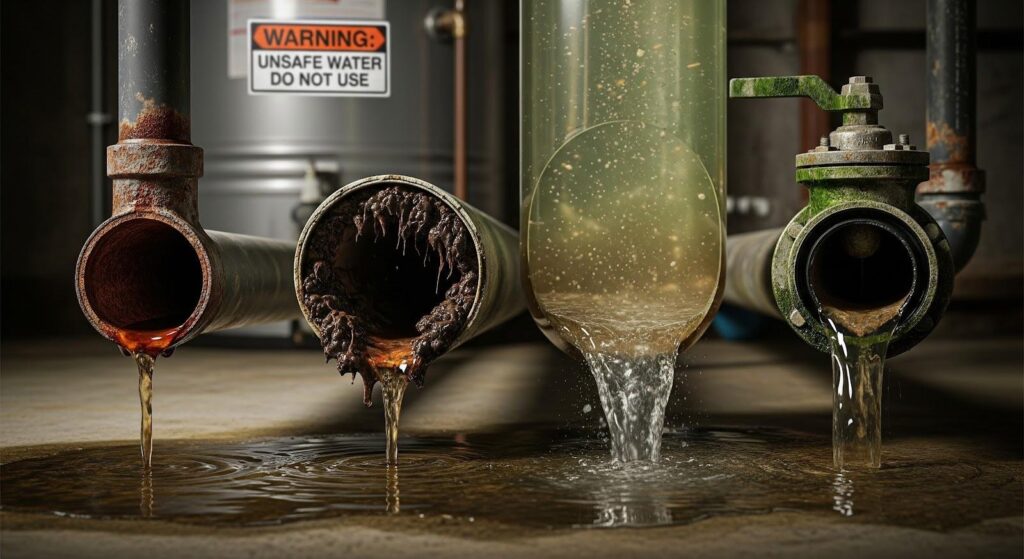
Commercial buildings are in a constant flux. An old warehouse is turned into a cool office; a hospital ward is turned into an administration block.
The fact is that the plumbing tends to remain the same.
When a building was built to be used heavily with water (such as a laundromat) but is currently being used with a low-intensity application (such as a storage facility) then the pipes may be oversized. This implies that water flows too slowly and this causes the stagnation problems that we have discussed above.
New renovation may also bring dust and debris and contamination into the lines when the new sections are not flushed and disinfected correctly before people begin using it.
Preventive Maintenance Tips for Safe Drinking Water
The positive thing is that contamination can be prevented almost always with an active routine. It has nothing to do with restructuring the entire system, but rather management.
- Turn it on: Turn the tap in empty rooms or vacant floors at least once a week.
- Watch the temperature: Make sure that your hot water is hot and your cold water is cold.
- Check your valves: Have your backflow prevention devices checked after every 12 months.
- Check your tanks: Do not think that out of sight is out of mind.
In case you are uncertain whether your building is compliant or safe with water, then it is worthwhile to call in professional plumbing services to conduct a site audit on the same. They have the ability to detect your hidden dead legs, verify your cross-connection risks, and develop a maintenance program that keeps you in check.