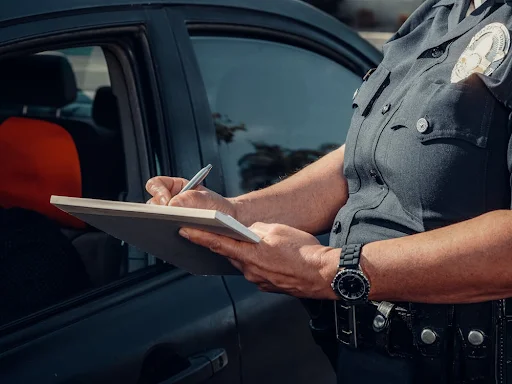
Traffic stops suck. Your heart starts racing, your palms sweat, and you suddenly feel tongue-tied. But here’s the kicker… Most drivers don’t even know what those rights are.
Having no clue about your rights at a traffic stop can cause even more headaches later.
By understanding your rights during a traffic stop, you know how to protect yourself no matter what.
Let’s review exactly what you need to know to keep yourself safe during any traffic stop.
In this article you’ll learn
- Your Constitutional Rights during Traffic Stops
- What Police Officers Can and Can’t Do
- Your Rights when Your Car is Being Searched
- Things You Should Do to Protect Yourself
Traffic Stops Are More Common Than You Think
Think traffic stops are rare?
Think again.
The Stanford Open Policing Project reveals that law enforcement officials stop over 20 million motorists nationwide each year. That breaks down to over 50,000 drivers each day.
But did you know…
Traffic stops account for about 15% of all arrests made today. In fact, that number has been on the rise over the past few years. A routine traffic stop for a burned-out taillight can quickly lead to your arrest if you don’t know your rights.
That’s why working with a qualified tampa criminal defense traffic attorney from Rhino is so important when facing charges for criminal defense services related to traffic violations. Cases like these often hinge on whether or not procedures were followed correctly.
Know Your Fourth Amendment Rights
The Fourth Amendment is one of your most powerful assets during a traffic stop.
Why?
Well, the Fourth Amendment protects citizens from unreasonable searches and seizures by the government.
In other words, the police cannot pull you over without cause, nor can they search your vehicle without your consent.
For police to make a traffic stop, they must have reasonable suspicion. Reasonable Suspicion means they have the articulable ability to believe that you committed a traffic violation or another crime.
Let’s use an example…
If a police officer pulls you over for running a red light, he has reasonable suspicion. If he pulls you over and doesn’t tell you why, that’s a violation of your Fourth Amendment rights.
Why does this matter?
If police violate your Fourth Amendment rights during a traffic stop, they cannot use incriminating evidence against you in court. This is known as the “fruit of the poisonous tree” legal principle.
If the tree is poisoned (illegal search), then the fruit (incriminating evidence) is tossed.
Know What Police CAN and CANNOT Do
While police officers do have power during a traffic stop, they don’t get to do whatever they want.
Knowing your rights is paramount to understanding when an officer crosses the line.
Police CAN:
- Ask to see your license, registration, and proof of insurance
- Order you to step out of the vehicle (along with any passengers)
- Conduct a pat down if they suspect you have a weapon
- Bring a drug-sniffing dog to the curb while you wait
- Search your vehicle if they have probable cause to do so
Police CANNOT:
- Detain you any longer than is necessary to resolve the traffic stop
- Force you to answer their questions beyond your identification
- Search your vehicle without a warrant, unless you consent or they have probable cause
This is a great place to bookmark if an officer starts pushing the boundaries of what they can legally do during a traffic stop.
When an Officer Asks to Search Your Vehicle
This is where things often get tricky.
If a police officer asks to search your vehicle, you have every right to say no. You do not need to give police consent to search your vehicle. You should simply reply with, “No, officer.”
Remember to always be polite. Simply denying consent to search your vehicle is not suspicious behavior and cannot be used against you in court.
You should say something along the lines of:
“I do not consent to any searches.”
That’s literally all you need to say.
However, there are some exceptions to this. Suppose an officer has probable cause to believe you have evidence of a crime in your vehicle. In that case, they can search your car without your consent.
Possible reasons for this include but are not limited to:
- The officer sees contraband/items related to a crime in plain view
- They smell marijuana coming from your vehicle
- You’ve been involved in a vehicle accident
But remember…
Unless police have probable cause, they cannot search your vehicle without your consent. You have no obligation to allow them to search your vehicle.
You Have the Right to Remain Silent
You have the right to remain silent under the Fifth Amendment. So if you don’t feel like answering a question, you don’t have to.
You ARE required to:
- Provide your name
- Hand over your license
- Show proof of registration
- Provide proof of insurance
You ARE NOT required to answer questions such as:
- Where are you coming from?
- Where are you headed?
- Have you been drinking?
- Is there anything illegal in the car?
You can simply reply with:
“I do not answer questions without my attorney present.”
This isn’t being rude; this is you exercising your rights.
Things You Should Do During Any Traffic Stop
So those flashing lights are behind you. Now what?
If you approach the situation calmly and know what to do, you’ll get through the traffic stop without issue.
Here’s what to do during a traffic stop:
- Pull over to a safe location preferably where there are plenty of lights.
- Turn off your engine and place your hands on the wheel.
- Remain calm and courteous with the officer.
- Provide your documents when asked without quickly reaching for them.
- Politely decline searches of your person and vehicle.
- Do not volunteer any information to the officer.
- Write down everything you remember about the stop as soon as possible.
Steps to take if you’re issued a warning:
These steps still apply if the officer lets you go with a warning.
Steps to take if you’re placed under arrest:
Again, these steps apply if you are arrested. Even if you feel your rights were violated, following these steps is crucial to defending yourself in court.
What to Do If Your Rights Have Been Violated
Cops aren’t perfect. We get it. Sometimes an officer may take their power a little too far.
If you feel your rights have been violated, your opportunity to fight comes later.
Do NOT:
- Physically resist the officer
- Question the officer’s decision to pull you over
- Run from the officer
Do:
- Comply with the officer’s demands, even if you know your rights have been violated.
- Write down the officer’s badge number and patrol car number
- Gather any witness’ information
- Write down everything you can remember from the traffic stop
Your court case starts as soon as the officer drives away. Be prepared to fight.
Wrapping Things Up
While we hope you never have to use this information, it’s better to be safe than sorry.
You have rights as a citizen of the United States, and traffic stops are no exception.
Key Takeaways:
- You have rights under the Fourth and Fifth Amendments
- You can refuse to have your car searched if police do not have probable cause
- You do NOT have to answer questions that may incriminate you
- Remain calm, and always document everything.
Understanding your rights during a traffic stop is empowering. You now have the knowledge to protect yourself no matter the situation. Drive safe!
Expand your knowledge—explore more content crafted just for curious minds.