In the relentless pursuit of business growth, concepts like “efficiency,” “agility,” and “resilience” dominate leadership dialogues. Too often, however, they remain abstract ideals, nebulous goals on a quarterly slide. There exists a discipline where these concepts are not theoretical but physically manifest, where resilience is measured in microns and failure is not an option. This is the world of Swiss precision machining, a field where the uncompromising demands of aerospace, medical technology, and advanced engineering have forged a philosophy of operation that holds profound lessons for any organization seeking to build unbreakable systems.
Beyond the Machine: A Blueprint for Structural Integrity
At its core, the Swiss machining process solves a fundamental problem of physics: deflection. In a conventional lathe, as a workpiece extends, it bends imperceptibly under cutting forces, introducing error. The Swiss solution is elegant and definitive—a guide bushing that provides rigid support within millimeters of the cutting action. This eliminates the variable of flex, establishing a foundational truth from which all precision flows.
This is the first and most critical management insight: true precision and resilience are impossible without a foundation of unwavering support at the point of execution. In an organization, deflection is the strategic drift caused by unclear communication, inconsistent processes, or inadequate resources. The Swiss principle teaches us that support cannot be distant or abstract. It must be engineered into the system itself, providing teams with the immediate stability—be it through clear guidelines, real-time data, or empowered decision-making—to perform under pressure without bending from their intended course. It is the antithesis of the brittle, top-down structure that cracks under stress.
Synchronized Complexity: The “Done-in-One” Enterprise
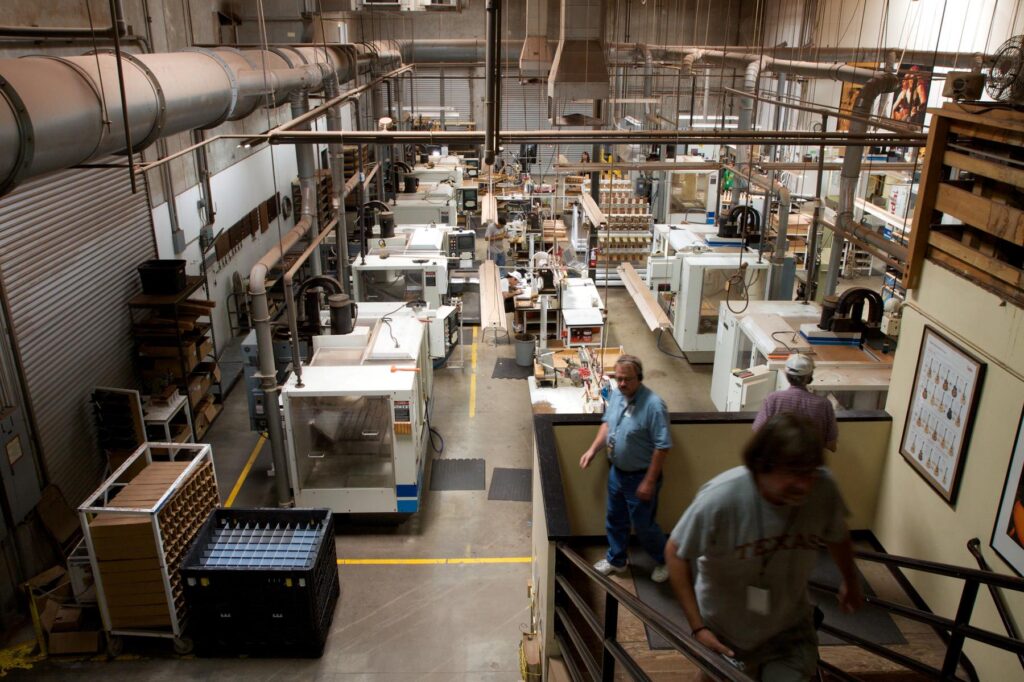
A modern CNC Swiss lathe is not a simple tool; it is a self-contained production ecosystem. It performs turning, milling, drilling, and threading in one continuous, automated cycle, often completing a part ready for assembly. This “done-in-one” philosophy eliminates the cumulative error, handling damage, and queue times inherent in moving a part between multiple single-purpose machines.
For the modern enterprise, this is a powerful model for integration. The goal shifts from optimizing isolated departments (the individual machines) to designing seamless, cross-functional workflows that minimize handoffs and maximize flow. The chronic delays and quality erosion that occur at departmental boundaries—the “white space” on the organizational chart—are designed out of the process. Companies that master this, like those that leverage integrated Swiss machining services, achieve a level of operational velocity and quality consistency that disjointed systems can never match. It requires an architectural view of the entire value stream, where synchronization is engineered in from the start.
Thriving on Difficulty: Expertise in Demanding Environments
Swiss machining earns its reputation not on easy tasks, but on its mastery of the most challenging materials: medical-grade titanium that must be biocompatible, nickel superalloys that retain strength in jet engine infernos, and delicate polymers that fracture if mishandled. Each material demands a unique recipe of tool geometry, cutting speed, coolant application, and fixturing. There is no universal setting.
This translates directly to a core leadership tenet: standardized processes are insufficient for specialized challenges. High-performance teams are built on deep, domain-specific expertise. Attempting to manage a complex R&D project, a sensitive regulatory compliance initiative, or a critical client relationship with the same generic playbook used for routine operations is akin to using an aluminum-cutting program on titanium—it will fail, expensively. Organizations must cultivate and empower specialized expertise, allowing for adaptive strategies that respect the unique “properties” of each challenge. This depth of practical knowledge is what distinguishes a true expert partner like Falcon CNC Swiss in their field.
The In-Line Quality Mindset: Building Integrity, Not Inspecting It In
Perhaps the most radical departure from traditional manufacturing—and management—is the quality philosophy. In a Swiss cell, precision is not verified at the end; it is guaranteed at every step. In-process probes measure features immediately after they are cut, and the machine auto-corrects in microseconds. Tool wear is monitored through power sensors, predicting failure before it impacts quality. Inspection is continuous, embedded, and corrective.
For managers, this is the imperative to build quality into the process, not to inspect for defects after the fact. In a knowledge economy, this means creating systems of real-time feedback and psychological safety where errors are caught and corrected in the moment, not in a quarterly audit. It means investing in tools and training that prevent mistakes rather than procedures for sorting out the consequences. It requires a cultural shift from blaming individuals for failures to engineering systems that make excellence the default output. This proactive integrity is what allows manufacturers to produce mission-critical components with confidence.
Data as the Sixth Axis: From Intuition to Informed Precision
The modern machining floor is a data-rich environment. Every cut generates information on vibration, thermal growth, power consumption, and tool integrity. The most advanced operations don’t just collect this data; they analyze it to predict outcomes, prescribe maintenance, and optimize processes dynamically.
This mirrors the essential evolution from gut-feeling management to evidence-based leadership. In a complex operation, intuition is valuable but insufficient. Resilience is built on a foundation of clear metrics, predictive analytics, and a willingness to let empirical data guide decisions. It’s about moving from asking “What do we think?” to “What does the data show?” This objective clarity eliminates opinion-based debates and aligns the entire organization around measurable realities, creating a more adaptive and intelligent enterprise.
Conclusion: Engineering an Unbreakable Organization
The principles of Swiss precision machining offer more than a manufacturing case study; they provide a robust framework for building resilient organizations. It is a philosophy that champions integrated design over fragmented functions, embedded support over after-the-fact correction, specialized expertise over generic application, and data-informed action over guesswork.
These are not mere tactics but the pillars of a system engineered for reliability in the face of complexity and stress. They explain why industries where failure carries the highest stakes—aerospace, medical, defense—rely on this methodology. In business, the stakes are competitive relevance, customer trust, and long-term viability. By adopting this engineering mindset, leaders can move beyond managing abstract goals and begin constructing the unbreakable systems that turn those ambitions into enduring, tangible reality. It is a journey from working in the business to architecting it.