Pakistan’s beauty and personal care market has quietly grown into a multi-billion dollar industry. While global attention tends to focus on India’s beauty boom or the rapid expansion of Southeast Asian markets, Pakistan—with over 240 million people and a median age of 22—represents one of the most underserved yet high-potential beauty markets in the world. And the shift from physical retail to digital commerce is reshaping how that potential gets realised.
Market Size and Growth Trajectory
Euromonitor estimates Pakistan’s beauty and personal care market at approximately $5.2 billion, with projections pointing toward $7 billion by 2028. Skincare, colour cosmetics, and haircare represent the largest segments, though men’s grooming is emerging as a fast-growing niche. The growth is driven by a convergence of demographic and economic factors: a young population entering peak consumer spending years, rising urbanisation, increased female workforce participation, and—critically—social media platforms that have democratised beauty education.
For comparison, India’s beauty market is valued at roughly $18 billion, while Bangladesh’s sits near $3 billion. On a per-capita basis, Pakistani consumers still spend significantly less on beauty products than their Indian or Southeast Asian counterparts, suggesting substantial room for growth as disposable incomes rise and product accessibility improves.
The Influencer Engine
No analysis of Pakistani beauty retail is complete without acknowledging the role of social media influencers. YouTube and Instagram beauty content in Urdu and English has created an entirely new purchase funnel. Creators like Nabila, Shahzain Raza, and dozens of micro-influencers with 50,000 to 200,000 followers produce product reviews, tutorials, and “get ready with me” videos that directly drive consumer decisions. The relationship between content and commerce is tighter in Pakistan than in many Western markets, partly because traditional advertising channels—particularly television—have limited reach among younger demographics.
TikTok’s growth in Pakistan has accelerated this trend further. Short-form video content showcasing product application, before-and-after results, and ingredient breakdowns reaches millions of viewers daily. Brands that have invested in influencer partnerships—both local manufacturers and international names—report conversion rates that significantly outperform traditional display advertising.
From Department Stores to Digital Storefronts
Historically, Pakistani consumers purchased beauty products through a fragmented retail landscape: department store counters, independent beauty shops, pharmacy chains, and unbranded market stalls. This created significant information asymmetry. Consumers in larger cities had access to a wide range of products and knowledgeable salespeople, while those in smaller cities and towns relied on whatever limited selection local shops carried—often at marked-up prices with questionable authenticity.
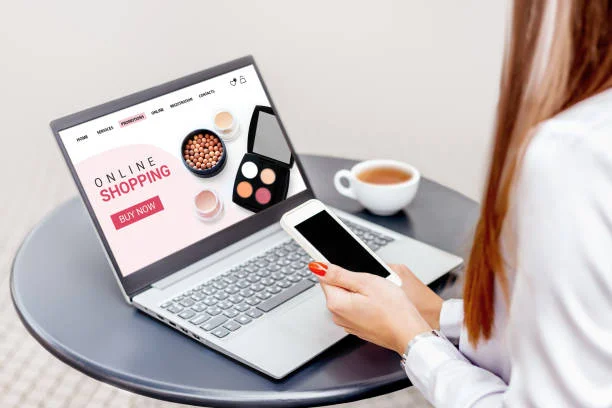
E-commerce has compressed this gap. A consumer in Sukkur or Abbottabad now has access to the same product catalogue as someone in Karachi’s Clifton neighbourhood. Platforms operating as a beauty store online Pakistan consumers trust have been particularly effective at bridging this divide, especially those with established physical retail reputations that lend credibility to their digital operations. The ability to read ingredient lists, compare prices, and access customer reviews before purchasing has empowered a more informed consumer base.
Authenticity as a Differentiator
Counterfeit beauty products remain a serious concern in Pakistan. From fake MAC lipsticks to diluted versions of popular serums, the grey market is extensive. Online platforms that can guarantee product authenticity—through authorised distributor relationships, batch tracking, and proper storage conditions—hold a significant competitive advantage. This is particularly relevant for higher-priced international brands, where consumers are understandably cautious about spending PKR 3,000 to 8,000 on a product that might not be genuine.
K-Beauty and the Next Wave
Korean beauty products—commonly referred to as K-Beauty—have gained significant traction globally and are now making inroads into the Pakistani market. The appeal aligns well with Pakistani consumer preferences: ingredient-focused formulations, affordable price points relative to Western luxury brands, and an emphasis on skincare routines rather than heavy makeup coverage. Sheet masks, snail mucin serums, and centella-based products have developed dedicated followings among Pakistani beauty enthusiasts, initially through cross-border shopping and now increasingly through domestic e-commerce availability.
The K-Beauty wave represents an opportunity for online retailers to capture consumer segments that are currently purchasing through informal import channels or international shipping services. Platforms that can offer authentic K-Beauty products with local pricing, Urdu-language product descriptions, and domestic delivery timelines will be well-positioned to convert this latent demand into structured revenue.
Challenges and Outlook
Pakistan’s online beauty retail sector faces real headwinds. Logistics costs are high relative to average order values. Consumer education around ingredients and suitable products for South Asian skin types is still developing. Return rates for beauty products purchased online tend to be higher than other categories due to shade mismatches and texture preferences that are difficult to evaluate digitally.
Despite these challenges, the structural tailwinds are strong. A young, digitally connected population; improving payment infrastructure; growing comfort with online purchasing; and a beauty culture that is expanding beyond traditional occasions into daily self-care routines all point toward sustained growth. The platforms that invest in curation, authenticity, and consumer education—rather than competing purely on price—will likely capture the most durable share of this evolving market.