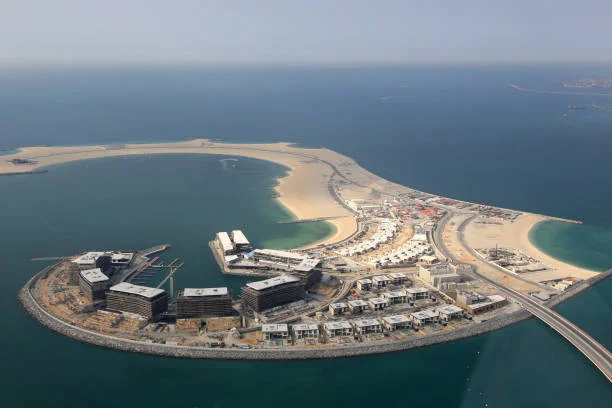
Large-scale urban developments rarely succeed by chance. Behind every district that functions well over decades lies a planning philosophy that prioritises long-term outcomes over short-term visibility. Along Dubai’s northern coastline, Dubai Islands has become a clear example of how strategic planning can shape not only physical space, but also market resilience and operational stability. Rather than approaching the waterfront as a single development opportunity, Dubai Islands has been conceived as a multi-phase district with clearly defined priorities around infrastructure, land use, and long-term value creation.
Early activity across the district already reflects this approach. Residential and mixed-use projects such as Villa Del Arte Dubai Islands, Ellington Cove, Azizi Wasel, Bay Villas by Nakheel, and other waterfront initiatives illustrate how multiple developers are operating within a shared strategic framework. Each project differs in scale and design, yet all align with the broader master plan that governs density, connectivity, and spatial coherence. This alignment is not accidental; it is the result of deliberate long-range planning that seeks to manage complexity rather than react to it.
Planning Beyond the First Development Cycle
One of the defining characteristics of Dubai Islands is its resistance to short-cycle thinking. Many waterfront projects globally are driven by early-phase sales targets and rapid build-out, often at the expense of long-term coherence. Dubai Islands takes a different path. The district is structured to evolve gradually, allowing infrastructure, public spaces, and community functions to mature alongside residential and hospitality supply.
This phased approach reduces systemic risk. By controlling development intensity and sequencing, planners can adapt to market conditions without compromising the integrity of the district. For stakeholders, this creates a more predictable environment in which decisions are informed by long-term performance metrics rather than immediate returns. Strategic patience becomes a built-in feature of the project rather than an external constraint.
Infrastructure as the Foundation of Strategy
Effective long-term planning in real estate begins with infrastructure, and Dubai Islands places this principle at the centre of its development model. Transport connections, utilities, drainage systems, and coastal engineering have been designed at district scale rather than parcel by parcel. This ensures consistency in service delivery and reduces the likelihood of costly retrofits as the area grows.
From a management perspective, this approach simplifies coordination across multiple developers and phases. Clear infrastructure baselines establish non-negotiable parameters within which individual projects can innovate. The result is a district that supports diversity in architecture and use while maintaining operational efficiency and resilience.
Managing Density With Intent
Density is one of the most sensitive variables in long-term urban planning. Too little density can undermine economic viability, while too much can strain infrastructure and erode livability. Dubai Islands manages this balance through a horizontal expansion model that spreads development across multiple islands rather than concentrating it in a single high-rise zone.
Lower to mid-rise building profiles allow for better light penetration, airflow, and visual continuity, all of which contribute to environmental comfort and user satisfaction. From a strategic standpoint, this density model also preserves optionality. Future phases can adjust intensity as demand evolves, without destabilising the district’s core identity.
Aligning Multiple Stakeholders Under One Vision
A key management challenge in master-planned districts is coordinating multiple developers, designers, and operators while maintaining a unified direction. Dubai Islands addresses this through a clearly articulated master plan that defines not only physical parameters, but also experiential and functional objectives.
This framework reduces friction between stakeholders. Developers operate with a clear understanding of constraints and expectations, while planners retain oversight of cumulative impact. Such alignment is essential for long-term success, particularly in projects that unfold over many years and involve diverse commercial interests.
Long-Term Value Over Short-Term Visibility
Strategic planning on Dubai Islands reflects a broader shift in how value is defined in real estate development. Rather than prioritising landmark architecture or immediate market attention, the project focuses on creating conditions that support sustained demand. Waterfront access, walkability, mixed-use integration, and environmental comfort are treated as value drivers, not marketing features.
This emphasis aligns with global trends in real estate management, where long-term asset performance increasingly depends on usability, adaptability, and quality of environment. Districts that function well over time tend to attract stable occupancy, consistent investment interest, and lower operational volatility.
Planning for Change, Not Against It
Perhaps the most significant aspect of Dubai Islands’ strategic planning is its acknowledgement of change as a constant. Climate considerations, evolving mobility patterns, and shifting lifestyle preferences are all factored into the district’s design logic. Infrastructure capacity, land-use flexibility, and public space allocation allow the area to absorb change without structural disruption.
For managers and planners, this adaptability is critical. It reduces the risk associated with long-term forecasts and allows governance structures to respond to new conditions pragmatically. In this sense, Dubai Islands is less a fixed product and more a system designed to remain relevant.
A Model of Strategic Discipline
Dubai Islands demonstrates how disciplined planning can support large-scale development without sacrificing coherence or control. By embedding long-term thinking into every layer of the project—from infrastructure to density management—the district offers a practical example of how real estate strategy can extend beyond individual assets to shape entire urban environments.
As cities worldwide grapple with growth, complexity, and uncertainty, projects like Dubai Islands highlight the importance of planning frameworks that prioritise longevity over immediacy. For management professionals, the district stands as a case study in how strategic foresight, when applied consistently, can transform ambitious vision into durable urban reality.
A featured read that brings the most value in one place at Management Works Media.