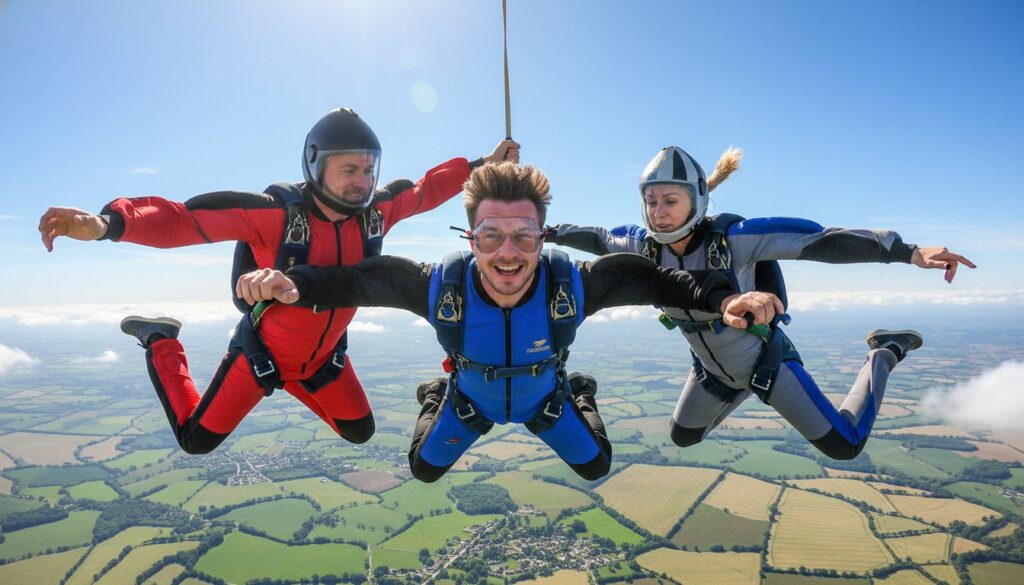
Ask anyone who’s done a skydive to describe it and you’ll notice something interesting — they almost all struggle. Not because it wasn’t memorable, but because the experience sits outside the normal vocabulary of things people do on a weekend. Falling at 120 mph from 15,000 feet doesn’t map neatly onto anything else in everyday life. Which is, of course, precisely the point.
Skydiving in the UK is more accessible than most people realise. You don’t need to travel to some remote airfield in the middle of nowhere, spend weeks in training, or remortgage your house to afford it. Here’s a straightforward guide to skydiving adventures and activities available across the country.
The Basics: Types of Skydiving Activities in the UK
Tandem Skydiving This is where almost everyone starts, and for good reason. In a tandem skydive, you’re harnessed to a fully qualified instructor who handles the technical side — exiting the aircraft, deploying the parachute, navigating to the landing zone. Your job is to enjoy it.
The freefall phase typically lasts 30 to 60 seconds depending on the exit altitude, during which you’ll be travelling at around 120 mph. At around 5,000 feet, the instructor deploys the parachute and the descent slows dramatically — the canopy ride down usually takes five to seven minutes and offers a completely different experience to the freefall: calm, quiet, and with a surprisingly clear view of the landscape below.
No prior experience is needed for a tandem skydive. Minimum age in the UK is 16 (with parental consent) and most centres set a maximum weight of around 100–110kg. The full experience from arrival to landing typically takes three to four hours, much of which is ground preparation and waiting for your slot.
Accelerated Freefall (AFF) If tandem skydiving is the introduction, AFF is where things get serious. This is the structured training programme through which people learn to skydive independently — and it’s considerably more involved than a single tandem jump.
The AFF course consists of eight progressive levels, starting with an intensive ground school covering body position, altitude awareness, emergency procedures, and parachute deployment. The first jump involves two instructors alongside you in freefall; as you progress through the levels, the support reduces until you’re jumping solo. Completion of all eight levels, plus the required number of additional jumps, leads to a full solo skydiving licence issued by the British Parachute Association (BPA).
The AFF course typically costs between £1,200 and £1,500 in the UK and takes most people a full season to complete, depending on weather and jump availability. It’s a genuine commitment — but for those who want to skydive on their own terms rather than strapped to someone else, it’s the only route that gets you there.
Indoor Skydiving Technically not skydiving in the traditional sense, but worth including because it offers the closest replication of freefall available without an aircraft. Vertical wind tunnels — such as those operated by iFLY across several UK locations — generate winds of up to 175 mph, creating a column of air you can float in, manoeuvre through, and genuinely fly within.
For beginners, indoor skydiving is an excellent way to experience the sensation of freefall in a completely controlled environment. For experienced skydivers, wind tunnels are used seriously for skills training — body position, stability, and canopy control all benefit from tunnel time in ways that are hard to replicate in the air.
Skydiving Locations in the UK
The UK has around 60 active parachute centres, most of which are affiliated with the British Parachute Association — the national governing body for the sport, which regulates training standards, equipment requirements, and safety procedures across all member clubs.
Some well-regarded centres for tandem skydiving adventures include:
- Skydive Hibaldstow (Lincolnshire) — one of the largest and busiest drop zones in the UK, with a strong safety record and regular lift availability
- British Skydiving (Langar, Nottinghamshire) — the BPA’s own centre, offering tandem jumps and AFF training
- Skydive Netheravon (Wiltshire) — operating from one of the oldest military airfields in the UK, with experienced instructors and a well-established club atmosphere
- Skydive St Andrews (Fife, Scotland) — offering coastal jump runs with views across the Firth of Forth on clear days
- Target Skysports (Cheshire) — popular in the north of England for both tandem and AFF training
Most UK drop zones operate year-round, though winter jumping is weather-dependent and slots can be harder to secure outside the main season of April to October.
How Safe Is Skydiving?
It’s the question everyone wants to ask but sometimes feels awkward raising. The answer is more reassuring than the activity’s reputation might suggest.
According to BPA statistics, the fatality rate for skydiving in the UK is extremely low — historically averaging less than one per year across the entire sport, against a background of hundreds of thousands of jumps annually. Tandem skydiving in particular carries a remarkably strong safety record, largely because the instructor brings years of experience to every jump and equipment is subject to rigorous maintenance and inspection regimes.
That said, skydiving is not a risk-free activity, and no responsible operator will tell you otherwise. What they will tell you is that the risks are well understood, well managed, and — for the vast majority of people — well worth it.
What to Do Next
If a tandem skydiving adventure is on your list, the first step is simply booking it. Most UK centres allow online booking, and prices for a tandem jump typically range from £150 to £250 depending on altitude and location. Charity skydives — where participants raise sponsorship to offset the cost — account for a significant proportion of first-time jumpers in the UK each year and are worth exploring if cost is a factor.
adventuro lists skydiving activities and adventure experiences across the UK, making it easy to find a reputable centre near you and take the leap — quite literally.
The aircraft door opens. The ground is a very long way down. And then you jump.