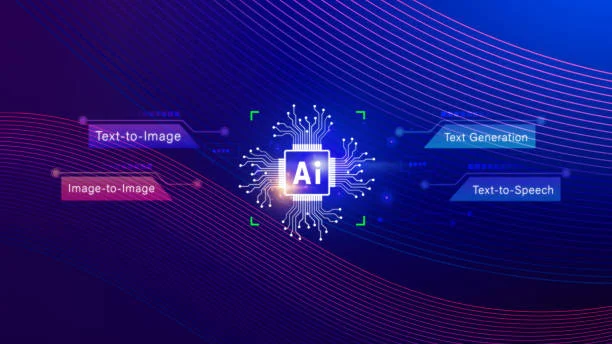
In today’s digital-first world, visuals are the language of communication. From social media posts and product showcases to educational materials and entertainment media, images shape how information is consumed and remembered. As demand for high-quality visual content grows, creators are searching for faster, smarter, and more flexible tools. This is where Image to Image AI emerges as a game-changing technology.
Rather than starting from scratch, Image to Image AI allows users to upload an existing image and transform it into a new version guided by prompts, styles, or reference aesthetics. The result is not just an edited picture but a reimagined visual that retains structural integrity while adopting new artistic direction.
This innovation is redefining creative workflows across industries, enabling individuals and businesses to produce compelling visuals with unprecedented speed and efficiency.
Understanding How Image to Image AI Works
At a technical level, Image to Image AI uses deep learning and diffusion-based models trained on vast image datasets. These models understand patterns such as composition, color harmony, textures, lighting behavior, and spatial relationships.
When a user uploads an image and provides a prompt — for example, “convert to watercolor painting” or “add cinematic lighting and rain” — the AI reconstructs the image while applying the requested transformation.
Unlike traditional filters that simply overlay effects, AI-driven transformation interprets context. It recognizes faces, backgrounds, depth, and materials, producing results that appear natural and coherent.
This capability allows users to:
- restyle images into artistic formats
- modify environments and backgrounds
- enhance lighting and atmospheric mood
- improve resolution and clarity
- create multiple stylistic variations instantly
The technology bridges the gap between photography, digital art, and design, making creative experimentation more accessible than ever.
From Enhancement to Reinvention
Early photo editing tools focused primarily on corrections. Image to Image AI expands the possibilities to complete reinvention.
A simple image of a park can be transformed into:
- a golden autumn landscape
- a snowy winter wonderland
- a fantasy world with glowing trees
- a futuristic cyberpunk city
This level of transformation allows creators to test ideas quickly without costly photoshoots or advanced 3D rendering.
For designers, this means faster concept exploration. For marketers, it enables rapid campaign localization. For everyday users, it turns ordinary photos into extraordinary visual experiences.
Enhancing Engagement with Animate Image AI
While static visuals are powerful, motion adds emotional depth and realism. Animate image ai technology extends the capabilities of Image to Image AI by introducing subtle movement and lifelike animation.
Instead of remaining frozen in time, images can now display:
- gentle facial expressions and blinking eyes in portraits
- flowing water, drifting clouds, or flickering lights in landscapes
- animated brush strokes in digital artwork
- atmospheric motion such as fog, rain, or glowing particles
This transformation makes visuals feel alive and immersive.
Animate image ai is especially impactful for:
- historical photo revitalization projects
- digital storytelling and documentaries
- memorial tributes and heritage preservation
- social media engagement and viral content
- museum and educational exhibitions
By adding motion without requiring full video production, creators can enhance storytelling while maintaining simplicity.
Bridging Still Imagery and Cinematic Storytelling with Script to Video AI
As visual content evolves, creators increasingly seek ways to convert ideas into dynamic narratives. Integratin Image to Image AI with Script to Video AI provides a seamless path from concept to cinematic storytelling.
A typical workflow may include:
- Transforming base images into stylized visuals using Image to Image AI
- Enhancing realism or adding motion using Animate image ai
- Organizing scenes according to a written script
- Using Script to Video AI to generate a complete video sequence
This process allows users to produce professional-quality videos without cameras, actors, or complex editing software.
For example:
- A startup can produce promotional videos from product photos.
- Teachers can transform diagrams into animated lesson videos.
- Content creators can turn travel photos into narrative journeys.
- Authors can visualize scenes from written stories.
Script to Video AI dramatically reduces production time and cost, making cinematic storytelling accessible to individuals and small teams.
Prompt-Based Editing: Creativity Through Conversation
One of the most revolutionary aspects of AI-driven imaging tools is prompt-based editing. Instead of navigating complex menus and sliders, users simply describe what they want.
Examples include:
- “Transform this portrait into a Renaissance painting.”
- “Add neon reflections and a rainy cyberpunk atmosphere.”
- “Change the background to a tropical sunset beach.”
- “Enhance lighting with soft cinematic shadows.”
This natural-language approach allows beginners to create professional visuals while enabling experienced designers to iterate rapidly.
Prompt-based editing also encourages experimentation. Users can generate multiple variations in seconds, compare styles, and refine outputs until the desired result is achieved.
Industry Applications Driving Adoption
Image to Image AI is quickly becoming indispensable across various industries.
Marketing and Branding
Businesses create region-specific visuals, seasonal campaigns, and personalized advertisements without expensive reshoots.
E-Commerce
Retailers generate lifestyle backgrounds, color variations, and promotional imagery to improve product appeal and conversion rates.
Film and Game Development
Concept artists use AI to explore character designs, environments, and visual themes rapidly.
Education
Complex concepts can be visualized through stylized diagrams and animated scenes for more engaging learning experiences.
Social Media Content Creation
Creators produce eye-catching visuals and animated imagery to increase engagement and reach.
Personal Creativity
Users restore old photos, experiment with artistic styles, create avatars, or animate treasured memories.
Advantages That Make Image to Image AI Essential
The rapid growth of AI-powered imaging tools is driven by several major advantages:
Efficiency
Transform visuals in seconds instead of hours.
Accessibility
No design expertise required.
Creative Exploration
Generate multiple styles and interpretations instantly.
Cost Savings
Reduce dependence on studios, equipment, and editing teams.
Scalability
Produce large volumes of content quickly for campaigns and platforms.
These benefits empower both professionals and everyday users to create high-impact visuals with minimal resources.
Ethical Considerations and Responsible Use
With powerful creative tools comes responsibility. Ethical use of AI-generated visuals is critical to maintaining trust and integrity.
Best practices include:
- disclosing AI-generated content when appropriate
- respecting copyright and ownership rights
- avoiding deceptive or misleading visual manipulation
- using AI responsibly in journalism and public communication
Responsible usage ensures that innovation supports creativity while preserving authenticity and trust.
The Future of AI-Powered Visual Transformation
As AI models continue to evolve, Image to Image AI will become even more sophisticated. We can expect:
- real-time image transformation and animation
- improved lighting realism and material accuracy
- deeper personalization based on user preferences
- seamless integration with augmented and virtual reality
- collaborative AI tools that adapt to creative workflows
Combined with Animate image ai and Script to Video AI, the future points toward a unified creative ecosystem where still images, animation, and video storytelling merge into a seamless experience.
Conclusion
Image to Image AI represents a major leap forward in digital creativity. By enabling users to transform existing visuals into new artistic expressions, animate still images, and build narrative videos, the technology empowers creators at every level.
Whether enhancing marketing campaigns, revitalizing historical photos, producing educational content, or experimenting with artistic styles, AI-driven visual transformation removes traditional barriers to creativity.
As tools continue to improve and workflows become more integrated, the ability to convert imagination into compelling visual experiences will only become more accessible. In this new era, creativity is no longer limited by technical skill or production resources — it is guided by ideas, powered by AI, and brought to life with extraordinary speed.