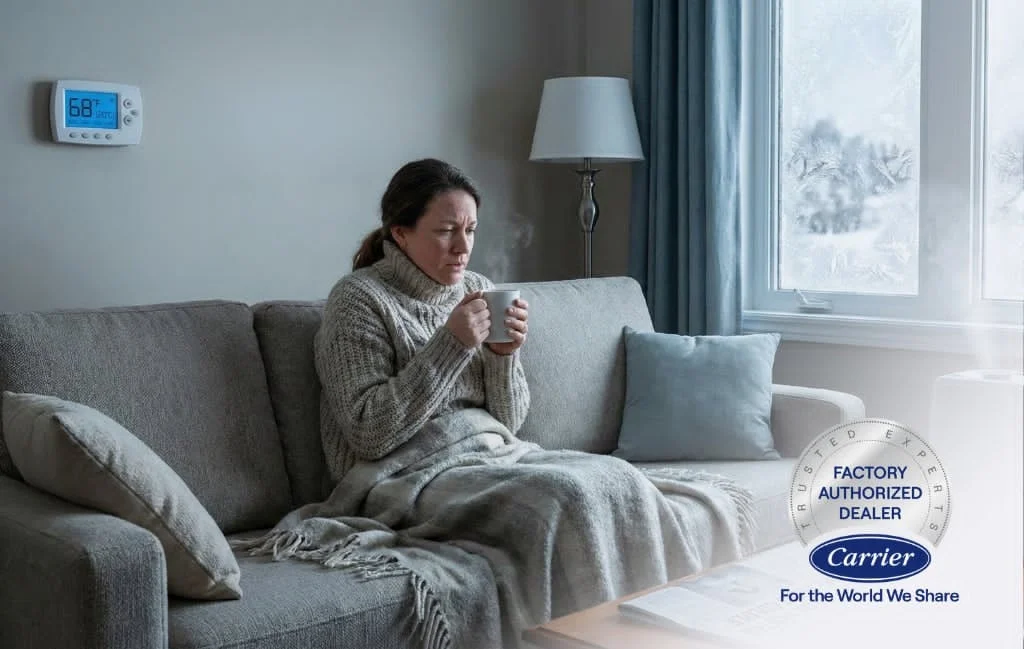
Even with the heating system working properly, do you feel chilly inside the house in the winter? The source of the problem could be caused by something other than your HVAC system, such as a low indoor humidity level. Dry air inhibits your body’s ability to keep warm naturally. As a result, your home can feel much colder than indicated on the thermostat.
Another effect of low humidity is on your health and well-being. Effects may be in the form of dry skin and static shocks as well as potential damage to wooden floors or furniture.
This article will explain how winter dryness impacts how cold your home will feel and the benefits of installing a humidifier by an HVAC contractor to improve your ability to feel warmer and more comfortable in your home while conserving energy.
Understanding the role of Humidity in Home Comfort
Listed below are the key roles of Humidity in maintaining Home Comfort:
Better Warmth Indoors
The ideal indoor humidity level allows your home to naturally be warmer. The moisture in the air slows down the rate of heat being lost from your body, and so you feel warm and comfy even on cold days without having to crank up the heat in your house. You’re getting to enjoy feeling warm in your house while saving money.
Healthy and Comfortable Air
With balanced humidity, your skin will stay soft with no chance of becoming dry and irritated. The moisture in the air will help to keep your airway and throat comfortable with limited discomfort from the dry air during the winter months. If your home has the right humidity level, it will be much more pleasant and comfortable to live in.
Reduces Static Electricity
When the humidity in your home is low, there is a higher chance of static electricity forming, which causes small electric shocks and damages fabric and electronics. Having proper humidity levels will help reduce the risk of creating a build-up of static, making your home a safer place to live and easier to navigate.
Preserves Your Home
The correct humidity levels will help prevent wooden furniture, floors, and doors from cracking, shrinking, or warping. It will help to keep your home’s interior quality for many years by maintaining the proper humidity level.
Winter Humidity: The Unknown Reasons Your Home Is Feeling Colder
Heat Loss Due to Low Humidity
Because dry air reproduces the body’s moisture, a lack of humidity will allow the body to cool down more rapidly than if the humidity level were normal. This is why you may feel colder than the actual temperature in a room that has very low humidity.
With a dry air environment, you cannot rely on the insulating properties of the water vapor surrounding your body, which means that the air you breathe will not feel as warm as it would under normal circumstances if that insulation is present.
Heating Further Dries the Air
Most outside air is dry, which is compounded by the fact that when it is heated indoors, it is then drier still. As such, dry air is less effective at holding in heat and therefore will often feel even colder than it would if the air were able to hold warmth.
Perception of Cold in Dry Air
The thin and sharp feeling that dry air creates can directly impact how warm/comfortable we feel in a room. If the temperature is comfortable, but the air is dry, the room will still appear as if it is not; this experience is part of what makes winter difficult to endure.
Dry air in winter also causes your home to feel colder due to the lower humidity content.
Faster Cooling of Air Near the Body
When a thin layer of warm air covers your entire body, this layer is rapidly dispersed in an arid environment. This leads to a quicker cooling sensation.
The quicker dissipation of the thin layer of warm air causes discomfort in areas set to higher temperatures. The effect of low humidity will accelerate the sense of cold, particularly inside.
Expert Humidifier Installation to Maintain Optimal Humidity
Low indoor humidity is a hidden reason why homes feel colder in winter. Proper moisture levels help your home feel warmer, protect your skin and respiratory system, and prevent damage to wooden furniture and floors.
Infiniti Home Comfort, with over 15 years of experience, can help you address common winter humidity problems that make your home feel colder. Their expert humidifiers installation services ensure your home maintains the right moisture levels, improving comfort and protecting your skin, respiratory system, and wooden interiors from dryness.
Key Takeaways
The low levels of indoor humidity during winter can make a house feel cooler than it really is. Low humidity means more heat escapes, and it makes homes less insulated and creating a chillier environment. However, controlling the levels of humidity has many benefits, including providing warmth, protecting the skin and airways from dryness, and helping to maintain wooden objects and architectural features within the home.
By maintaining proper levels of humidity within the home, a more comfortable, cozy environment can exist throughout the winter season.