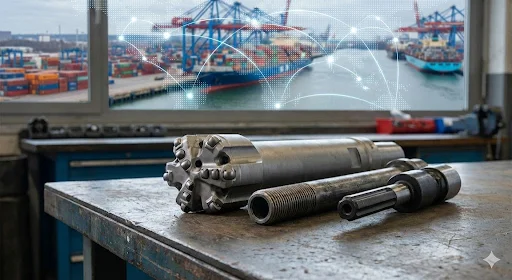
If you talk to any drilling project manager in 2025, a common theme tends to come up: the drilling tools themselves haven’t changed much, but the environment required to deliver them certainly has. Steel and carbide markets have become less predictable, freight routes shift with little warning, and even routine consumables sometimes face unexpected delays. Because of this, procurement teams that once emphasized securing the lowest unit price increasingly focus on something more fundamental—reliability. And this shift is still ongoing, shaped by supply chain conditions that continue to evolve through 2025.
Why Supply Chain Disruptions Now Affect Engineering Decisions
Not long ago, drilling tool procurement was largely driven by technical fit: Does the bit suit the geology? Does the shank match the hammer? Are the anchor bars compatible with the design?
Those questions still matter—but supply chain volatility has elevated a different set of concerns. Many procurement teams now also ask:
- Can this supplier maintain a predictable lead time?
- Will this specification remain available throughout the project?
- How much variability might we see between batches?
- Does the manufacturer control key processes such as heat treatment and QC?
These questions tend to push decision-makers toward suppliers with more integrated production capabilities and steadier logistics footprints. Companies like Sinodrills—which maintain multiple product lines and in-house manufacturing—often fit this profile, making them relevant examples of how the market is adapting. This shift is less about branding and more about reducing uncertainty that can affect schedules and operating costs.
The Supply Chain Realities Behind Today’s Procurement Pressure
1. Steel and Carbide Prices Have Become Less Predictable
Alloy steels, carbide inserts, and heat-treated components form the backbone of drilling tools. Fluctuations in these materials can make it harder for procurement teams to rely on long-term pricing or plan budgets accurately. Manufacturers with stable material sourcing arrangements may help reduce some of this variability.
2. Manufacturing Capacity Constraints Can Slow Key Product Categories
Processes such as forging, CNC machining, and heat treatment can create bottlenecks, particularly for DTH bits, shank adapters, and anchor bars. When a project relies on several small suppliers, the chance of encountering at least one bottleneck increases.
This is one reason some teams prefer working with suppliers that control more of their own production steps.
3. Logistics Instability Makes Lead Times More Uncertain
Freight congestion, changing customs rules, and shifting ocean routes can all affect delivery times. In industries where tool availability directly influences daily progress, even small delays can accumulate quickly.
4. Multi-Category Procurement Is Becoming More Common
Some contractors report value in consolidating multiple tool categories—top hammer, DTH, geotechnical anchors, and rotary tools—under fewer suppliers. This can help reduce paperwork, compatibility issues, and fragmented shipments.
Integrated manufacturers are often better positioned to support this kind of consolidation.
From Supply Chain Chaos to New Procurement Priorities
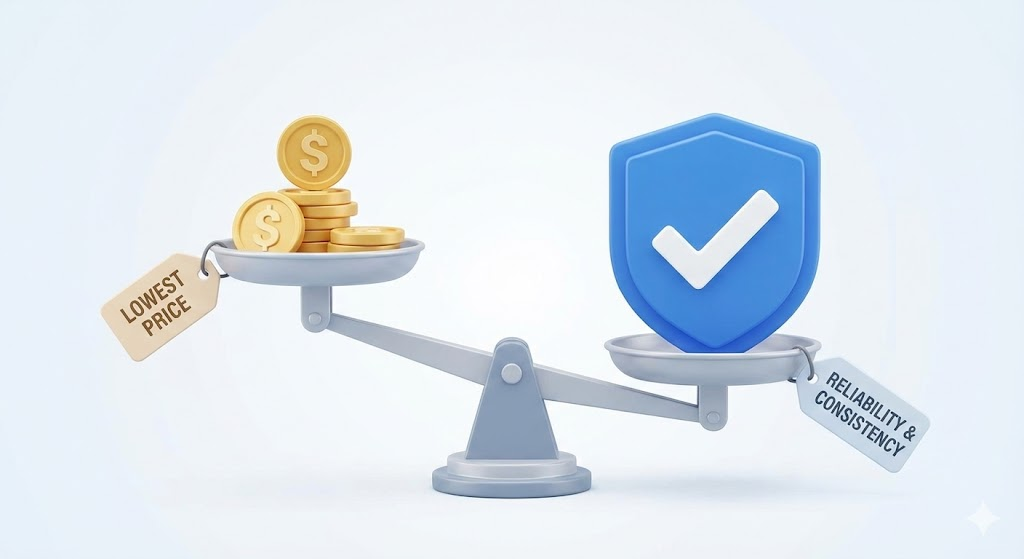
Due to these pressures, Many procurement teams have begun updating how they evaluate drilling tool suppliers. Some recurring priorities include:
1. Consistency Over the Lowest Price
While cost-per-meter still matters, many teams now acknowledge that unpredictable availability can ultimately cost more than a slightly higher unit price.
2. Standardization Across Product Lines
When tools come from different factories or distributors, small differences in tolerances or materials can create variability in performance. Integrated production can help reduce these inconsistencies, though its effectiveness depends on each manufacturer’s internal QC.
3. Reducing SKU Fragmentation
Relying on multiple suppliers for bits, couplings, rods, and bars can introduce extra complexity. Some procurement teams now opt for manufacturers—such as Sinodrills—that offer broader product coverage to simplify logistics and compatibility.
This trend doesn’t apply to every project, but it is becoming more common.
4. Technical Support as a Selection Factor
In many projects, the ability to troubleshoot wear patterns, optimize impact/flushing parameters, or recommend more suitable bit geometries is becoming part of the procurement evaluation process—not just an afterthought.
How Geology Influences Supplier Selection in 2025
Supply chain considerations don’t replace engineering—they intersect with it. Different ground conditions place different demands on tool availability and supplier capability:
Hard Rock Projects Depend on Reliable DTH Supply
Mines and quarries often require consistent deliveries of DTH bits and hammers to maintain production plans. Sudden shortages can quickly disrupt operations.
Fractured or Loose Formations Require Anchor System Continuity
Tunneling and infrastructure projects usually depend on long runs of self-drilling anchor bars, couplers, and sacrificial bits. Tool substitutions mid-project can affect installation characteristics or load expectations.
Multi-Phase Projects Benefit From Unified SKUs
Contractors handling drilling, anchoring, and support phases often prefer suppliers that maintain consistent specifications across product families.
This reduces the chance of compatibility issues or unexpected performance differences.
A Practical 2025 Procurement Framework
While every project is different, procurement teams often find it useful to apply a simple decision model:
1. For time-critical projects:
Prioritize suppliers with demonstrably stable inventory and reliable logistics.
2. For multi-formation or multi-phase projects:
Choose suppliers capable of delivering several tool categories under unified specifications.
3. For deep or straightness-critical drilling:
Check the supplier’s consistency in DTH tool production and tolerance control.
4. For unstable ground or anchor-heavy work:
Ensure long-term availability of matching bars, couplers, and drill bits to avoid mid-project changes.
5. For multi-year frameworks:
Evaluate suppliers based on production stability, technical support strength, and their ability to adapt to shifting supply chain conditions.

Conclusion: Reliability Comes From Both Tools and the Supply Chain Behind Them
In 2025, drilling tool procurement is no longer only about carbide grade, steel hardness, or bit geometry. It now reflects a broader equation involving supply chain reliability, production consistency, and the ability to support multiple tool categories throughout a project.
Contractors who stay on schedule increasingly rely on suppliers that combine:
- Integrated manufacturing
- Predictable output
- Clear QC traceability
- Multi-category coverage
- Steady logistics paths
- Practical engineering support
As one procurement lead commented during a recent discussion:
“We’re not just choosing tools anymore—
we’re choosing how much uncertainty we can afford.”
And as supply chain conditions continue to shift globally, drilling tool procurement strategies will likely keep evolving alongside them.