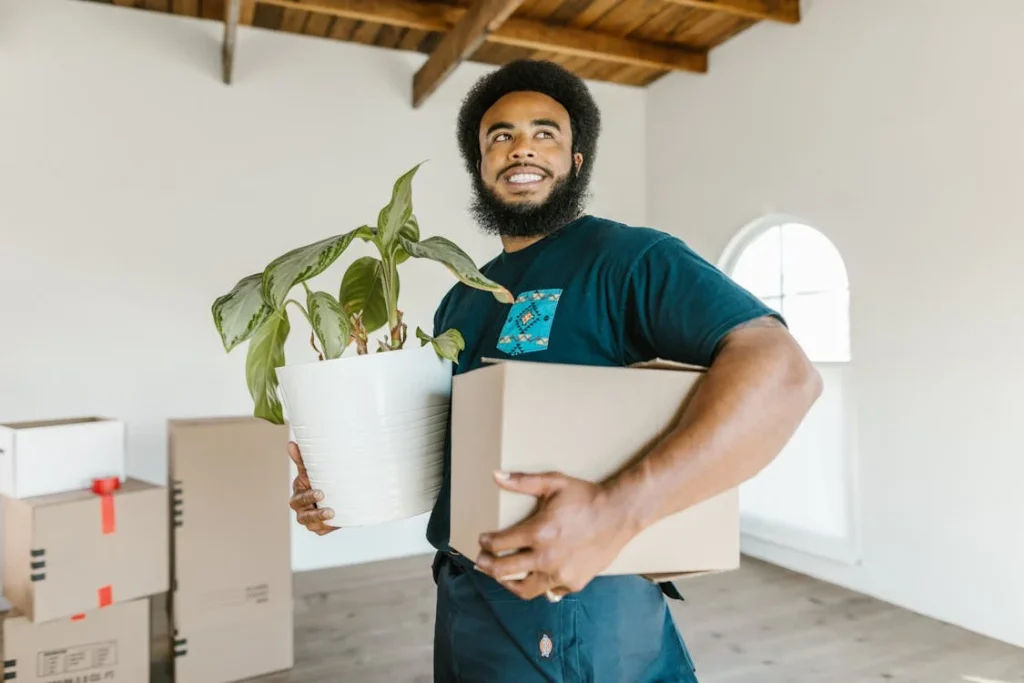
Moving doesn’t really begin on moving day. It starts earlier, usually in a quiet moment.
Packing sounds like a physical task: boxes, tape, labels. However, decluttering turns it into something else entirely. You start deciding what follows you into the next space and what stays behind. Not in a dramatic way. Just one item at a time. And those decisions start adding up.
Some things feel easy to let go of. Others take a second. You hold them, pause, then place them in a different pile. Slowly, the volume changes. The house begins to feel lighter without anything obvious disappearing all at once. That’s usually when something clicks. The next home isn’t going to feel the same. Not because it’s a different layout. Because you’re not bringing the same version of your life into it.
Decluttering Before a Move Changes How Much You Actually Need to Transport
At first, it looks like everything needs to go. Every room feels full. Every shelf has something on it. Then you begin sorting. You pick up one item, then another. Some go into a box. Others don’t. The piles slowly separate. Things you use. Things you forgot about. Things that don’t quite belong anymore. After a while, the volume shifts. Not in a dramatic way. You just notice there’s less to deal with. Fewer things to wrap. Fewer boxes forming in the corner. The move starts feeling smaller somehow. That’s usually when the logistics change, too.
You might start thinking differently about how to move everything. What kind of help you actually need. Whether working with local movers still looks the same now that the load isn’t what you expected. It’s not just about effort, but about realizing you’re not moving the same amount of life you thought you were.
Pre-Move Sorting Shifts Focus from Storage Capacity to Daily Functionality
Before decluttering, storage tends to drive everything. Where will this fit? Which cabinet can hold that? How many bins will you need to organize what’s already there? The focus stays on accommodating everything. Then you start removing things. And the question changes. Instead of asking where something will go, you start asking if it needs to be there at all. What actually gets used. What sits untouched. What just exists because it always has. That shift feels subtle at first.
Though it changes how you picture the next home, you stop imagining rows of storage filled. You start thinking about how you move through a space instead. Where things should sit so they’re easy to reach. What needs to be nearby? What doesn’t need a place at all? The layout starts forming around habits instead of storage limits.
Letting Go of Bulky Items Alters Room Proportions in the New Home
Large items carry weight beyond their size. A heavy cabinet. A wide sectional. A table that takes up more space than you remember. They shape how a room works, sometimes without you noticing. Until you consider not taking them. That’s usually where things get interesting. You picture the next home without that oversized piece sitting in the middle of the room. The space feels different already. More open. Less defined by one object. You might start imagining alternatives. A smaller table. A lighter piece of furniture. Or maybe nothing in that spot at all. Just space.
Rooms begin to expand in your mind. Not because they’ve changed physically. Because the things that once filled them aren’t there anymore.
Decluttering Reduces the Urge to Recreate Your Previous Layout Exactly
There’s a tendency to rebuild what you already have. Same couch placement. Same arrangement of furniture. Same flow from one room to the next. It feels familiar, so it makes sense at first. Then decluttering interrupts that. You arrive at the next space without the full set of items that defined the old one. A missing chair. A smaller collection of furniture. Less décor ties everything together. The old layout stops fitting.
You try to place things the same way, and it doesn’t quite work. Something feels off. That’s when you pause. And start adjusting. You move one piece slightly. Then another. You try a different arrangement without meaning to. The room begins forming its own logic instead of copying the last one.
Letting Go of Outdated Items Prevents Style Carryover into the New Space
Some items carry more than one function. A style that made sense when you bought them. Colors that once fit the room they came from. They don’t always feel wrong, though they don’t quite belong either. Decluttering brings that into focus. You hold something and realize it doesn’t match where you are anymore. Not in a dramatic way. Just a quiet mismatch. And once you let it go, that old reference point disappears with it. The new home starts with fewer visual expectations.
You’re not trying to match what used to be there. You’re not working around pieces that define the space too strongly. The room stays open a little longer before taking shape. That pause matters.
Decluttering Reduces the Need for Hidden Storage Solutions
Hidden storage usually grows out of necessity. Too many things, not enough space. So, you add bins. Drawers. Boxes that slide under furniture. Storage inside storage. It works. However, it creates another layer to manage. Decluttering changes that dynamic.
You bring less into the new space, so the need to hide things softens. You don’t reach for containers as quickly. Items sit where they’re used instead of being tucked away. It feels simpler. You open a drawer and find what you’re looking for without moving three other things first. Shelves stay visible instead of being packed. The space feels more direct. Less hidden. More accessible.
Fewer Items Allow Architectural Features to Stand Out More Clearly
Houses have details you don’t always see right away. A window that frames the outside in a certain way. The shape of a wall. The way light hits the floor at a specific time of day. Those things get lost when the room is full. Decluttering changes what you notice.
You start seeing the structure itself. The lines of the space. The way one room connects to another. Features that were always there, just hidden behind everything else.
Pre-move decluttering doesn’t announce itself as a redesign. It happens quietly. You sort through things. Make small decisions. Set items aside. At the time, it feels like preparation. Just getting ready to move. Then you arrive in the new home. And something feels different. The rooms don’t fill up the same way. The layout doesn’t follow the old patterns exactly. There’s more space than you expected. Not just physically, but in how the house takes shape.