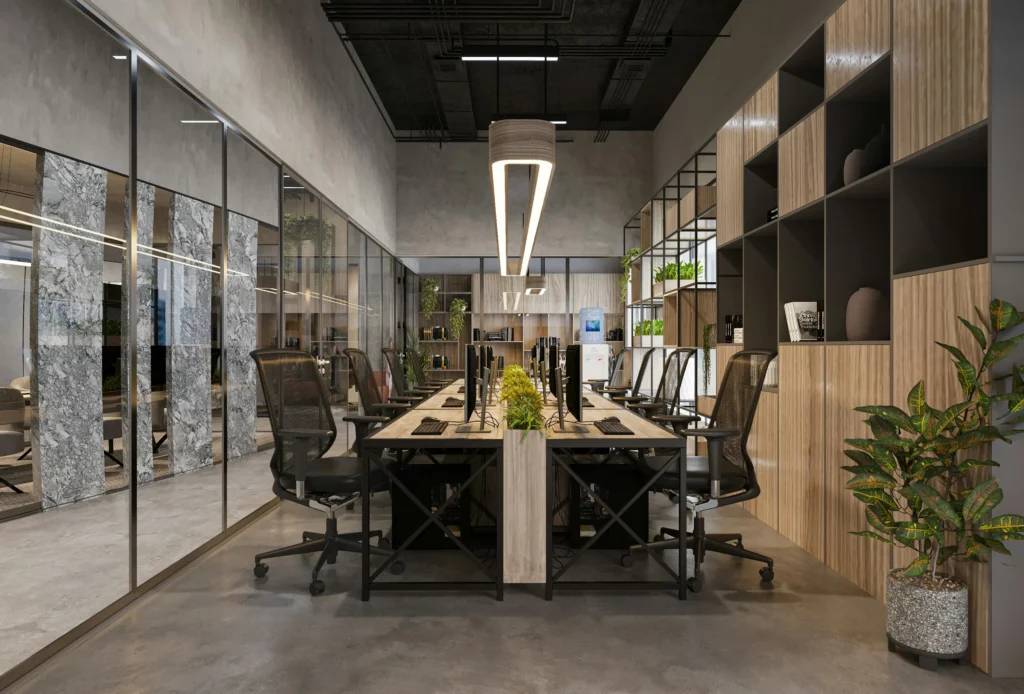
The modern workplace no longer fits neatly into a single definition. With employees splitting their time between home offices, coworking spaces for Hybrid Teams, and traditional headquarters, organizations are rethinking what an office should provide.
Data show that around 88% of employers in the US offer some form of hybrid work option. Around 25% offer this option to all employees. New job postings in the Q4 2025 reflect this trend. While 24% of these postings were for hybrid work, 11% were for fully remote positions.
Thus, instead of focusing on rows of desks and fixed seating, companies now see their physical spaces as hubs for collaboration, creativity, and connection. This shift is changing how leaders approach design, planning, and long-term investment in their work environments.
The Shift From Fixed Desks to Flexible Zones
For decades, office layouts centered on assigned workstations, reflecting a predictable daily routine. Hybrid work has disrupted that pattern.
Employees may be on-site only a few days each week, which means large areas can remain empty if space is not planned with flexibility in mind. As a result, many organizations are moving toward open zones that can serve multiple purposes throughout the day.
Some companies, like Amazon, have asked their staff to return to the office five days a week. The company also notified employees that it will end hot-desking. However, others want to work in shared spaces. About 62% of employers aim for 1.5 employees per desk through the hot-desking option.
These spaces often include collaborative areas for team meetings, quiet corners for focused work, and shared resources that can be reserved as needed. The goal is to create an environment that adapts to different work styles rather than forcing employees into a single format.
How can companies manage personal storage in offices without assigned seating?
Without permanent desks, employees still need secure places for personal items and work materials. Many organizations introduce lockers, mobile storage carts, or digital storage systems to reduce paper dependency. These solutions maintain convenience while keeping shared spaces organized and easy to reset for the next user.
Planning for Movement and Collaboration
Hybrid teams tend to use the office more for connecting than for completing individual tasks. This has led to layouts that prioritize movement and interaction Hybrid Teams. Wider walkways, informal meeting spots, and open gathering areas encourage employees to naturally cross paths and share ideas.
To support this kind of environment, many organizations are turning to data-driven planning tools that track how spaces are used over time. Understanding which areas are popular and which are underutilized helps leaders make informed decisions about redesigns or expansions.
Businesses are also collaborating with experienced professionals and service providers to bring their ideation to life. Space management solutions that offer comprehensive services, covering everything from furniture and prefabrication to specialty and fulfillment, are helping brands build custom office layouts to meet their unique needs.
According to SPACESINC, these experts can take a consultative approach to addressing companies’ specific needs. They can understand the client’s needs, challenges, and goals to craft solutions accordingly.
Technology as a Design Partner
Artificial intelligence (AI) is transforming office design by using data to understand employee behavior and preferences. This helps leaders make informed decisions about layouts, collaboration areas, and space usage. AI tools allow companies to analyze patterns that were previously based on assumptions, improving responsiveness and efficiency in workspace planning.
Real-world examples show that AI is already being used to optimize collaboration spaces, energy use, and flexibility. Some workplaces are seeing increased attendance after redesigning based on data insights.
Booking systems for desks and meeting rooms, occupancy sensors, and mobile apps are also in use. They give employees more control over their on-site experience. Coworking spaces are already using such technology to manage space more efficiently.
The coworking space management software market is valued at $1.7 billion in 2024. It was expected to grow to $1.94 billion in 2025. Moreover, it is estimated to grow at a CAGR of 13.7% from 2025 to 2029. This would bring the market to a whopping $3.24 billion.
Data collected with the technology provides valuable insights to organizations. This feedback loop allows companies to test new layouts and adjust them over time.
How can companies protect employee privacy when using workplace tracking tools?
Transparency is essential when collecting usage data. Organizations should explain what information is gathered, how it will be used, and how it benefits employees. Anonymizing data and limiting access to only necessary decision-makers can help build trust and address privacy concerns.
Supporting Well-Being Through Thoughtful Design
Hybrid work models, which blend in-office and remote days, can boost both employee well-being and productivity. It gives workers flexibility and autonomy while preserving opportunities for in-person collaboration.
Research shows that many employees prefer hybrid schedules, reporting benefits such as reduced isolation, improved focus, less commuting time, and stable or increased productivity. Organizations that adopt flexible arrangements often see stronger engagement and satisfaction. Hybrid setups may also support inclusivity by enabling access to a broader talent pool.
Hybrid work has placed a stronger emphasis on employee well-being, and office layouts are reflecting that priority. Natural light, access to quiet areas, and comfortable communal spaces can make on-site days more appealing and productive. When employees feel that the office offers something they cannot easily replicate at home, they are more likely to use it as intended.
Spaces that accommodate different working styles, physical needs, and cultural preferences help create a sense of belonging. This consideration is especially important for hybrid teams, where maintaining a shared company culture can be more challenging.
How can office design encourage healthy work habits throughout the day?
Incorporating features such as standing desks, walking paths, and accessible break areas can encourage employees to move regularly. Placing amenities such as water stations and relaxation spaces in visible locations also reminds people to take short breaks and stay comfortable.
Hybrid teams have transformed the office from a daily destination into a strategic resource. Layouts now aim to support connection, creativity, and efficiency rather than simple occupancy.
Through flexible design, thoughtful use of technology, and attention to employee experience, organizations can create environments that grow alongside their evolving work models. The result is a workplace that feels purposeful, responsive, and aligned with how people actually work today.
There’s more to discover! Click to explore ideas and tips that inspire at Management Works Media.