A Shift in Homeowner Priorities
Residential solar is being approached differently than it was in the past, notes leading property management company, Shannon Property Management. Homeowners are no longer beginning with questions about roof space or solar panel count. Many want to understand how to keep their home powered when the grid fails. Longer outages, higher utility bills, and homes that depend heavily on electricity have all contributed to this change in mindset. This has pushed battery storage into a central role, especially as more families explore options like home battery backup. Solar production is still key, but its purpose is shifting toward supporting the battery instead of defining the entire system.
Contractors are also finding that starting the conversation with storage sets clearer expectations from the beginning. Many homeowners still assume solar alone will keep everything running during an outage, so they need straightforward guidance on what solar can and cannot do without a battery. Addressing this early prevents misunderstandings later. When the discussion centers on what the system must power—and for how long—the design becomes far more intentional and avoids costly rework. This approach also helps homeowners understand why storage sizing drives the overall system rather than panel count alone.
Modern homes rely on electricity in ways that were not common even a few years ago. Heat pumps, induction cooking, EV chargers, smart appliances, and work-from-home lifestyles all depend on steady, uninterrupted power. When these demands are part of daily life, traditional backup options often struggle to keep up. Families want a system that delivers reliability, energy resilience, and a genuine sense of control, and a battery-backed or Home Battery Backups design fits naturally into that expectation. As household technology continues to expand, homeowners increasingly want a smart home that keeps up with their lifestyle choices.
Why a Storage-First Approach Reduces Design Issues
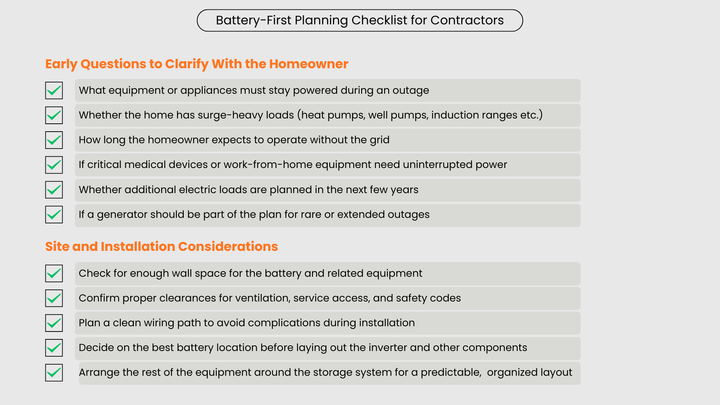
Many design problems begin when the battery is added late in the planning process or when expectations are unclear. This can lead to wiring changes, equipment swaps, or callback visits. Starting with storage avoids much of this. Early discussions usually focus on what needs to operate during an outage, whether the home has surge-heavy equipment (like a well pump), how long the occupants want to function without the grid, and whether new electric loads will be added later. Some homeowners also want to know if a generator should be considered for complete energy resilience circumstances. Once these pieces are understood, the solar layout can be sized with purpose instead of guesswork Home Battery Backups.
Storage systems also require physical planning. Batteries need proper clearances, dedicated wall space, and a path for wiring that avoids complications later. When the design begins with the battery’s location, the rest of the equipment tends to fall into a more predictable arrangement. This reduces improvising in the field and leads to cleaner installations.
Smart Load Management in Modern Homes
As homes become more connected, electrical design continues to evolve. Smart load centers and similar tools give contractors a way to adjust circuits without major rewiring. Homeowners gain more visibility into how their home behaves during an outage, which helps them understand how their system is actually performing. These tools can also prevent the need to oversize storage in homes with varied or seasonal loads. By offering more flexibility, smart load management often determines whether a backup system feels simple and predictable or limited and rigid Home Battery Backups.
Daily Use and Time-of-Use Rates
More utilities are adopting time-of-use pricing, and homeowners often want to know how storage interacts with these schedules. They generally need clarity on when the battery collects energy, when it supplies it, how the inverter guides those choices, and whether the system is designed for daily cycling or occasional outages. Understanding these points early helps prevent misunderstandings and ensures the final system operates in a way that aligns with the homeowner’s expectations.
When a Generator Still Belongs in the Plan
Some regions experience long stretches of limited sunlight or require support for equipment that draws large surges. In those cases, a small generator can play a helpful role during extended outages. It is not a replacement for storage. It simply offers an additional layer of support when the weather or grid conditions push the system beyond what the battery alone can cover. Discussing how the generator and battery will work together ensures the homeowner understands how their system will behave in rare but challenging situations.
Conclusion: A New Direction for Residential Solar
The trend toward storage-centered design is likely to continue. Homes are becoming more electrified, weather patterns are shifting, and many families want greater control over their energy use. A battery-first approach gives contractors and homeowners a clearer path with fewer surprises. It supports more predictable performance during outages, reduces design challenges, and responds to how people rely on electricity today. As the desire for resilience and stability grows, storage will remain a defining feature of residential solar projects across the United States.
Discover more reads that deliver fresh perspectives, tips, and ideas you can use now.