
Development of raw land into a successful commercial building is not as simple as having concrete and walls up. It is a well-planned trip, which demands insight, planning, and a good portion of patience. Whether you are looking at that piece of empty land in the center of town or looking to invest in land that is yet to be developed, knowing how the transformation process works may be the difference between a lucrative venture and a nightmare.
Begin With a Good Feasibility Study
You should find out whether your vision is sensible before you plunge into committing the first dollar. A feasibility study analyzes the viability of your project from various perspectives. This entails the examination of demographics, income levels, traffic in the surrounding area, and local competition. You want to know who your possible tenants or customers are and whether there is a real demand for what you intend to construct.
Physical restrictions such as soil conditions, availability of utilities, water and sewage connections, and other possible environmental concerns should also be evaluated in the study. Sometimes what seems ideal on paper faces issues of soil instability or lacks good access to infrastructure. It is crucial to find out about these issues early enough before they cause expensive surprises in the future.
Navigating Zoning Laws and Regulatory Requirements
Here’s where things get real. Zoning dictates what you are and are not allowed to construct on your land, and such guidelines change greatly depending on the area. Your parcel could be zoned for retail use but not industrial, or it could be restricted to a certain height that constrains your building plans. You will have to study zoning ordinances in the area to find out whether your intended use is permissible.
The process itself can be daunting as commercial developments often involve a series of approvals. You should anticipate obtaining building permits, grading permits, utility permits, driveway permits, and possibly environmental clearances. In case there are wetlands or other environmentally sensitive areas on your lot, you may require more impact permits. This process can be simplified with the involvement of local planning departments at the beginning and the advice of legal professionals.
Get the Right Financing
Building a commercial building is a huge capital investment and the majority of developers depend on specialized financing. Construction loans are short-term loans specifically meant to finance building expenses; these are usually between 12 to 36 months. Such loans typically work on an interest-only basis during construction, making them less of a financial burden while you are building.
Disbursement of the loan proceeds is done in phases as the work goes on to ensure the money is utilized as required by the project. Most developers later transform these into long-term commercial mortgages after the building is finished and earning income. To have a successful funding process, it is necessary to have a clear financial plan projecting realistic figures for construction costs and future revenue.
Collaborate with Professional Design Teams
After you have the viability and funding, now is the time to get the professionals. Quality architectural design services take your idea and develop it into clear specifications that are well within building codes and match market expectations. It is a stage that requires the collaboration of various professionals, with architects designing the general layout, structural engineers making sure that the structure is sound, mechanical engineers designing the heating/air conditioning and plumbing systems, and electrical engineers designing the electrical supply.
The design process normally undergoes a series of stages beginning with early ideas and ending with highly detailed technical drawings. In design development, the decision on material choices is finalized, and all systems in the building are aligned and coordinated to prevent conflicts. Such teamwork ensures your completed building performs effectively and attracts your target market.
Collaborate With Veteran Constructors
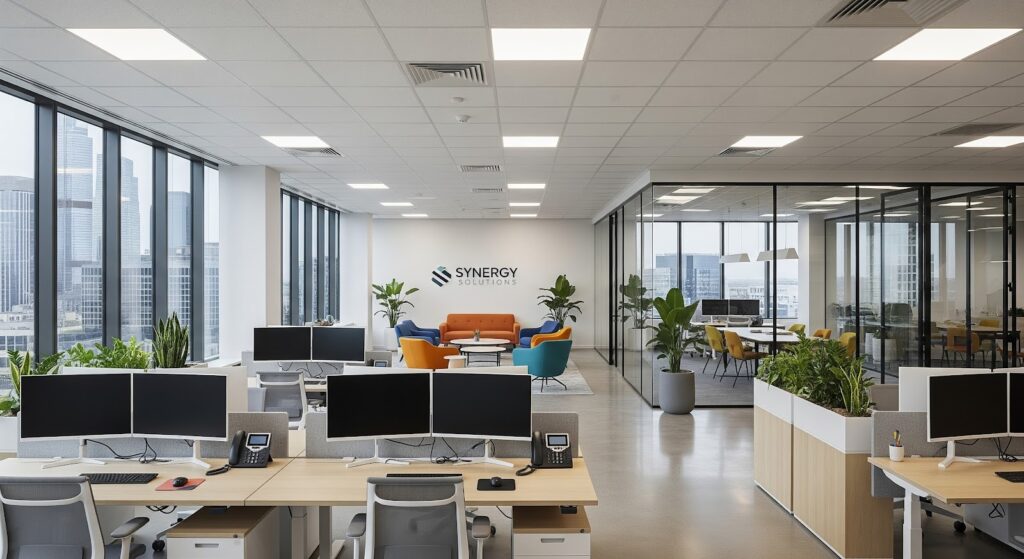
Good plans will do no good without good execution. Here is where Commercial Construction Services come into play for your project. The complicated job of converting your empty lot into a working building is done by professional construction teams who handle the earthworks and pour the foundation, as well as exterior construction and interior finishes.
Construction phases are logical: first comes site preparation and grading, then the foundation, followed by exterior construction, building framing, and roofing, and finally the interior, which includes electrical systems, flooring, and fixtures. Skilled constructors organize various trades, scheduling, quality control, and budget control. They also handle on-site preparation such as landscaping and paving as well as off-site work such as access road connections.
Create an Intelligent Leasing Program
This is one of the first things that one should consider when developing land, not when the structure is complete. The way you are going to make a profit—whether by leasing conditions, pricing models, or types of tenants—should guide your design and construction decisions.
It is possible to start acquiring tenants at an early stage of development. After determining the type of tenant you are targeting, you can begin implementing measures to contact and attract them. In the case of retail developments, it may involve focusing on certain classes of businesses that are complementary to each other. In the case of office buildings, you can target growing industries in your locality. The presence of tenants in a queue prior to or shortly after completion is a significant boost to your financial performance.
Turning Dirt Into Dollars
Transforming empty land into a lucrative retail area is one of the most rewarding projects in real estate building. It involves thorough research, regulatory compliance, good funding, professional design, solid construction, and proper acquisition of tenants. All elements are crucial to the general success of your project. Though it requires a lot of labor and capital investment, the end result—a physical property that earns a constant flow of money or a huge increase in value—makes it worth it to those who take a calculated and professional approach.