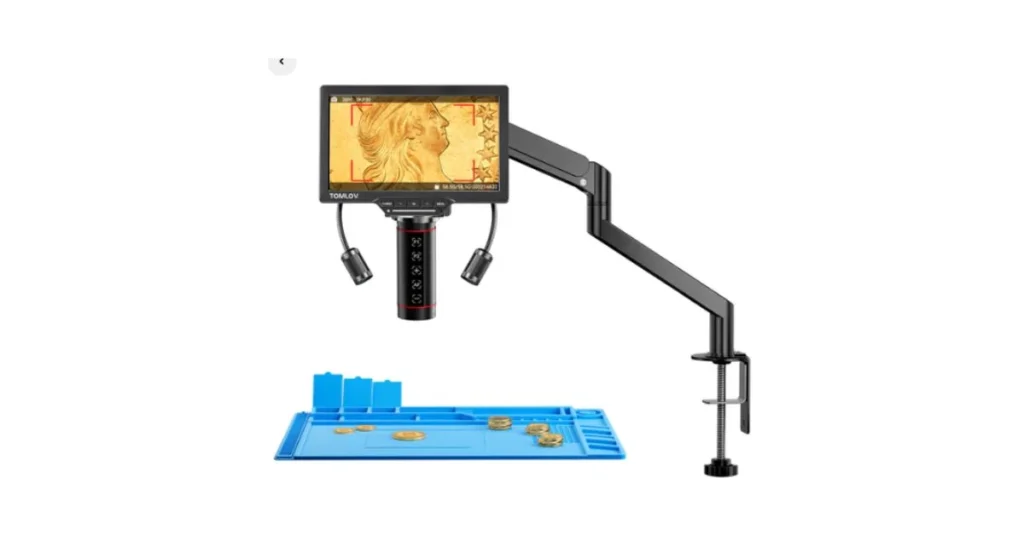
If you have ever struggled to see fine details clearly while repairing electronics, building models, or teaching hands-on subjects, you are not alone. Traditional magnification tools often fall short once real work begins.
This guide explains how 3D microscopes address those limitations, where they are most useful, and what to consider when choosing one for hands-on work and learning.
Why Traditional Magnification Often Feels Limiting
Many people start with basic magnifying tools or entry-level microscopes. While these tools can work for simple observation, they often create new problems during longer sessions.
Common limitations include:
- Eye strain from monocular viewing
- Loss of depth perception when working on layered objects
- Awkward posture when leaning into eyepieces
- Difficulty sharing what you see with others
These issues become especially noticeable in tasks like soldering, repair, inspection, or teaching, where accuracy and comfort matter just as much as magnification.
Discover insights that connect the dots and deepen your understanding.
What Makes a 3D Microscope Different
A 3D microscope provides stereoscopic vision, meaning each eye receives a slightly different image. This creates real depth perception rather than a flat, zoomed-in view.
In practical terms, this allows users to:
- Judge height, depth, and spacing more accurately
- Work with tools under magnification without guessing distances
- Maintain better posture during extended use
- Switch naturally between observation and hands-on work
Digital 3D microscopes also add flexibility by displaying the image on a screen, making it easier to collaborate, document findings, or learn as a group.
Everyday Uses for 3D Microscopes
Electronics Repair and Soldering
For PCB inspection and micro-soldering, depth perception is critical. A 3D microscope helps users see solder joints, traces, and components clearly, reducing mistakes and improving precision.
Coin, Jewelry, and Collectible Inspection
Collectors benefit from being able to examine surface details, wear patterns, and authenticity markers without flattening the image. A 3D view makes subtle textures easier to recognize.
Education and STEM Learning
In classrooms or home learning environments, 3D microscopes make microscopic exploration more engaging. Students can observe specimens together on a screen, encouraging discussion and curiosity.
Hobby Projects and Craft Work
Model building, watch repair, engraving, and fine craft projects all benefit from accurate depth perception. A 3D microscope allows users to work confidently at small scales.
Comfort and Productivity Matter More Than Magnification Numbers
Many buyers focus only on magnification levels, but experienced users quickly learn that comfort and workflow are equally important.
A well-designed 3D microscope setup can:
- Reduce neck and eye fatigue
- Support longer, more focused work sessions
- Improve accuracy by minimizing hand-eye coordination errors
Adjustable stands, clear displays, and stable imaging contribute to a smoother overall experience, especially for users who work with small details regularly.
Choosing the Right 3D Microscope for Your Needs
When selecting a 3D microscope, it helps to think about how and where you will use it, not just what you will view.
Key considerations include:
- Working distance for tools and hands
- Screen size and resolution for comfortable viewing
- Stability and adjustability of the stand
- Ease of setup for beginners or shared environments
For users looking to explore different 3D microscope options for hobbies, education, or repair work, collections like Tomlov’s 3D Microscope provide a range of configurations designed for hands-on use rather than purely academic observation.
Why 3D Microscopes Are Becoming More Accessible
In the past, stereoscopic and digital microscopes were often limited to labs or industrial environments. Today, improvements in camera sensors, displays, and manufacturing have made 3D microscopes more affordable and user-friendly.
This accessibility means:
- Hobbyists can achieve professional-level visibility
- Educators can bring detailed observation into everyday lessons
- Small workshops can upgrade inspection and repair workflows
As a result, 3D microscopes are no longer niche tools. They are becoming part of everyday creative, educational, and technical spaces.
Final Thoughts
Seeing clearly is about more than magnification. It is about comfort, depth, and confidence while working with fine details. 3D microscopes offer a more natural way to observe and interact with small objects, bridging the gap between observation and action.
Whether used for learning, collecting, repairing, or creating, a 3D microscope can change how people experience detail-oriented work. As these tools continue to evolve, they are helping users of all levels see not just more, but better.
Don’t miss this standout read—packed with value and fresh perspectives.