
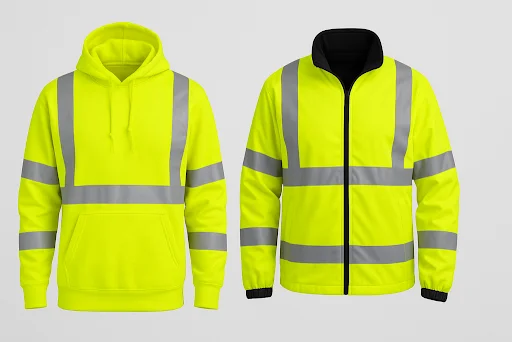
Ensuring worker visibility is one of the most fundamental responsibilities of a safety manager. In environments where people, vehicles, machinery, and visitors interact—such as construction-adjacent real estate projects, large residential developments Vis Jackets, commercial properties, and renovation sites—what employees wear can directly influence safety outcomes. Choosing between Hi Vis Sweatshirts andHi Vis Jackets is not simply a matter of comfort or style; it is a strategic decision shaped by climate, work conditions, compliance requirements, and human behavior.
While both garment types serve the core purpose of enhancing visibility, their differences affect performance, adoption, and long-term safety effectiveness. Understanding these trade-offs is essential for building a layered safety apparel strategy that protects workers without compromising mobility, productivity, or compliance.
Understanding Visibility as a Risk-Control Measure
High-visibility apparel functions as a form of risk mitigation. Its purpose is to ensure that workers are quickly and clearly identifiable in environments where hazards may not always be obvious. This includes areas with moving vehicles, limited lighting, temporary obstructions, or frequent changes in site layout—conditions commonly found in real estate developments under construction or renovation.
Visibility, however, is not static. It changes with weather, time of day, surrounding materials, and the worker’s distance from potential hazards Vis Jackets. Safety managers must therefore look beyond minimum compliance and evaluate how apparel performs across real-world conditions. The decision to issue a sweatshirt-style layer or a jacket-style outer layer plays a key role in that evaluation.
Layering Strategy as a Safety System, Not a Clothing Choice
One of the most common mistakes in safety apparel planning is treating garments as isolated purchases rather than components of a system. Layering strategy should support year-round visibility, thermal comfort, and consistent usage.
In transitional seasons or mild climates, a high visibility sweatshirt or high vis hoodie often becomes the most frequently worn item on site. It provides warmth without bulk, encourages compliance because of comfort, and maintains visual contrast in environments where workers may move between indoor and outdoor areas. Because these garments are lighter, workers are less likely to remove them during active tasks, which helps maintain consistent visibility throughout the day Vis Jackets.
By contrast, high visibility clothing designed for outerwear use is often required when weather conditions become more demanding. Rain, wind, cold temperatures, or extended outdoor exposure necessitate additional protection that lighter layers cannot provide. In such cases, visibility must coexist with insulation, weather resistance, and durability.
A sound layering strategy recognizes that no single garment performs optimally across all conditions. Instead, safety managers must plan how different layers interact and when each is most appropriate.
Climate and Seasonal Variability
Weather is one of the most influential factors in determining appropriate high-visibility apparel. In moderate conditions, workers often prefer garments that offer warmth without restricting movement. Sweatshirt-style options are particularly effective during early mornings, cooler evenings, or in climates where temperature fluctuations are common throughout the day.
However, colder regions or winter seasons introduce new challenges. Heavy outer layers may be required to protect against low temperatures and wind chill. In these scenarios, high visibility outerwear becomes essential, but it also introduces trade-offs. Thicker materials can limit flexibility, reduce dexterity, and increase fatigue if not properly selected.
Rain and moisture further complicate decisions. A sweatshirt that performs well in dry conditions may lose effectiveness when wet, while a weather-resistant high visibility jacket can preserve both comfort and visibility during prolonged exposure Vis Jackets. Safety managers must evaluate not just average conditions, but worst-case scenarios that could impact worker behavior and safety outcomes.
Mobility, Comfort, and Worker Compliance
Compliance is an often-overlooked aspect of safety apparel planning. Even the most compliant garment is ineffective if workers are reluctant to wear it consistently. Comfort plays a major role in whether safety apparel is worn correctly and for the full duration of a shift.
Sweatshirt-style garments typically offer greater flexibility and ease of movement, which makes them appealing for tasks requiring bending, lifting, or extended walking—common activities on real estate sites and property developments. When workers feel unrestricted, they are less likely to modify or remove apparel, preserving visibility.
Heavier outer layers, while protective, can sometimes lead to partial compliance. Workers may unzip jackets, remove them indoors, or wear them improperly to regulate body temperature. Each of these behaviors can reduce visibility at critical moments. Safety managers must account for these human factors when choosing apparel and setting site policies.
Durability and Lifecycle Considerations
Cost is not limited to the initial purchase price of safety apparel. Durability, maintenance requirements, and replacement frequency all influence long-term value. Sweatshirt-style garments are often subject to frequent washing, which can affect reflective materials over time if not properly constructed. Jackets, while typically more durable, may incur higher upfront costs and more specialized cleaning requirements.
A balanced approach considers where wear and tear is most likely to occur. In environments with frequent abrasion, contact with tools, or exposure to rough surfaces, outer layers may degrade faster than expected. Conversely, lighter garments worn daily may need replacement sooner due to fading or reduced reflectivity.
Safety managers should assess how long visibility remains effective, not just how long the garment physically lasts. Reflective performance, color retention, and fabric integrity all impact the protective function of the apparel.
Site Type and Operational Context
The nature of the worksite strongly influences appropriate layering choices. Large real estate developments often involve mixed-use environments where sales teams, inspectors, contractors, and maintenance personnel share space. In these settings, apparel must balance visibility with a professional appearance.
Sweatshirt-style options can offer a less industrial look while still meeting visibility requirements, making them suitable for client-facing roles or guided site visits. Heavier outer layers may be better suited for workers engaged in extended outdoor tasks or operations near vehicle traffic.
Operational context also includes shift length and task variability. Workers who move between indoor and outdoor areas may benefit from lighter layers that can be worn continuously, whereas stationary outdoor roles may require greater insulation and weather protection.
Regulatory and Compliance Considerations
Safety apparel decisions must align with applicable regulations and standards. While specific requirements vary by region and industry, compliance generally focuses on visibility performance rather than garment type. This gives safety managers flexibility but also places responsibility on them to ensure that chosen apparel performs adequately under site conditions.
Layering strategies should consider whether additional layers obscure reflective elements or reduce contrast. A jacket worn over a compliant garment must itself meet visibility requirements, otherwise the underlying protection becomes irrelevant. Clear policies and training are essential to ensure that workers understand how to layer correctly without compromising safety.
Environmental and Sustainability Impact
Increasingly, safety managers are asked to consider the environmental impact of procurement decisions. Apparel choices influence material consumption, replacement frequency, and waste generation. Selecting garments that serve multiple seasons or roles can reduce overall consumption.
A layered approach can support sustainability by extending garment life. Lighter layers may be used independently in mild conditions and combined with outer layers in colder weather, reducing the need for multiple specialized items. Durability, repairability, and responsible sourcing all contribute to a more sustainable safety apparel strategy.
Balancing Standardization and Flexibility
Standardization simplifies procurement, training, and enforcement, but excessive uniformity can reduce effectiveness if it ignores environmental or task-specific needs. A rigid approach that mandates a single garment type year-round may lead to discomfort, reduced compliance, and increased risk.
Flexibility, on the other hand, requires clear guidelines. Safety managers must define when different layers are appropriate and ensure that all options meet visibility and compliance standards. This balance allows organizations to maintain control while adapting to real-world conditions.
Making Informed, Impact-Aware Decisions
Ultimately, choosing between sweatshirt-style and jacket-style high-visibility apparel is not about determining which is better overall, but about understanding how each performs within a broader safety system. Decisions should be informed by climate, site conditions, worker behavior, durability, compliance requirements, and environmental impact.
Safety managers who take a layered, impact-aware approach are better positioned to protect workers while maintaining productivity and compliance. By viewing visibility apparel as an evolving strategy rather than a fixed solution, organizations can adapt to changing conditions and reduce risk more effectively over time.
In complex environments such as real estate developments and property management sites, where visibility, professionalism, and safety intersect Vis Jackets, thoughtful layering decisions play a crucial role in achieving sustainable and practical safety outcomes.
Discover What’s Next—Explore More Insights at Management Works Media.