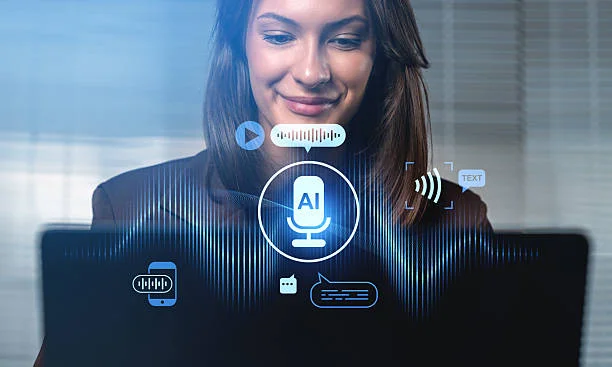
Audiobooks, podcasts, voice assistants, and video readings dominate the digital platform, and there is a growing demand to find the tools that will turn the written Text to Speech information into a natural-sounding speech.
This is the area where AI dubbing technology comes in. Modern systems reproduce the rhythm, tone, and flow of actual human voices rather than creating flat, robotic voices. This can be done in AI Dubbing by means of a free AI text-to-speech online using AI that does not require studios, voice actors, or coding skills.
As a creator, educator, or even a business owner, this is because knowing how AI dubbing works enables you to achieve quicker production time, expanded reach, and more interactive listening experiences with only text.
The Shift From Robotic Speech to Human-Like Voices
The early text-to-speech systems paid attention to pronunciation only. They were able to read out the text aloud, but they did not sound natural. The AI dubbing is a significant step in a new direction since it is not forced to follow strict rules but is conditioned to work with patterns of real speech. These systems get to know how human beings stop, emphasize words, and switch tone in the middle of the sentence.
This is what enables AI Dubbing to be a realistic AI voice generator. The voice is not scripted, and it seems natural and conversational. The output is sound, which can be listened to by the audience without feeling tired, thus being used in both short and long-term narration.
Creating Extended and Multilingual Audio Experiences With AI
Extended narration and global reach are two areas where AI dubbing can be used to its advantage.
● AI Audiobook Generator
An AI Audiobook Generator enables authors and educators to convert written text into an engaging oral presentation without the need to spend a lot of money on production. This renders independent creators access to audio publishing.
● AI Audio Translator
Using an AI Audio Translator, one can have their content read in other languages and retain the natural sound and rhythm. This assists brands and educators in accessing foreign markets better.
● AI Text-to-Speech Generator
An AI Text-to-Speech Generator of the modern world can also be used to work with long scripts, maintain the coherence of speech, and make it sound consistent, clear, and pleasant to hear to the end.
How AI Dubbing Understands Tone, Context, and Emotion
Natural speech is very much context-related. AI dubbing does not only focus on the words they use but also examines the sentence structure, punctuation, and phrases in order to determine how it should sound.
How context shaping works
- Questions are on the tone of rising.
- Delicate focus is on emotional phrases.
- Breaks are made in places where human beings breathe.
How emotion improves realism
- Impersonal information tones.
- Smoother presentation of storytelling.
- Establish a direct focus of instructions.
Through the use of language knowledge in conjunction with emotional simulation, AI dubbing will make it seem deliberate instead of mechanical when the audio is spoken.
Simple Creation With an Online Text-to-Speech Workflow
The ease of use is also one of the most powerful benefits of AI Dubbing. Sound equipment and audio training are not required. The online text-to-speech tool is very fast and understandable, where a user can start with text and immediately produce sound in a few minutes.
The simplicity enables one to convert text to voice instantly, especially useful to creators who have a limited time to get a work completed. Rather than having voiceovers that take days to be created, one can create audio, listen to it, and download it in a smooth process.
Key Use Cases Powered by AI Dubbing Technology
The AI dubbing is adaptable to accommodate various formats of content without compromising quality.
- Narration of e-learning and educational lessons.
- Promotion of the videos and product descriptions.
- Blog-to-audio conversions
- Social media voiceovers
Due to the fact that the voices are natural, the listeners do not get bored easily, irrespective of the platform and format.
How AI Dubbing Moves Beyond Mechanical Speech
The old text-to-speech systems were constructed on fixed pacing and a set of pronunciation rules. Their ability to read a text correctly did not make them conscious of the way human beings talk.
AI dubbing is completely different. It does not use strict instructions, but rather learns through actual conversations, accounts, and spoken language patterns. This is a learning approach that enables the system to identify subtle changes that include a change in emphasis, sentence structure, and changes in emotion.
The AI Dubbing is also adaptive to the length and structure of the content. The sentences are short and crisp, and the longer passages are naturally rhythmic.
It is particularly relevant when dealing with long content such as tutorials, courses, or audiobooks, where the fatigue of the listener occurs in reality. Since the voice is not robotic but deemed as purposeful, audiences will tend to believe the message and remain attentive till the end.
Conclusion
The AI Dubbing is a significant breakthrough in terms of digital content conversion to audio. Professional studios, voice performers, and extensive time frames needed to make a movie are now possible to do within the blindness of an eye at minimal expense and quality.
The integration of linguistic intelligence and emotional realism makes AI dubbing written words sound human, expressive, and easy to listen to. Since audio is increasingly becoming part of education, marketing, entertainment, and ease of access, tools such as AI Dubbing will become necessary and not optional.
They enable creators to interact with the audience in the manner in which they are used, i.e., using headphones, smart devices, or voice-driven platforms. Sound is becoming an important part of the digital world, so AI dubbing is not only a convenience but also a new form of communication based on legibility, realism, and accessibility.
The missing piece lives here—explore this related posts now at Management Works Media.