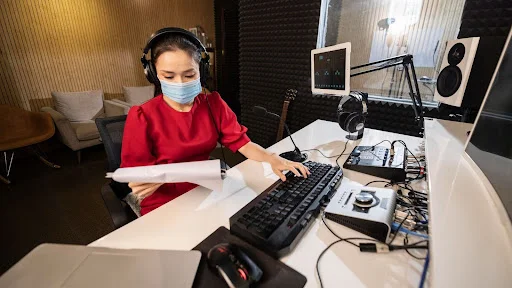
Brands often face this problem, especially when they rush and hope AI will do all the work. The truth is, AI isn’t terrible on its own. It’s quick, budget-friendly, and surprisingly capable for rough drafts or internal content. But once you need emotion, nuance, or even basic regional sensitivity, things get wobbly. One mispronounced word, one flat sentence fo Voice-Over Translation Agency, and the entire message feels like it slid off its rails.
That’s usually the turning point. Many try again and again, adjusting things they don’t fully understand, until they get frustrated. The smarter ones discover something else: pairing AI output with a voice over translation agency, an actual team that can humanize, refine, and reshape the audio until it sounds like something a real listener can connect with. That’s where the conversation shifts from “fixing sounds” to “crafting communication that feels alive.”
When AI Audio Sounds ‘Almost Right,’ But Not Quite
We’re living in a time where AI voices are everywhere; scroll long enough on TikTok and you’ll hear the same synthetic tone narrating cooking videos, travel clips, financial advice, you name it. The world quietly settled on this idea that a slightly robotic voice is acceptable. And maybe it is until it isn’t.
I once heard an AI voice trying to express empathy in a healthcare project. The script talked about trust and patient comfort, but the delivery felt like a machine politely reading a weather report. No warmth. No cadence. No lived-in experience. When we played it for a focus group, everyone shifted in their chairs. Nobody could explain why it just felt wrong. That’s when it hit me. It’s the emotional bridge between your story and your audience Voice-Over Translation Agency.
A misplaced pause can confuse meaning. A cold tone can make sincere messaging feel cynical. A single cultural mispronunciation can pull listeners right out of the experience. People don’t always notice good audio, but they definitely notice bad audio.
A related article that deepens understanding and connects ideas seamlessly.
Why the World Still Needs Human-Guided Voice Work
AI doesn’t understand the softness required when speaking to parents or the sharp clarity needed in technical training. It predicts patterns, and it doesn’t live them. Humans hear the difference instantly.
A voice artist knows where to let a sentence breathe. They sense when a line should lift at the end or settle gently. They recognize the cultural weight behind certain phrases. They adjust instinctively, the way a storyteller adjusts to an audience leaning forward.
That’s why even the sharpest AI output benefits from a human touch. Sometimes it means rewriting lines so they sound natural. Sometimes it means blending AI and human voices so you get efficiency without losing authenticity. And sometimes the best decision is to replace the entire track with a trained professional. Human-guided voice work isn’t about rejecting AI; it’s about giving your message the emotional clarity it deserves.
Where Multilingual Content Makes Things Complicated
The real chaos begins when your project involves multiple languages. AI might manage English reasonably, but once you slip into languages with tonal rules, cultural subtext, or region-specific pronunciation, things fall apart fast. A phrase that sounds natural in French might come off oddly stiff in German. Japanese can shift meaning with the slightest change in pitch. Mandarin requires tonal precision that machines still struggle to deliver. This is where multilingual translation services or Voice-Over Translation Agency become invaluable, not as an accessory, but as a safeguard. Every language has its own rhythm. Its own personality. Its own emotional palette. A one-size-fits-all AI voice can’t capture that. Humans can.
With the right team, each language gets a voice that matches its cultural expectations. Not just mechanically correct but emotionally fluent.
Your Audience Notices More Than You Think
Many people think listeners don’t notice, believing that as long as the info is there, delivery doesn’t matter. But that’s not how people engage with sound. If the tone feels off, they disconnect, and if the rhythm feels forced, their attention slips.
How MarsTranslation Can Help with Quality Voice-Over Services
Eventually, fixing AI audio becomes less about “tools” and more about “people who understand storytelling.” You need voices that carry meaning, editors who can sense when a line falls flat, and linguists who catch cultural nuances before they become embarrassing mistakes. That’s where a professional translation agency steps in. You need more than a machine. It’s about someone who gets your goals, the feelings in your words, and what your audience expects.
This is where MarsTranslation makes a noticeable difference. Their approach feels refreshingly grounded and very human-first, but without ignoring the advantages of modern tech. They don’t simply pass your audio through software and send it back. They listen, refine, adjust, and rebuild where needed.
Mars offers full voiceover translation services backed by skilled voice artists and cultural experts who understand how tone shifts across regions. They’re also an ISO-certified company, which says a lot about the standards they follow: consistency, quality, and precision aren’t buzzwords for them; they’re requirements.
And if you check their work, you’ll notice something subtle: they bridge the gap between AI efficiency and human emotion. This is rare. And it’s exactly what brands need when they’re struggling with that slightly-too-mechanical AI sound.
Final Thoughts
Fixing poor AI audio isn’t really about fixing AI. It’s about restoring the part of communication that machines haven’t mastered yet: the emotional undercurrent that makes people lean in and actually feel the message.
If your audio sounds “almost there,” that’s usually the cue that it needs a human ear. A real collaborator. Someone who understands voice as more than sound waves. Ultimately, your message needs more than precision; it needs a voice people can feel.
Dive deeper—more posts are waiting to inspire and expand your thinking.