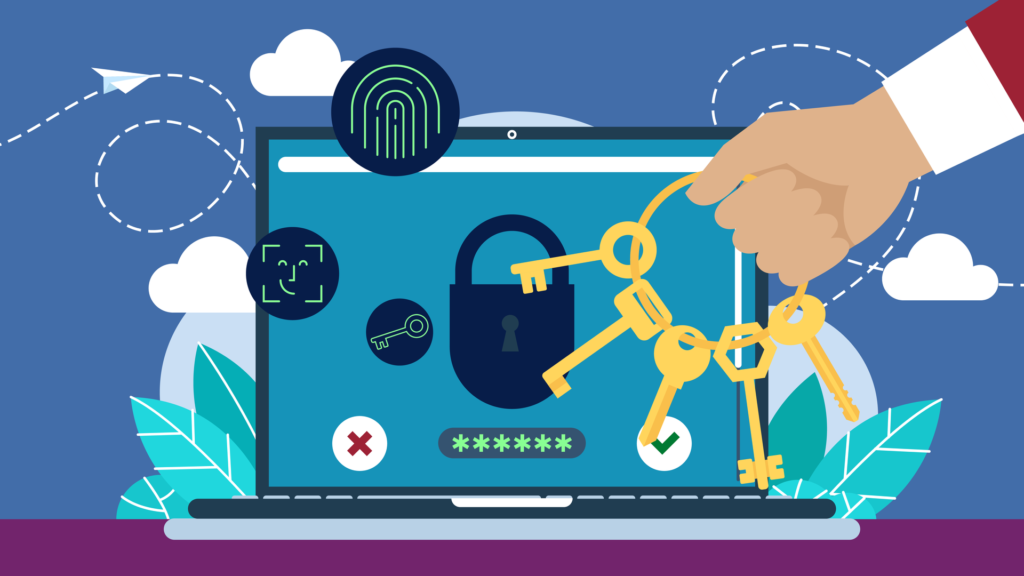
The digital security world is presently experiencing the most radical change since the internet was invented. The “shared secret”—the password—has for many years been the main protector of our digital identities. But along with the rise in hacking and attacks, the password has also grown to be more of a liability than a plus. Consequently, the demand for sophisticated methods of protecting sensitive data has increased, and many users and organisations are now trying to figure out what is passkey technology. and why it is being called the new login. This shift signifies a total changeover to a cryptographic future where strings of characters have to be remembered no more, but unique digital signatures take their place instead, thus completely cutting off the possible ways of hackers accessing the system in the current highly interlinked world.
Cryptographic Security: A New Standard
The transition in question is so crucial that without understanding its technical mechanism, one could hardly say that. The new standard is based on public-key cryptography, unlike the password, which is just a text that is shared between the user and the server. In public-key cryptography, a pair of keys is used: one key is public and stays on the server, while the other is private and is only on the user’s device. The server challenges the device with a “challenge” when the user is logging in, which is then signed by the device using the private key.
It is necessary to comprehend what is passkey and how it works internally in order to modernise one’s digital footprint. The security of the authentication process lies in the fact that the private key is never exposed to the server. Even if a hacker intercepts the communication between the device and the server, they will only get to see the signature, which is of no use for future login attempts. This user-centric approach to authentication is considered the best practice for ensuring data protection since at no point in time are the user’s credentials placed in a position where they can be accessed by a third party.
User Convenience and Frictionless Access
New security measures are, up to now, rightfully associated with the “friction” they create and hence one of the greatest obstacles in their adoption. Multi-factor authentication is among the most common methods. Although its security is beyond question, it still demands that users cope with waiting for SMS codes or entering six-digit app tokens. Other than that, it may discourage some users with its tediousness and time-consuming nature. On the contrary, the technicality of using a biometric feature, such as facial recognition or fingerprint scanning, provides an amazing experience with passkeys, clearly answering what is passkey in practice. No more logging in using a username and password—just verification of your presence on the device with a biometric scan.
Eliminating Phishing and Social Engineering
Phishing still holds the position of the most preferred method by cybercriminals today since it takes advantage of human behaviour. Even the most careful people can sometimes get tricked by an email that is expertly made or a website that is imitating the original one. Classic passwords have a weakness since they can be input into any field, regardless of whether the web page is real or fake. The new login protocol’s advantage is its ability for “domain binding.” Since a passkey is mathematically linked to a particular domain, your gadget will simply deny the signing of the login request from the phoney site.
This built-in resistance to phishing is nothing short of revolutionary for the security of the digital world. It implies that in case you accidentally visit a site that is an exact copy of your bank’s, the criminal will not be able to get hold of your credentials because your computer will not release them. The requirement of having a hardware-bound, domain-specific security measure is no longer a luxury but a significant requirement for preserving the integrity of your digital life, as the world is becoming accustomed to synthetic identity fraud and deepfake attacks.
Cross-Ecosystem Compatibility
One of the most frequent misunderstandings regarding this technology is that it restricts users to one ecosystem, like Apple or Google. However, the fact of the matter is that the standard is founded on the FIDO2 and WebAuthn protocols, which giant tech companies unanimously support. This collaboration across platforms makes it possible for you to log in to your Windows PC with an Android phone or use your iPhone to enter a Chrome browser. Almost every OS these days comes with the feature of encrypted cloud synchronisation, which guarantees the availability of your keys on all the devices you trust.
In addition, the whole industry is jaunting towards a scenario where your smartphone will be the only security token everywhere, further clarifying what is passkey in real-world usage. You would just need to scan a secure QR code on a nearby computer for logging in instantly without ever touching a keyboard. This versatility makes the transition from passwords to an alternative method very much so inevitable; it will be permanent and universal because it is in sync with the modern consumer’s multi-device usage. Organisations that will be early adopters of these standards will be in a position to secure themselves better and gain the trust of the security-sensitive public.
Conclusion
The change from passwords to more secure methods is a necessary move in the development of our digital world. The switch involves a minor habit change, but the benefits in the areas of tranquility and productivity are really huge. Adopting a system that merges cutting-edge cryptography with easy-to-use biometrics, we are able to put an end to the time of shared secrets at last. Today’s switching over means you will no longer have to be concerned about database leaks, phishing emails, and the endless hassle of passwords. A security level that really meets the difficulties of the twenty-first century is the one that should be picked now.