Photography blends creativity with technical skill, and the right gear shapes both the process and the results. Beginners often feel overwhelmed by choices, while professionals refine setups for precision and efficiency. A thoughtful selection of equipment builds confidence, improves image quality, and supports creative growth. This guide breaks down essential photography gear, covering tools that matter at every level. Each section focuses on practical value, helping photographers make informed decisions without confusion. Clear explanations, real-world relevance, and a conversational tone keep everything accessible while maintaining depth. Strong gear choices create consistency, and consistency drives better photography.
1. Camera Bodies That Match Your Style
A camera body forms the foundation of any photography setup. Beginners benefit from user-friendly controls and reliable auto modes, while professionals demand advanced manual settings and fast performance. Mirrorless cameras dominate today’s market because they offer compact designs and powerful features. DSLRs still appeal to those who prefer optical viewfinders and longer battery life. Sensor size also matters, as full-frame cameras deliver better low-light results and dynamic range. Crop sensors provide affordability and portability. Choosing the right body depends on shooting style, budget, and long-term goals. A well-chosen camera supports growth and encourages consistent practice.
2. Memory Cards and Storage Reliability
Reliable storage keeps every shot safe, and memory cards play a critical role in performance. Fast write speeds help capture bursts and high-resolution video without delays. Photographers should understand SD card performance tiers because they influence workflow efficiency and data security. Cards with higher ratings handle demanding tasks better and reduce buffering issues. Professionals often carry multiple cards to avoid data loss and maintain backups during shoots. Beginners should still invest in quality options instead of cheap alternatives. Organized storage habits prevent mistakes and save time later. Consistent card management builds confidence and ensures that no important moment disappears unexpectedly.
3. Lenses That Define Image Quality
Lenses shape the final image more than any other piece of gear. A sharp, well-built lens enhances clarity, depth, and color accuracy. Beginners often start with a versatile zoom lens, which covers multiple focal lengths in one package. Prime lenses offer wider apertures and deliver better low-light performance and background blur. Professionals build collections based on specific needs, including portrait, landscape, and macro photography. Investing in quality glass pays off over time because lenses last longer than camera bodies. A thoughtful lens choice improves creative control and expands possibilities. Strong optics transform ordinary scenes into visually compelling photographs.
4. Tripods for Stability and Precision
A tripod adds stability, which improves sharpness in many shooting situations. Long exposures, low-light scenes, and landscape photography benefit the most from steady support. Beginners often overlook tripods, yet they quickly notice the difference in image clarity when they start using one. Lightweight travel tripods suit casual photographers, while professionals prefer sturdy models with adjustable legs and smooth heads. A good tripod also supports video work and time-lapse photography. Consistent stability reduces camera shake and increases control over composition. Reliable support gear strengthens technical accuracy and allows photographers to experiment with creative techniques without frustration or guesswork.
5. Lighting Equipment for Better Control
Lighting determines the mood, tone, and clarity of every image. Natural light works well, but artificial lighting gives photographers full control over conditions. Beginners can start with simple reflectors and basic flashes to shape light direction. Professionals rely on softboxes, studio strobes, and continuous lighting systems for precise adjustments. Portable lighting setups help photographers work in different environments without limitations. Understanding how to control shadows and highlights improves overall image quality. Good lighting equipment transforms ordinary scenes into professional-looking shots. Mastering light allows photographers to create consistent results regardless of location or time of day.
6. Camera Bags for Protection and Mobility
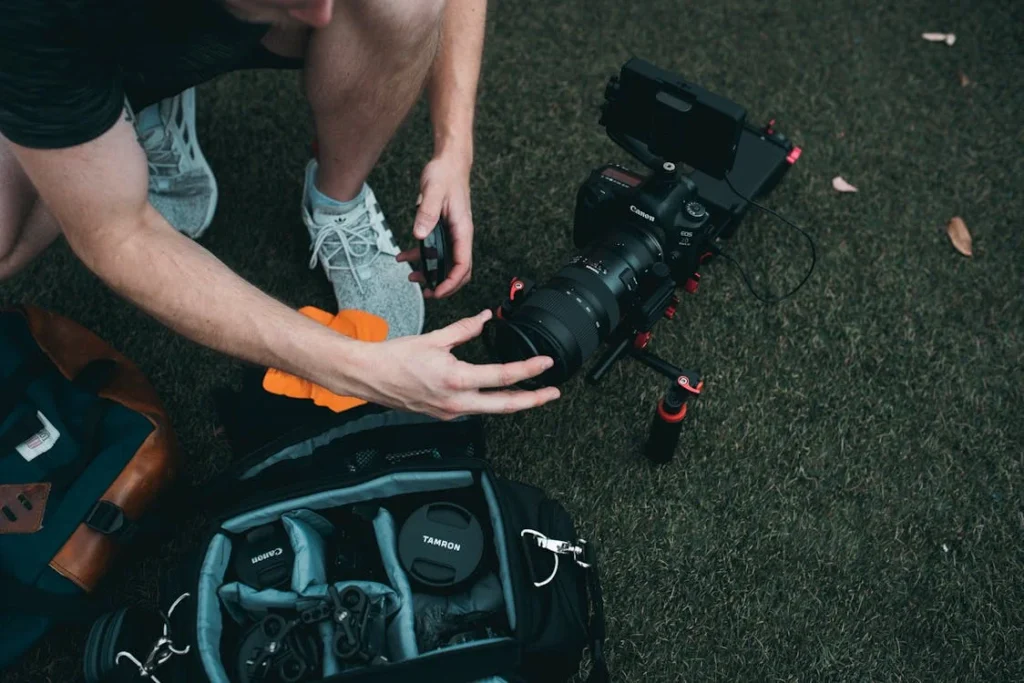
A camera bag protects valuable equipment and keeps everything organized. Beginners often choose simple backpacks, while professionals look for durable, weather-resistant designs with customizable compartments. Easy access to gear matters during fast-paced shoots. A well-designed bag prevents damage, reduces clutter, and improves efficiency. Comfort also plays a role, especially during long sessions or travel photography. Shoulder bags, sling bags, and rolling cases offer different advantages depending on usage. Proper storage extends the lifespan of equipment and minimizes stress during transport. A reliable bag ensures that gear stays safe, accessible, and ready for action at all times.
7. Filters That Enhance Creative Effects
Filters provide creative control directly in-camera, reducing the need for heavy editing later. Polarizing filters help manage reflections and improve color saturation, especially in landscape photography. Neutral density filters allow longer exposures in bright conditions, creating smooth motion effects in water and clouds. Beginners can start with basic filters to understand their impact. Professionals often carry multiple options for different scenarios. High-quality filters preserve image sharpness and prevent unwanted distortions. Using filters encourages thoughtful composition and experimentation. These small accessories deliver noticeable improvements and expand creative options without adding complexity to the overall photography setup.
8. External Flashes and Speedlights
External flashes add flexibility and improve lighting quality in various situations. Built-in camera flashes often produce harsh results, while speedlights offer better control and direction. Beginners can learn basic flash techniques to balance light and reduce shadows. Professionals use multiple flash units with wireless triggers to create dynamic lighting setups. Adjustable power levels and bounce techniques enhance natural-looking results. A well-used flash can transform indoor photography and improve portraits significantly. Understanding flash positioning and intensity builds confidence and consistency. Reliable lighting tools ensure that photographers capture well-exposed images even in challenging environments where natural light falls short.
Photography gear supports creativity, but thoughtful choices matter more than expensive equipment. Beginners grow faster with reliable tools, while professionals refine their setups for precision and consistency. Every piece of gear plays a specific role, from cameras and lenses to lighting and accessories. Understanding how each item contributes to the final image improves both confidence and results. A balanced approach to gear selection prevents overspending and encourages skill development. Strong fundamentals, combined with the right equipment, lead to better photography over time. Consistent practice and smart decisions create lasting improvement and keep the creative process enjoyable and rewarding.