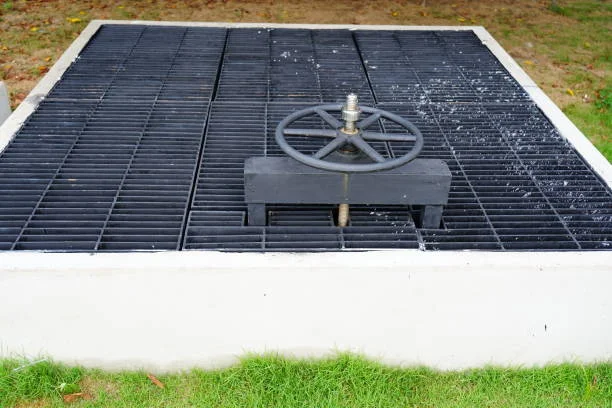
For any facility manager responsible for bulk oil storage or Oil Stop Valves, the sight of a gathering storm cloud brings a familiar sense of unease. Rainwater pooling in secondary containment areas isn’t just an operational nuisance; it’s a ticking clock for compliance. Every gallon of accumulated water reduces your containment capacity, creating a high-stakes scenario where a potential spill could become an environmental and financial disaster.
This complex challenge demands a solution that is both effective and reliable. Fortunately, a simple, automatic technology—the oil stop valve—is designed to solve this very problem, providing a fail-safe line of defense.
Key Takeaways
- The EPA’s SPCC rule requires facilities to manage stormwater in secondary containment areas, creating a conflict between maintaining capacity and preventing spills.
- An oil stop valve automatically differentiates between oil and water using the principle of specific gravity, allowing rainwater to drain while instantly blocking hydrocarbons.
- This gravity-operated, fail-safe technology requires no external power, making it exceptionally reliable and low-maintenance.
- Implementing an oil stop valve is a smart, cost-effective strategy to ensure SPCC compliance, prevent costly cleanups, and protect the environment.
The High-Stakes Balancing Act of SPCC Compliance
Navigating the EPA’s Spill Prevention, Control, and Countermeasure (SPCC) rule presents a significant operational challenge. The regulation creates a dual mandate that can feel contradictory: you must have robust secondary containment, but you must also actively manage it to ensure it remains functional.
The rule is explicit. According to the EPA, secondary containment for bulk storage must hold the entire capacity of the largest container plus “sufficient freeboard to contain precipitation”. This means that every inch of rainwater that collects in your containment berm effectively reduces its ability to do its job during an actual spill. Leaving the drain valve closed ensures containment but risks an overflow. Leaving it open invites a catastrophic, uncontrolled release.
This leads to the operational nightmare of manual draining. Under 40 CFR 112.8(c)(3), facility personnel must inspect accumulated water for any sign of oil before draining it, a process that is labor-intensive, subjective, and fraught with risk. Furthermore, every drainage event must be meticulously documented, adding another layer of administrative burden. A single mistake—a missed inspection, a faulty observation, or a forgotten log entry—can lead to non-compliance and a potential spill.
This regulatory tightrope is a major challenge for facility managers. The solution is a technology that can intelligently and automatically differentiate between water and oil. An expertly engineered oil stop valve is designed to solve this exact problem, operating on a simple, reliable principle.
How an Oil Stop Valve Provides Automatic, Fail-Safe Protection
To build confidence in any technology, it’s essential to understand how it works. An oil stop valve isn’t a complex piece of electronic equipment for Oil Stop Valves. Instead, its effectiveness comes from a simple, elegant design based on a fundamental law of physics, making it inherently reliable and fail-safe.
The Core Function: Knowing the Difference Between Oil and Water
At its heart, an oil stop valve is a bulk spill prevention device. It acts as the final gatekeeper for your secondary containment area’s drainage point. Its primary job is to stay open to allow harmless rainwater to pass through, but to slam shut automatically and instantly the moment it detects hydrocarbons like oil or fuel.
This automatic function eliminates the need for manual intervention after every rainstorm. You no longer need to dispatch personnel to inspect the water and open a drain valve. The oil stop valve handles this task 24/7, saving significant time, labor, and record-keeping effort. Most importantly, it directly resolves the core conflict of SPCC compliance by ensuring your containment area maintains its full capacity to hold a potential spill.
The Science of Simplicity: The Specific Gravity Principle
The genius of the oil stop valve lies in its power-free operation. It works based on the immutable principle of specific gravity: oil is lighter than water.
Inside the valve is a precisely weighted ball or cylinder. This float is calibrated to be buoyant in water, which has a specific gravity of 1.0. As long as water is flowing into the valve’s chamber, the float remains lifted, keeping the drain outlet open.
However, if a spill occurs and a hydrocarbon like oil or fuel enters the chamber—with a typical specific gravity of 0.95 or less—the float immediately loses its buoyancy. It sinks under its own weight, seating perfectly into the outlet and creating a secure seal. This gravity-driven action happens instantly, requires no external power source, and contains the spill before it can escape.
The Top 3 Benefits for Facility Managers
By connecting the valve’s simple, physics-based design to daily operations, it becomes clear why it is the superior choice for any facility manager focused on compliance, reliability, and efficiency.
Unmatched Reliability and Peace of Mind
Fear of system failure is a major concern, especially when dealing with environmental compliance. The oil stop valve is designed to eliminate this worry through its elegantly simple mechanics.
- Completely Automatic & Fail-Safe: The gravity-based operation means the valve is always on duty. It works around the clock without requiring any human intervention or supervision, providing constant protection.
- No External Power Required: The valve does not depend on electricity, sensors, or complex computer controls. This is a critical advantage, as it cannot fail during a power outage—a time when pumps may stop and the risk of a spill can actually increase.
- Minimal Maintenance: The design typically features only one moving part: the float. This drastically reduces the potential for mechanical failure and means maintenance requirements are minimal, saving time and resources over the equipment’s long lifespan.
Guaranteed SPCC Compliance
For a Compliance-Conscious Facility Manager, meeting regulatory requirements is the primary goal. An oil stop valve provides a clear and effective path to achieving this.
It offers a defensible, engineered solution for meeting the SPCC mandate to drain uncontaminated stormwater. The valve’s automatic function removes the risk of human error inherent in manual draining protocols and simplifies the associated documentation burden. By ensuring a spill can never leave the designated containment area, it helps your facility avoid the catastrophic fines, cleanup costs, and reputational damage that follow an environmental release.
Choosing the Right Oil Stop Valve for Your Facility
Selecting the right valve is a straightforward process based on your facility’s specific environmental conditions and operational needs. Thinking through these factors will ensure you get a reliable, long-lasting solution.
Material and Climate Considerations
The construction material of the valve is the most important factor to consider, as it directly relates to your climate.
- PVC “Economy” Models: These are an excellent, cost-effective choice for facilities located in warmer climates where freezing temperatures are not a concern. PVC provides durable, corrosion-resistant performance in these environments.
- Stainless Steel Models: For colder climates, stainless steel is essential. It prevents the valve from becoming brittle or damaged in freezing conditions. Stainless steel is also often specified for applications with higher fire protection ratings or where extreme durability is required.
Common Applications and Industries
Oil stop valves are a proven solution across a wide range of industries where SPCC regulations apply. You can find them providing critical protection in:
- Electrical Substations (surrounding oil-filled transformers)
- Bulk Fuel and Oil Storage Tank Farms
- Truck and Railcar Fueling and Unloading Terminals
- Manufacturing Plants with large hydraulic systems or bulk lubricant storage
- Any facility with outdoor secondary containment berms or dikes
Optional Enhancement: The Slave Valve
For a truly “set it and forget it” system, a slave valve is a valuable addition. During long dry spells or in arid climates, the water inside the main valve chamber can evaporate. If the water level drops too low, the float will sink and close the drain, preventing it from functioning when the next rainstorm arrives.
A slave valve solves this problem automatically. It is a small, secondary valve connected to a clean water source, like a simple hose line. It monitors the water level in the main oil stop valve chamber and adds a small amount of water as needed to compensate for evaporation. This simple enhancement ensures the main valve is always armed and ready to drain stormwater, making the entire system fully automatic and worry-free.
The Smartest Move for Spill Prevention and Compliance
The responsibility of managing a facility with bulk oil storage is immense. You must balance the absolute necessity of spill containment with the practical need to manage stormwater, all while adhering to strict SPCC regulations. Manual methods are inefficient, risky, and a constant drain on personnel resources.
The automatic, gravity-operated oil stop valve emerges as the definitive solution. Its design is brilliantly simple, relying on a fundamental law of physics to provide reliable, fail-safe protection. It requires no power, minimal maintenance, and removes the element of human error from your compliance strategy.
Investing in this technology isn’t just about buying another piece of equipment. It’s about implementing a smart, cost-effective strategy that guarantees compliance, protects the environment, and provides lasting peace of mind every time the forecast calls for rain.
Step beyond the familiar—new ideas and insights begin right here at Management Works Media.