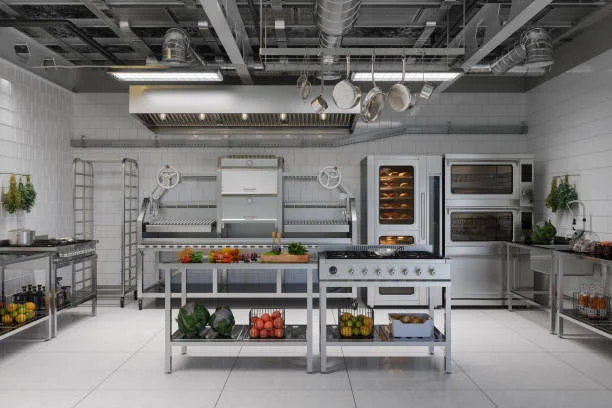
The commercial kitchen design of restaurants, hotels, cafes, hospitals, and catering businesses in London is very crucial to their success. The strictness of the UK health and safety laws, a lack of space in the cities, and very high operational requirements demand professional planning and localised information in designing a viable and compliant commercial kitchen.
Learning the Significance of Intelligent Kitchen Design
An effective commercial kitchen enhances the efficiency of workflow, the safety of staffs and food quality. Every square metre needs to be exploited in a busy city such as London, where rent is very expensive, and competition is very stiff. The correct design of the kitchen lowers the needless movements, accelerates service, and minimizes the possibility of accidents, which simplifies everyday tasks and allows them to gain more profit.
Adherence to the UK Regulations and Standards
The UK regulations are one of the most essential issues of the commercial kitchen design in London. Guidelines that designers need to adhere to include Environmental Health Officers (EHO), the Food Standards Agency (FSA), and the local councils. These regulations include ventilation, drainage, hygiene area, fire safety, and trash control. This is because the lack of these standards in meetings may attract fines, delays, or even closure, and thus the need to plan professionally at the beginning.
Workflow Optimization and Layout Planning
Successful kitchen design depends on an efficient workflow. In London, most commercial kitchens are designed using important areas like storage, preparation, cooking, cleaning, and service. A logical arrangement will minimize cross-contamination and will allow employees to deliver in peak hours. It can be a small coffee shop in Soho, or the spacious kitchen of a big hotel in Canary Wharf, but personalised designs have the ability to make the most out of productivity.
Selection of equipment and maximizing space
The selection of equipment is essential in the small kitchen areas of London. Designers target space-saving appliances that are energy efficient and meet the UK standards. Incorporated units, sectional equipment, and multi-purpose appliances are used to maximise space and ensure that operating expenses are controlled. The location will be placed properly, also so that it is easy to maintain and meet ventilation and safety standards.
Ventilation, Lighting, and Sustainability
Strict laws on air quality and fire safety make it important that the London commercial kitchens have ventilation systems. The extraction systems used are of high quality, which assists in the removal of heat, smoke, and odours, resulting in a safer working environment. Moreover, the current designs of kitchens pay more attention to sustainability by means of energy-saving lights, water-saving fittings, and environmentally friendly materials to minimize the environmental effects and operation costs.
Different Businesses: Custom Designs
The needs of the food business differ. The commercial kitchen design in London will differ according to the purpose of the place of fine dining, fast food, catering, or institutional kitchens. Business owners also use professional designers who provide an understanding of the menu, service style, and staff requirements to offer the final design to aid in the present and future developments.
Conclusion
The design of a commercial kitchen in London is not merely the measures of equipment organization; it is primarily the establishment of a safe, efficient, and compliant working environment, depending on the needs of a busy urban setting. Using intelligent layouts, regulatory effectiveness, and contemporary and sustainable designs, commercials can develop kitchens that increase productivity, comply with legal necessities, and sustain success in the long term.