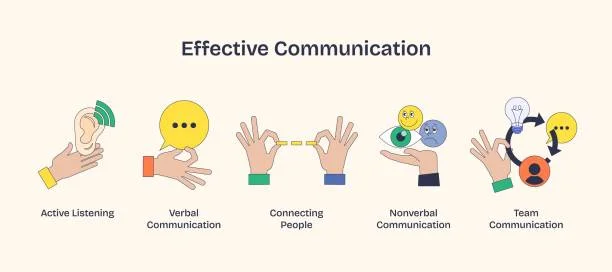
Most organizational problems are not rooted in lack of talent or effort. They emerge from misunderstanding, misalignment, and inconsistency. Instructions are interpreted differently. Expectations shift without explanation. Standards exist on paper but not in practice. Over time, this creates friction that no amount of hard work can fully resolve.
Two capabilities quietly determine whether systems hold together or slowly break down: how clearly people communicate and how reliably processes are managed. These are not soft concerns. They are structural ones.
Why Communication Is a System, Not a Skill
Communication is often treated as a personal trait. Some people are “good communicators,” others are not. In reality, communication is a system embedded in how organizations operate. Meetings, documentation, feedback loops, escalation paths, and decision records all contribute to how information flows.
When communication is unclear, work slows down. Decisions get revisited. Teams duplicate effort or work at cross-purposes. Trust erodes not because of intent, but because of confusion.
Learning through a communication skills course helps professionals see this system more clearly. It shifts focus away from speaking confidently and toward communicating deliberately. How is the context set? What assumptions are being made? What action is expected, and by when? These questions matter more than presentation polish.
Strong communicators do not talk more. They reduce ambiguity. They choose words that limit misinterpretation. They confirm understanding rather than assuming it.
Miscommunication Is Expensive, Even When It Looks Minor
Small communication gaps compound quickly. A vague requirement leads to rework. An unclear metric leads to disagreement. An unspoken expectation leads to frustration. Individually, these issues feel manageable. Collectively, they drain momentum.
This is why mature organizations invest in communication standards. Not scripts, but shared norms. How decisions are documented. How feedback is given. How priorities are clarified. These practices reduce friction before it appears.
Professionals who understand this tend to influence outcomes quietly. They ask clarifying questions early. They summarise decisions clearly. They make next steps explicit. Over time, teams rely on them because things move more smoothly when they are involved.
Quality Management Is About Predictability, Not Perfection
Quality is often misunderstood as flawlessness. In practice, it is about consistency. A quality system ensures that outcomes are repeatable, deviations are visible, and improvements are intentional.
Processes exist to reduce variability, not creativity. When quality management works, people spend less time fixing preventable issues and more time solving meaningful problems. When it fails, teams rely on heroics and last-minute fixes.
Exposure through quality management courses introduces this way of thinking. The focus is not on bureaucracy, but on control points. Where can errors enter? How are they detected? What happens when standards are not met? These questions are practical, not theoretical.
Quality management treats mistakes as signals. They are data points that reveal where systems need adjustment.
Where Communication and Quality Intersect
The strongest quality systems fail without clear communication. Standards that are not understood are not followed. Metrics that are not explained are not trusted. Improvements that are not communicated are not sustained.
Similarly, good communication without quality discipline becomes fragile. Decisions are clear, but execution varies. Expectations are aligned, but results drift. Stability requires both.
Professionals who understand this intersection are valuable because they connect intent to outcome. They don’t just explain what should happen. They help ensure it happens consistently.
This is especially important in environments with scale. As teams grow, informal alignment breaks down. Systems must carry what conversations once handled.
Why These Skills Mature Well Over Time
Tools change. Roles evolve. Organizations restructure. But the need for clarity and consistency remains. Professionals who develop these capabilities find that their impact grows as complexity increases.
They are often the ones asked to lead initiatives, resolve conflicts, or stabilise processes. Not because they dominate conversations, but because they make work easier for others.
Importantly, these skills are transferable. They apply in operations, leadership, project management, compliance, and strategy. Wherever people and processes interact, communication and quality shape outcomes.
The Quiet Advantage of Intentional Systems
Organizations that function well are rarely loud about it. Meetings are shorter. Decisions stick. Standards are understood. Issues surface early instead of exploding later. This is not luck. It is the result of deliberate communication and disciplined quality management.
Professionals who recognise this stop chasing visibility and start building reliability. Over time, reliability becomes influence.