There’s a quiet revolution happening in technical and scientific education, and if you haven’t heard of the centro politecnico superior, you’re already behind the curve. Across engineering communities worldwide, this institution — and the broader movement it represents — is becoming a reference point for what modern, rigorous, human-centered technical education can look like. But why now? And why does it matter beyond the classroom walls?
Let’s dig in.
KEY TAKEAWAYS
- The centro politecnico superior represents a model of technical education deeply connected to community transformation and cultural identity.
- Its influence is expanding beyond traditional engineering circles into broader social and innovation movements.
- Experts highlight the school’s interdisciplinary approach as a blueprint for future-ready education.
- Alumni networks from this institution are increasingly visible in global technology and policy arenas.
- Understanding its history reveals why it’s positioned as a leading force in 21st-century knowledge culture.
A Brief History Worth Knowing
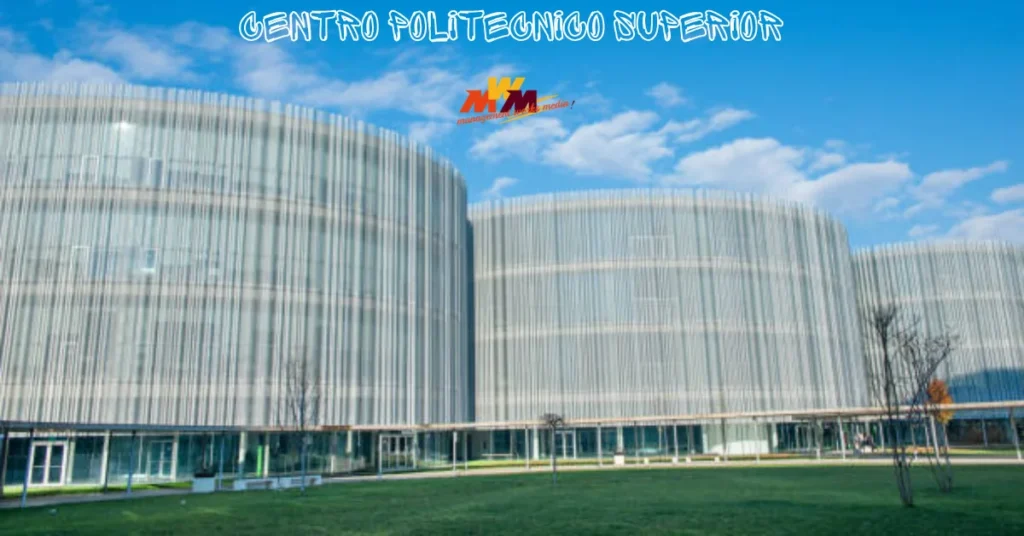
The Centro Politecnico Superior — formally known as the School of Engineering and Architecture at the University of Zaragoza in Spain — was established in the mid-20th century as a response to Spain’s urgent need for qualified engineers during a period of national industrial development. From its early days, it wasn’t just a school. It was a statement about what a country believed its future could look like.
That founding intention matters. Institutions built with a mission tend to outlast those built merely for function.
By the 1970s and 1980s, as Spain transitioned into democracy and then into the European Union, the institution evolved alongside society. It expanded its programs, diversified its faculty, and began producing graduates who didn’t just solve technical problems — they shaped industries, founded companies, and entered public life as change-makers.
This trajectory is not accidental. It’s the result of a deliberate culture embedded in the institution’s DNA.
Why It’s Relevant Right Now
Here’s where things get interesting.
We’re living through a convergence of crises: climate change demanding new engineering solutions, AI transforming every knowledge profession, and a generational hunger for meaningful work over mere employment. In this context, the model that the centro politecnico superior has been quietly refining for decades suddenly feels very timely.
The school has long emphasized interdisciplinary collaboration — bringing together computer science, civil engineering, architecture, industrial design, and environmental studies under one roof. That approach, once considered ambitious or even unusual in European engineering education, is now exactly what the tech sector, the public sector, and innovation ecosystems are demanding.
Alumni aren’t just finding jobs. They’re founding startups, leading sustainability initiatives, and sitting at policy tables.
There’s a cultural movement building around this kind of institution — one that sees technical education not as a pipeline to employment but as a civic responsibility. And that shift in framing changes everything about how we measure success, both for students and for the communities around them.
The Emerging Trend: Technical Education as Cultural Force
Let’s be direct: the most significant trend here isn’t about rankings or research output. It’s about influence.
The centro politecnico superior has become something of a symbol — referenced in conversations about the future of European engineering education, cited in discussions about how technical institutions can serve as anchors of regional identity and economic resilience. Cities with strong polytechnic cultures, research suggests, show greater adaptive capacity during economic disruptions. Zaragoza is a case study in this dynamic.
This matters because a generation of students worldwide is choosing institutions not just for career outcomes but for values alignment. They want to learn somewhere that stands for something.
That’s a profound cultural shift, and institutions like this one are both a product of it and a driver of it.
Expert Perspective
“Technical institutions that embed community engagement into their core mission — not as an add-on, but as a foundational commitment — consistently produce graduates who lead with both competence and conscience. The centro politecnico superior is one of the few European schools that has done this authentically for decades, not as a marketing strategy but as a genuine expression of institutional identity.”
— Dr. Elena Martos, Education Policy Researcher, Universidad Complutense de Madrid
Comparison: Traditional vs. Community-Integrated Technical Education Models
| Feature | Traditional Technical School | Community-Integrated Model (CPS Approach) |
|---|---|---|
| Curriculum Focus | Discipline-specific, siloed | Interdisciplinary, project-based |
| Community Role | Passive employer | Active stakeholder in learning |
| Graduate Outcomes | Employment-first | Impact-first, with strong employment rates |
| Cultural Identity | Institutional neutrality | Civic engagement as core value |
| Innovation Culture | Research-for-publication | Research-for-application |
| Alumni Engagement | Career networking only | Mentorship, social impact, co-creation |
| Industry Relations | Job placement pipelines | Long-term ecosystem partnerships |
| Adaptability | Slow to shift curriculum | Responsive to societal change cycles |
The Movement Beyond the Campus
One of the most striking aspects of the centro politecnico superior’s current moment is how far its influence has traveled beyond its physical campus.
Its alumni network spans technology firms in Madrid and Barcelona, renewable energy projects across southern Europe, and international development organizations operating in Latin America and North Africa. This isn’t coincidence — it’s the result of an educational culture that trained people to see their expertise as a tool for collective progress, not just personal advancement.
That’s a movement.
And movements, once they reach critical mass, reshape norms. The norm being reshaped here is what we expect from technical education — and from the people it produces.
In an era where engineers are being asked to consider ethics, equity, and environmental consequences as integral parts of their work, institutions that always embedded these questions into their training are suddenly ahead of the game. The centro politecnico superior didn’t pivot to these values because of market pressure. It was built on them.
What This Means for the Future
We’re at an inflection point.
Technical education globally is being challenged to prove its relevance — not just economically, but socially and culturally. The institutions that will thrive over the next two decades are those that can demonstrate a genuine connection between what happens inside their walls and the health of the communities and ecosystems outside them.
The centro politecnico superior model — community-rooted, interdisciplinary, values-driven — is increasingly being studied and referenced as a blueprint. That’s a significant development for an institution that spent much of its history operating without international fanfare.
The future isn’t just technical. It’s deeply human. And educational institutions that understand this will produce the leaders this century actually needs.
Frequently Asked Questions
Q1. What is the centro politecnico superior?
It is the School of Engineering and Architecture at the University of Zaragoza, Spain. Founded in the 20th century, it’s one of Spain’s most respected technical institutions, known for interdisciplinary education and strong community ties.
Q2. Why is it gaining attention now?
Its longstanding emphasis on interdisciplinary learning and civic engagement aligns closely with current demands in technology, sustainability, and social innovation. What once seemed distinctive is now seen as essential.
Q3. Who are its notable alumni?
Graduates include engineers, architects, entrepreneurs, and policy leaders active across Spain, Europe, and internationally — particularly in renewable energy, urban planning, and digital technology sectors.
Q4. How does it differ from other engineering schools?
Its core difference is treating community engagement and social responsibility as foundational, not optional. This produces graduates with strong technical skills and a clear sense of purpose.
Q5. Can international students attend?
Yes. The institution participates in Erasmus and other international exchange programs. Increasing numbers of international students are choosing it for both its academic quality and its distinctive institutional culture.
Call to Action
If you’re an educator, policy maker, student, or simply someone who cares about where the next generation of engineers and architects is coming from — pay attention to what the centro politecnico superior represents. Not just as a school, but as a model. Study it. Reference it. And ask hard questions about whether the institutions you’re connected to are building for the world we have, or the world we actually need.
The future belongs to those who shape it intentionally. That work starts in places exactly like this.