There is no shortage of AI image models now, and that is exactly why it has become harder to impress people with raw image generation alone. A model can produce something beautiful in a few seconds and still feel frustrating in real use. The real test is no longer whether a model can make a striking image. The real test is whether it can follow direction, handle edits, preserve structure, and stay useful when the task gets more specific.
That is where Image to image becomes a helpful lens for understanding GPT Image 2. The model is not only interesting because it can generate polished visuals from text. What makes it stand out is that it appears much closer to a serious visual production tool. It is better suited to workflows where people need controlled editing, stronger text rendering, cleaner layout understanding, and more reliable handling of complex instructions. In other words, it is impressive not just when it creates, but when it listens.
Why The Model Feels Different From Older Generators
Earlier image models often won attention through surprise. They could create something cinematic, surreal, or highly stylized from a short prompt, and that alone felt like magic. But once people tried to use those same models for posters, product visuals, ad mockups, comic panels, or branded assets, the weaknesses became obvious.
The text might break.
The layout might drift.
The model might ignore half the prompt.
The visual might look good at first glance but fail the actual job.
GPT Image 2 feels more important because it pushes beyond that stage. Its value is less about novelty and more about execution. It is the difference between a model that can generate an image and a model that can participate in a creative workflow with more discipline.
What Makes GPT Image 2 So Strong
The most impressive part of GPT Image 2 is not one isolated feature. It is the combination of several capabilities that matter in real production work.
Better Instruction Following Changes Everything
One of the hardest parts of image generation has always been prompt reliability. Many older systems would follow the general mood of a request but miss critical details. They might capture the style but lose the composition. They might understand the subject but ignore the background logic. They might create something attractive while still failing the assignment.
GPT Image 2 appears much stronger precisely because it is better at following more complex instructions. That sounds like a modest improvement, but in practice it changes the user experience dramatically. When a model listens more carefully, you spend less time fighting it and more time refining results.
It Understands Multi Layer Requests Better
This matters when prompts stop being simple. If you want a clean studio product shot with branded typography, controlled lighting, minimal packaging elements, and a premium retail feel, that is not a one-note request. It is a layered instruction. A stronger model needs to handle all of those parts together, not just cherry-pick one or two.
It Feels Closer To Directed Creation
That is why the model feels more useful. You are not only generating. You are directing. And the more reliably a model follows direction, the more valuable it becomes.
Text Rendering Is One Of Its Biggest Advantages
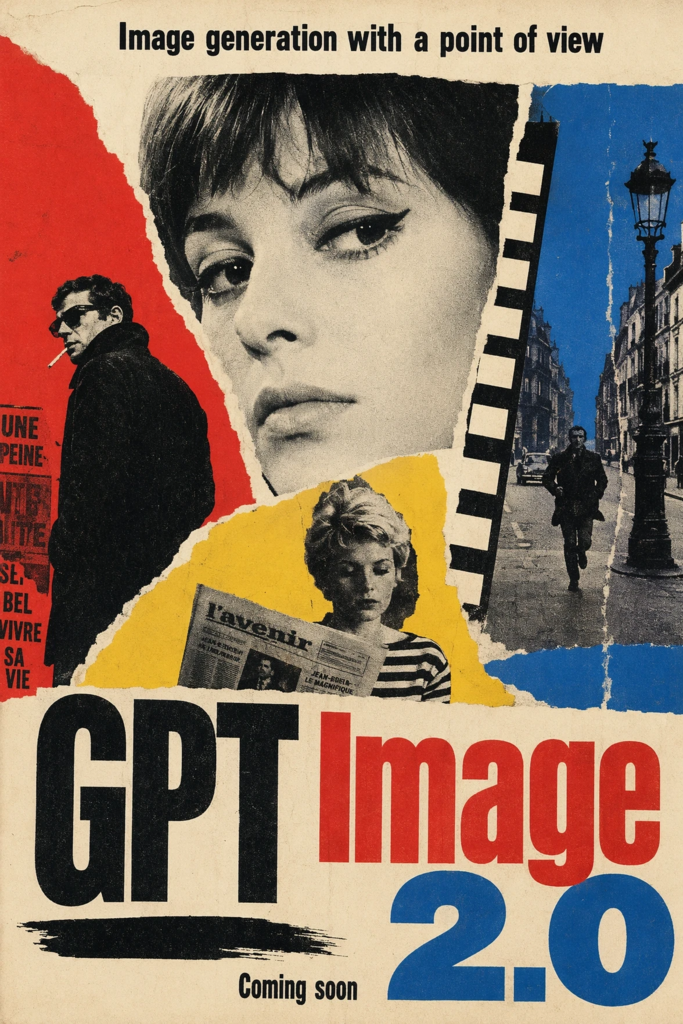
If I had to pick the single most important practical advantage, I would probably choose text rendering.
For years, image generation has struggled with words inside images. Posters, menus, labels, interface mockups, ad creatives, presentation covers, packaging, and information graphics all exposed the same problem: the text was often messy, broken, or unreadable. That limitation kept many image models stuck in the world of inspiration rather than production.
GPT Image 2 looks much more ambitious here. Better text rendering means the model becomes more useful for commercial and design-heavy tasks, not just artistic experiments.
This Expands Real Business Use Cases
Once a model can handle text more cleanly, it becomes relevant for a much wider range of visual work:
Marketing graphics
Ad-style visuals, promo cards, launch banners, and social posts become more realistic use cases.
Product presentation
Packaging concepts, labeled objects, and branded mockups become easier to test.
Storytelling formats
Comics, editorial layouts, and information-led visuals become more practical.
That is a major leap because it moves the model from image creation toward communication design.
Editing Power May Matter More Than Generation Power
A lot of people still judge image models by asking how well they create from scratch. That matters, but it is only half the story. In real work, people often need to revise, extend, or improve something that already exists.
That is why GPT Image 2 feels especially strong in editing-oriented workflows. It supports image input as well as text input, which means it can work from an existing visual rather than always starting from zero. That is a huge advantage for anyone doing transformation rather than pure invention.
Why This Works So Well With Existing Assets
Most creative work does not start from a blank canvas. It starts from a photo, a draft, a mockup, a rough composition, or a previous asset that is close but not finished. A model that can understand and modify an image intelligently is often more valuable than one that can only create new pictures from scratch.
It Supports Better Creative Continuity
When you begin with an existing image, you naturally keep more continuity. Subject identity, framing, lighting logic, and overall structure can carry through the workflow more effectively.
It Makes Revision More Practical
This is what makes the model feel mature. Instead of asking AI to guess your vision repeatedly, you can show it the starting point and guide what should change.
The Model Is Stronger Where Older Tools Often Failed
The gap between a demo image and a deliverable image is still one of the biggest problems in AI visuals. Lots of tools can make something eye-catching. Fewer can make something usable.
GPT Image 2 looks stronger because it addresses some of the exact areas where older models felt weak:
| Creative Need | Why It Matters | To image AI |
| Prompt accuracy | Reduces wasted generations | It appears better at following complex instructions |
| Text in visuals | Essential for posters and branded assets | It handles rendered text more convincingly |
| Structured layouts | Needed for design-led outputs | It shows stronger layout awareness |
| Image editing | Real projects often start from existing assets | It supports image input and transformation |
| Production use | Creators need repeatable workflows | It feels more suitable for iterative creation |
This is the kind of progress that matters more than flashy sample images. It improves the model’s usefulness, not just its wow factor.
Why It Feels More Like A Tool Than A Toy
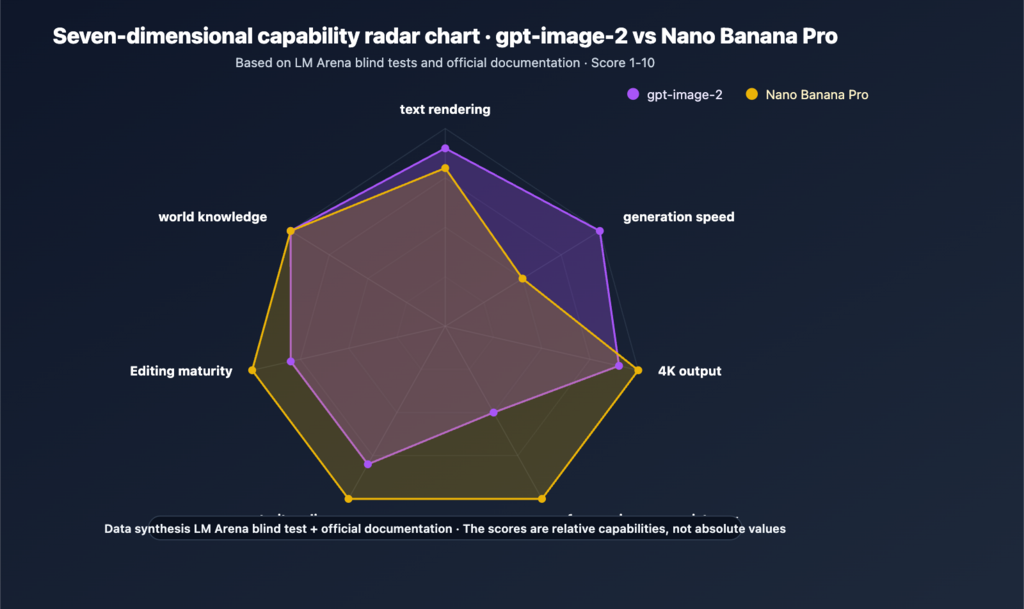
The best way to describe GPT Image 2 is that it feels more serious. Not serious in style, but serious in workflow value.
It is not only about making something that looks impressive on social media. It is about supporting repeated use in creative production. That includes generating ideas, editing source images, refining branded visuals, testing layouts, and building assets that need more control than earlier models could usually provide.
It Rewards Better Direction
This is also why the model may appeal more to people who think visually and strategically. The better your creative direction, the more the model seems able to respond with something useful. That is a meaningful change from systems that often felt like they were improvising around your request rather than actually following it.
What It Still Does Not Magically Solve
Even a strong model is still a model. It does not remove the need for taste, clarity, or iteration.
Results still depend on how well the request is written.
Complex design tasks may still require multiple generations.
Some outputs may still look polished but need human judgment before they become usable.
That is worth saying clearly, because the strength of GPT Image 2 is not that it eliminates creative decision-making. Its strength is that it raises the ceiling and improves the odds that your direction will actually make it into the final image.
Why GPT Image 2 Matters Right Now
The image generation space has become crowded, so the models that stand out now are the ones that solve real friction. GPT Image 2 matters because it appears to solve better problems. It is not only trying to create prettier images. It is trying to become more dependable in the places where users actually struggle: text, layout, editing, and instruction following.
That is why it feels like a meaningful step forward. It reflects a broader shift in AI image creation, from pure spectacle toward controllable visual production. And that is also why its strongest use case is not just freeform prompting. It is the moment when a user has a real task, a real asset, and a real need for the model to follow through with discipline.