Business growth brings exciting opportunities and tough decisions. One of the biggest challenges? Finding a workspace that fits your budget or Cost-Effective Office Solutions without locking you into a decade-long lease or draining your capital reserves.
Traditional commercial real estate in Australia’s major cities continues to climb. Sydney CBD office space averaged $850 per square meter annually in 2024, while Melbourne followed at $620. For a startup team of 10 needing 150 square meters, that’s $127,500 yearly before fit-out costs, utilities, or maintenance.
The math simply doesn’t work for many growing businesses. Fortunately, the Australian commercial landscape now offers smarter alternatives that deliver professional workspaces at a fraction of conventional costs.
Why Traditional Office Leases No Longer Make Sense for Every Business
Standard commercial leases typically require 3-5 year commitments with annual increases built into agreements. Property owners demand bank guarantees or personal guarantees, often equivalent to 6-12 months of rent. Factor in fit-out expenses ranging from $500 to $2,000 per square meter, and you’re looking at substantial upfront investment before anyone sits at a desk.
Growth-stage businesses face a paradox. They need professional space to attract talent and meet clients, but their financial resources belong in product development, marketing, and hiring. Tying up $200,000+ in office infrastructure creates cash flow pressure exactly when flexibility matters most.
Remote work solved part of this puzzle but revealed new problems. While some roles thrive with distributed teams, businesses in manufacturing Cost-Effective Office Solutions, logistics, architecture, and construction still need physical workspaces. Hybrid models demand rethinking traditional office assumptions.
Modular and Portable Office Alternatives
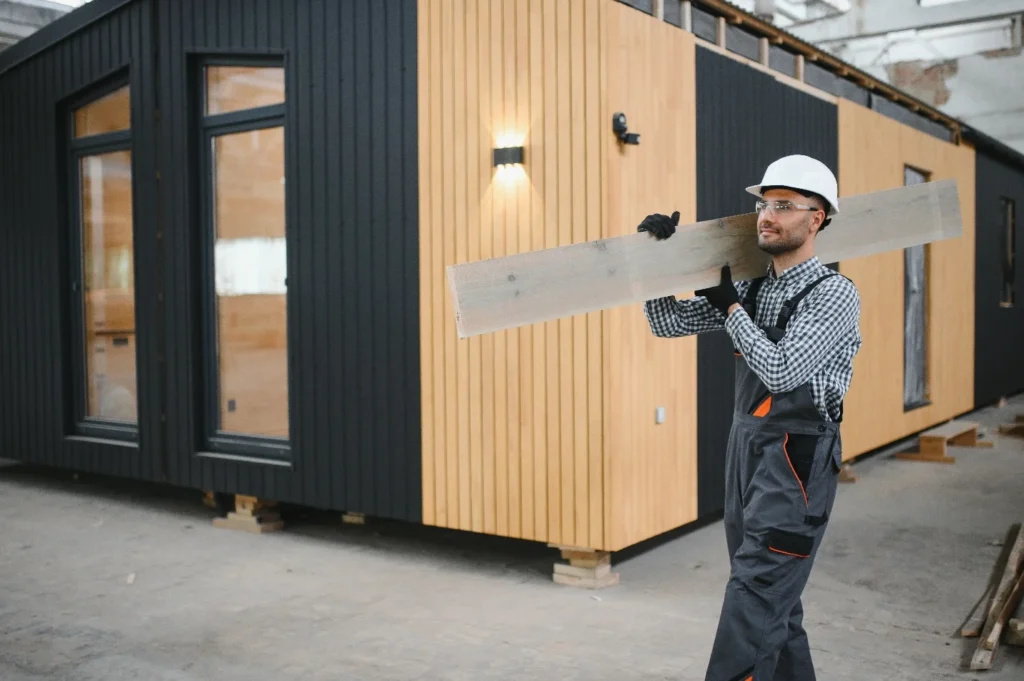
Australia’s climate and geography make portable workspace solutions particularly viable. Steel-frame modular offices can be installed on-site within days, providing immediate workspace without construction delays or council approval headaches.
A shipping container workshop transforms industrial storage units into functional workspaces. These conversions include insulation, electrical systems, climate control, and professional finishes. The modular nature allows businesses to start with one unit and expand as teams grow, adding sections without disrupting operations.
Providers such as Instant Sea Containers specialise in container-based office and workspace solutions designed for Australian conditions. Their range of modified containers supports use cases ranging from site offices and project hubs to long-term commercial workspaces, offering a practical alternative to traditional building or leasing.
Manufacturing businesses use these setups for on-site project management offices, keeping supervisors close to production floors. Construction companies deploy them at job sites, eliminating travel time between office and worksite. Wholesale operations convert containers into showrooms, meeting spaces, or inventory management offices or Cost-Effective Office Solutions.
Cost comparisons reveal substantial savings. A fully fitted 20-foot container office (approximately 14 square meters) costs $25,000 to $35,000 to purchase, or $250-400 weekly to rent. Compare that to CBD office rent of $500-700 weekly for similar space, plus fit-out costs. The portable option becomes even more economical when you eliminate commute expenses and position offices exactly where operations happen.
The Rise of Hybrid Workspace Models
Forward-thinking businesses now split their workspace strategy across multiple solutions rather than relying on single large offices. Teams might maintain a small CBD presence for client meetings while housing operational staff in affordable industrial zones.
This distributed approach offers flexibility that traditional leases cannot match. Sales teams work from co-working spaces near client concentrations. Operations staff use on-site facilities near warehouses or manufacturing plants. Administrative functions shift to suburban offices with easier parking and lower costs.
Australian businesses saved an average of 38% on real estate costs by adopting hybrid models, according to 2024 research from CoreLogic Commercial. That’s capital redirected toward hiring, technology, or market expansion.
The key is matching workspace type to actual needs rather than defaulting to conventional office assumptions. Do your engineers need CBD addresses, or do they need quiet spaces with proper equipment? Does your admin team require client-facing locations, or would they prefer avoiding city commutes?
Smart Space Planning for Growing Teams
Efficient workspace design multiplies the value of every square meter. Open-plan layouts with designated focus zones accommodate more staff than traditional cubicle farms while improving collaboration. Hot-desking systems reduce required space by 30-40% for teams with flexible schedules or field-based roles of Cost-Effective Office Solutions.
Break zones matter more than many founders realise. Employee satisfaction surveys consistently show that breakout spaces rank among top workplace amenities, often above premium coffee or snacks. These areas don’t need elaborate fit-outs. Simple setups with comfortable seating, natural light, and separation from desk areas significantly boost morale and productivity.
Storage optimisation prevents workspace waste. Vertical filing systems, digital document management, and off-site archive storage free up premium floor space for actual work. Many businesses discover they can house growing teams in existing footprints simply by eliminating unnecessary storage.
Climate control investment pays back quickly in productivity and comfort. Queensland businesses running operations in metal buildings without adequate cooling lose productivity during summer months. Proper insulation and climate systems cost more upfront but create year-round comfortable environments that retain staff and maintain output.
Converting Underutilised Industrial Space
Businesses with existing warehouse or industrial facilities often overlook conversion potential. That empty corner of your warehouse could become offices with basic partitioning and minimal investment.
Industrial conversions work particularly well for:
- Manufacturing operations needing supervision offices adjacent to production
- Logistics companies requiring dispatch centers near loading docks
- Wholesalers wanting showrooms connected to inventory
- Service businesses housing field teams near equipment storage
Building within existing structures avoids external construction costs and planning permits. You’re already paying rent or ownership costs on the space. Converting unused areas into functional offices maximises return on those fixed expenses.
Basic conversions including insulation, lighting, heating/cooling, and finishing can run $300-600 per square meter – significantly below ground-up construction or CBD fit-outs. The work typically completes in weeks rather than months, and modifications don’t require relocating teams or disrupting operations.
When Container Offices Make Strategic Sense
Modular container solutions excel in specific scenarios where traditional offices struggle. Construction projects spanning multiple years need on-site management facilities that relocate as work progresses. Pop-up retail operations require quick deployment and easy removal. Seasonal businesses scale workspace up and down without long-term commitments.
The logistics advantages become apparent during installation. A crane places a fully equipped container office anywhere on your property within hours. Electrical and data connections plug into existing infrastructure. No foundation work, no construction crews, no permit delays.
Businesses operating across multiple sites use identical container units to standardise workspace. Project managers moving between locations find familiar setups at each site. Equipment, layouts, and systems remain consistent, reducing adjustment time and increasing efficiency.
For companies wanting comprehensive information about converting shipping containers into professional office environments, everything you need to know about sea container offices covers specifications, regulations, design considerations, and real-world applications. The guide addresses practical questions about permits, customisation options, and long-term viability that inform smart workspace decisions.
Calculating Total Cost of Ownership
Smart workspace decisions require looking beyond monthly rent figures. Total cost analysis includes:
Direct Costs:
- Base rent or purchase price
- Utilities (electricity, water, internet)
- Insurance
- Maintenance and repairs
- Cleaning and upkeep
Hidden Costs:
- Commute time for staff
- Parking expenses
- Lost productivity during relocations
- Unutilized space during slow periods
- Break lease penalties if business changes
Opportunity Costs:
- Capital tied up in deposits or purchases
- Cash flow restricted by long-term commitments
- Flexibility lost to fixed lease terms
A CBD office at $60,000 annual rent might actually cost $85,000 when you add parking ($200/month per space), higher utility rates, and staff commute time valued at $50/day per person. That same budget could deliver substantially more space in industrial zones with better access and lower operating expenses.
Portable and modular solutions shift many costs from fixed to variable. Need less space next month? Remove a unit. Expanding operations? Add capacity within days. This flexibility carries real financial value, particularly for businesses in growth phases or industries with seasonal fluctuations.
Future-Proofing Your Workspace Strategy
Business needs shift faster than five-year lease terms allow. The team you’re building today might look completely different in 18 months. Workspace strategies need matching flexibility.
Successful businesses now plan workspace in phases rather than committing to single large solutions. Start with core requirements. Add capacity as revenue justifies expansion. Test different workspace types before committing to major investments.
This staged approach limits risk and provides adaptation room as business models evolve. E-commerce operations might need warehouse space initially, then add showrooms as they develop wholesale channels. Service businesses could start fully remote, add project offices as contracts grow, then establish permanent facilities once revenue stabilises.
The Australian commercial real estate landscape keeps shifting toward flexible solutions. Landlords offer shorter terms, modular spaces, and shared facilities. Container offices, warehouse conversions, and hybrid models become mainstream rather than alternative options.
Smart workspace decisions balance immediate needs against future flexibility, cost efficiency against professional presentation, and fixed investments against variable solutions. The right answer varies by business type, growth stage, and operational requirements. But one thing’s certain – the old model of defaulting to traditional office leases no longer serves growing businesses well.
Finding workspace that supports growth without constraining cash flow demands creative thinking and willingness to challenge conventional assumptions. Whether that means modular offices, converted warehouses, or distributed hybrid models, Australian businesses now have options that simply didn’t exist a decade ago. The question isn’t whether alternatives work – it’s which combination best serves your specific situation.
See how this fits into the bigger picture at Management Works Media.