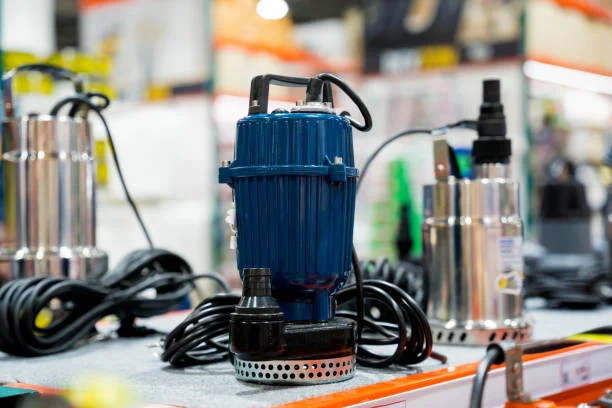
Flooding in your home can happen quickly. One day you wake up and see no water. The next day you wake up to six inches of it. If you find yourself suddenly dealing with floodwater in your home, a submersible water pump can work wonders.
It’s one of the best tools to get water out quickly. Used incorrectly, though, and it can put your family’s safety at risk.
In this complete guide, we’ll cover everything you need to know about using a submersible pump for residential floods.
What Is a Submersible Water Pump?
Simply put, a submersible water pump is designed to sit in the water and pump it out. A traditional pump sits on dry ground and sucks up water from above the unit. When set up properly, a submersible pump empties large volumes of water much quicker.
There are two common varieties you’ll find for home use, electric submersible pumps and battery-powered. Electric pumps pack more power, but you need to take extra precautions around electricity and water.
Battery-powered pumps are safer to use around floodwater but won’t pump as fast as their electric counterparts.
Gear Up for Safety First
Before you even touch that pump, dress for the job. Floodwater may look clean, but it likely carries sewage, contaminants, bacteria, and debris. Rather than jumping right in to protect your home, you need to protect yourself first.
You should wear:
- Rubber boots up to your knees at minimum
- Waterproof gloves
- Safety goggles
- Chemical-resistant face mask or respirator if sewage or chemicals are visible or smell present
- Old clothes that you don’t care about
Never try to fight flooding barefoot or in sneakers. Always keep a pair of rubber boots in an easily accessible spot in your home, ideally year-round but definitely during hurricane season.
Cut the Power
Ok, now the hard part. Electricity + Water = Fire hazard (sometimes literally.) To keep you and your pump safe, shut off the power to any area of your home with floodwater in it. Go to your breaker panel and turn off the electricity to any room affected by floodwater. If your breaker panel is submerged, DO NOT touch it. Instead, call your electric company and have them cut the power from outside.
If you aren’t 100% sure the power is off, treat it as if it’s not. Use a non-contact voltage tester on outlets near the water, as well as any visible wiring. Once you’ve determined the power is off to the affected areas of your home, you can safely bring the pump inside.
Pick the Right Pump
Just like traditional water pumps, not all submersible pumps are created equal. Since you’ll likely not have time to properly research which pump is best during an actual flood, here are a few things you should look for ahead of time. Keep these things in mind when picking which pump to buy and keep on hand:
Flow Rate
The higher the better, but if you’re pumping out a flooded basement, look for something that can pump at least 1,500-2,000 gallons per hour (GPH).
Solid Handling Capacity
Floodwater contains debris. Make sure the pump can handle at least ½-inch solids, or else anything too big will clog the pump.
Head Height
Head height is how high the pump can push the water. Make sure the pump you buy can pump water at least as high as your foundation to the street.
Power Source
This goes without saying, but if you don’t have electricity, pick up a battery-powered backup pump or water-powered submersible pump.
Install Your Pump Correctly
Ok, now that you’ve suited up, turned off your electricity, and chosen your pump. Let’s get it set up correctly. Place the pump in the lowest point of the flooded area. Position it so that the water will fill the pump as much as possible.
Attach your pump’s discharge hose to the outlet. Ensure the discharge end is directed away from your home’s foundation. Check the pump’s float switch, if equipped. Some submersible pumps have a float switch that automatically turns the pump on when the water reaches a certain level.
Plug in the pump using a heavy-duty outdoor extension cord. Do NOT submerge any part of the electrical cord or outlet in water. Keep all connections above water at all times. Turn the switch to “On” and let the pump run for a few minutes. Ensure that water is flowing from the discharge hose. Listen for any odd noises.
Never leave your submersible pump unattended for long periods. Check back every 15-20 minutes to ensure there’s still water in the intake and it’s not making weird noises.
Direct the Water Somewhere Safe
As important as removing water from your home is, where you place that water matters too. Do not point the discharge hose towards your home’s foundation. Pumping water next to your home can cause it to leak down into your home’s foundation.
Point the hose towards the street, storm drains, or low areas of your yard that naturally drain. By displacing the water far away from your home, you can lessen the chance of re-flooding.
Make sure where you’re pumping won’t cause issues for neighbors. Some areas forbid you from pumping water into the street. Check your local ordinances.
When to Stop Pumping
Don’t run your submersible pump dry! If a pump runs with no water in it for too long, it can burn out the motor. When the water gets down to around one or two inches, grab a wet/dry vacuum to finish the job.
If you hear loud grinding, loud rattling, or notice the water flow slow to a trickle, turn the pump off. Unplug it and check the intake screen for blockages.
Case Study: Extraction of Large Volumes From Residential Basements
Submitted by Texas A&M University (AgriLife Extension), a highly-respected leader in disaster recovery/flood mitigation.
During flash flood conditions, multiple residences were affected by rapidly rising water. When attempting to extract water from their basements with typical utility pumps, homeowners reported pump failure after mere minutes, unable to keep up with incoming water. “Failure” is defined as the pump becoming totally clogged with “silt and organic debris” (translated from geekspeak: mud & grass.)
BACKGROUND: When you’re buying pumps for floodwater mitigation, you need to look for Solid Handling Capacity (SHC). Floodwater is murky sludge, not perfectly clean H2O bubbling around your submerged pump motor. Algae, dirt, sticks, leaves, grass, and who knows what else wreak havoc on typical pump design by literally gumming up the motor.
HOW IT WORKED: Emergency restoration contractors brought in trucks with submersible “trash pumps” (also known as submersible pumps designed for pumping solids.) This particular model uses a special pump design known as a “vortex impeller”. Basically, the motor spins super-fast to create an actual vortex whirlpool inside the unit. Solids get pulled into the center of the cyclone up through a drainage hole without coming into contact with any of the parts that spin around!
THE RESULTS: Using pumps rated for 1/2″ solids or better allowed the crews to literally pump 2,000+ gallons of water per hour…nonstop…without burning out a single motor. Their efforts helped prevent the exterior water pressure from buckling the foundation walls.
Safety note before we go any further. If you need help with choosing the right pump or tips on operating around contaminated floodwater, please see the “Equipment” section of this guide.
Why won’t my pump finish the job? Questions & Answers.
Can I plug my submersible pump into my wall socket?
Technically, yes. However you really should only plug your pump into a GFCI outlet (those little kitchen outlets with “Test” and “Reset” buttons). Because your basement is flooded, the closest GFCI outlet is most likely on the floor above. If you must plug into the wall, use a heavy-duty, 12-gauge outdoor extension cord and… NEVER let the “plugged in” end of that extension cord rest in the water! Plug it in while it’s still on a ladder or balanced on top of a dry table.
Question: My pump runs for a while, then shuts off before the floor is dry. What’s up with that?
Built into just about every submersible pump is a simple float switch. Imagine a tiny plastic “bobber” that floats on top of the water, connected to your pump motor by a piece of wire. When the bobber floats, the circuit is closed and your pump turns on. As the water level drops, the float drops too, breaking the electrical connection and shutting the pump off. Once you reach the last 3 or 4 inches of water, that float will drop below the switch and cut power to the pump. From here on out, you’re going to need either a special “puddle sucker” (very-low suction pump) or you’ll want to break out a wet/dry shop vac to finish the job.
Question: Can I just grab the pump by the power cord and lower it into position?
NO! Just because you can do something, doesn’t mean you should. Grabbing your pump by the cord is the surest way to tear apart the internal seals holding your pump together. Water in your pump will cause a major short circuit and/or electrocution. Always lower your submersible pump into position using the handle or special eyelet provided. If there is no handle, tie a piece of nylon rope to the pump cord’s strain relief and use THAT to lower your pump into place.
What is “Head Height”?
Head Height is pretty simple once you think about it. Head Height is how hard your pump can fight gravity. Is your basement floor 8 feet below street level? Then you need a pump with a much higher Max Head than “8 feet”. Picking a pump with only a 10 foot max head means that once the water reaches street level, it will literally drip out of your pump. Plan on selecting a pump with a Max Head of 15-20 feet or more for a typical basement.
Since my neighbor’s yard is lower than my yard, can I pump all the water into his lawn?
Tempting. A really dumb idea. If you do this, you will almost ALWAYS get in a fight with your neighbor and likely lose. Most cities have laws stating you must pump the floodwater onto your OWN property (so it can soak away,) into a storm drain or directly into the street gutter. Pumping INTO your sanitary sewer system (sinks, floor drains) can cause property sewage backups. Now you’ve got a BIG problem.
Final Words
Once you’ve pumped all the water out, it’s not over yet. You want to dry out the affected area as quickly as possible. Use fans, dehumidifiers, and open windows to dry out your home. This prevents mold growth. Mold can start growing in as little as 24-48 hours.
Disassemble your pump and give it a good rinse with clean water. Allow it to dry completely before storing it in a dry location. Clean and store your pump properly so it’ll be ready to go next time you need it. Hopefully you never need these tips, but if flooding happens, stay safe and let your submersible pump do the work for you.