
Feeling comfortable at home seems natural until subtle changes begin to take shape. Initially, the airflow seems unusually weak, and within a short time HVAC Services, indoor temperatures stop matching your preferences.
These little inconveniences accumulate, season after season, without much noticeable effect on comfort, energy consumption, and indoor air quality. These problems often go undetected until there is a decline in system performance or a significant need to make repairs.
Throughout this period, most homeowners find it difficult to determine what services are really important over the course of a year. Nevertheless, when closely monitored and addressed in time, the majority of HVAC issues can be managed before they escalate.
With the regular support of systems, comfort levels are maintained, and daily life becomes less stressful. This article discusses the most crucial HVAC services any home requires throughout the year and how each helps ensure the system’s comfort, efficiency, and reliability.
1. System Inspection and Performance Check
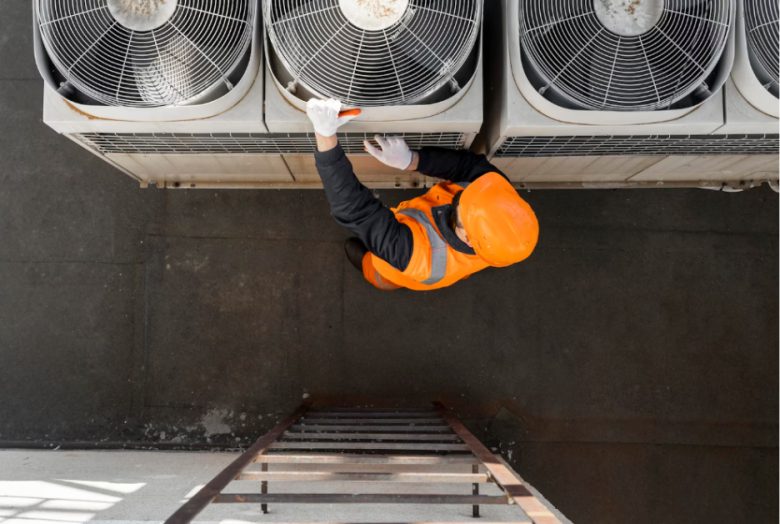
Periodic check-ups of the system are critical to ensuring reliability throughout the year. In cases where the inspections are not carried out, small inefficiencies HVAC Services tend to grow and impact the general performance.
During periodic check-ups, professional HVAC services assess airflow levels, electrical connections, thermostat response, and safety controls to ensure the system is functioning as intended. It is done to detect wear in its early stages before it disrupts normal comfort.
Also, performance checks indicate areas where the system may be running more than necessary, wasting unnecessary energy. By performing correct inspection, one can make appropriate adjustments to restore normalcy and effectiveness.
Consequently, the heating and cooling devices work with reduced effort and more reliability. In the long run, regular check-ups minimize the occurrence of unexpected failures and help in the operations running more smoothly with varying seasonal conditions.
2. Heating System Maintenance
HVAC systems are integral to heating equipment that is used to sustain indoor comfort in colder seasons. Internal components undergo constant stress as usage increases, and this eventually affects efficiency.
The check of burners, heat exchangers, and safety controls is performed as routine maintenance to guarantee stable functioning. These checks are effective at preventing uneven heating and air blockage. Also, calibration maintains the temperature response.
As maintenance is regularly performed, the heating keeps warm air circulating without overworking the heating system. Such a performance is balanced and helps HVAC Services ensure comfort without wasting energy.
Reliability and minimization of risks of failure in the cold season in long intervals are reinforced with scheduled heating care.
3. Cooling System Tune-Up
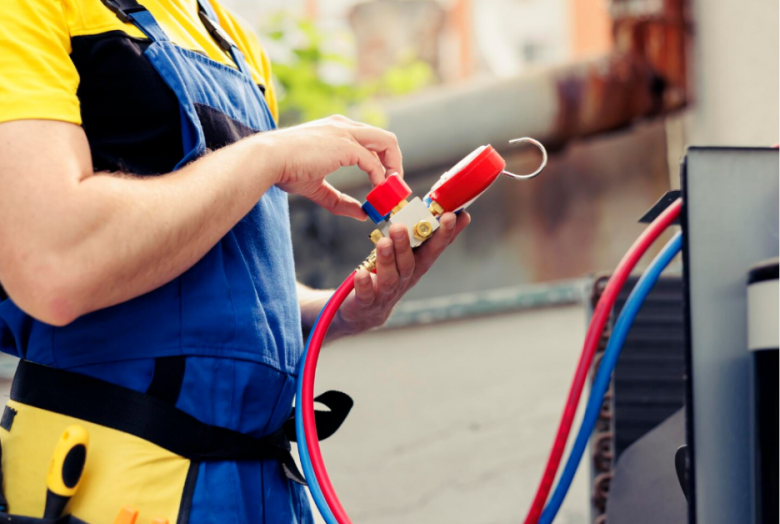
Cooling performance is more crucial in conditions where temperatures are rising, and demand on the HVAC system is increasing. Dust and refrigerant imbalance gradually reduce system efficiency when maintenance is neglected.
Tune-up service involves cleaning coils, checking refrigerant levels, and inspecting electrical components to maintain stable operation. These measures enable the effective elimination of heat in the indoor air.
Moreover, adjusting the airflow enhances humidity regulation, which is a strongly affecting factor in comfort. When the cooling system operates efficiently, indoor temperatures recover more quickly and more uniformly throughout the living areas.
This enhanced effectiveness decreases the pressure on the key parts and aids reliable functioning in harsh environments in case of prolonged heat exposure.
4. Air Filter Replacement and Airflow Balance
Air filter replacement supports both indoor air quality and system performance. When filters remain clogged, airflow becomes restricted and forces equipment to work harder.
Over time, this strain reduces efficiency and increases wear on internal components. Regular filter changes allow air to move freely through the system, supporting steady heating and cooling output.
Along with filtration, airflow balancing ensures conditioned air reaches each room evenly. Without proper balance, certain areas may feel uncomfortable while others receive excess airflow.
By correcting these issues, the system maintains a consistent temperature distribution. This approach not only improves comfort but also helps extend equipment lifespan by reducing unnecessary operational stress.
5. Ductwork Inspection and Sealing
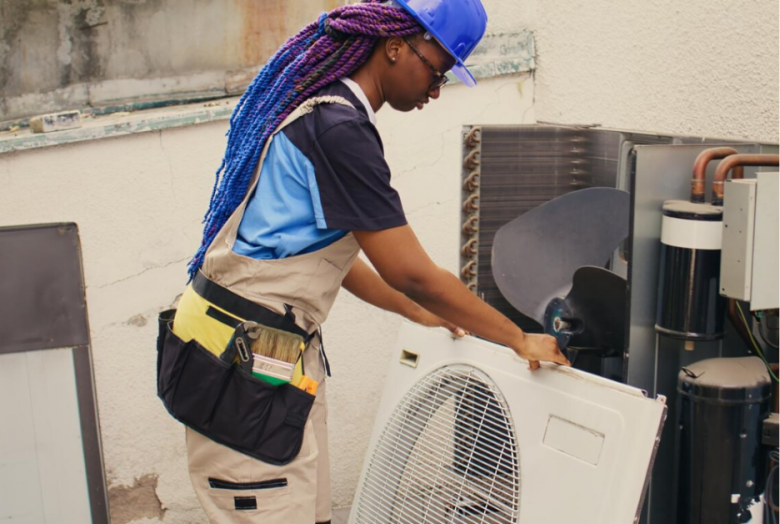
Ductwork serves as a delivery pathway for conditioned air and strongly influences HVAC performance throughout the home. Over time, small leaks, loose joints, or insulation gaps allow air to escape before reaching intended living spaces.
As this loss continues, rooms may feel uneven despite consistent system operation. During inspection, pressure loss points are carefully identified and properly sealed to restore efficient airflow.
This adjustment improves temperature consistency and allows air to reach each area as designed. In addition, sealed ducts reduce the entry of dust, moisture, and outdoor particles into airflow paths, supporting cleaner circulation.
When air moves freely through the duct network, comfort becomes easier to maintain. Proper duct sealing also helps reduce unnecessary workload placed on system components, supporting more stable operation over time.
6. Thermostat Calibration and Control Setup
Thermostat accuracy plays a direct role in maintaining steady indoor comfort and consistent HVAC response. When temperature readings differ from actual room conditions, the system may cycle too frequently or fail to respond at the right time.
Over time, this mismatch leads to uneven comfort and unnecessary energy use. Calibration ensures the thermostat reflects true indoor temperature, allowing equipment to operate as intended.
In addition, proper control setup supports scheduled adjustments that align with daily routines and occupancy patterns. With programmed settings, temperature remains balanced without constant manual changes.
Accurate controls also help prevent overcooling or overheating caused by delayed response. As a result, system operation becomes smoother and more predictable. Reliable thermostat performance supports stable comfort while improving efficiency throughout the year.
7. Preventive Repair and Component Adjustment
Preventive repair focuses on correcting small issues before they develop into major failures. Components such as capacitors, contactors, and wiring connections naturally wear over time.
When left unattended, these parts can cause sudden breakdowns during peak usage. Through routine service visits, technicians identify early warning signs and perform timely adjustments. This approach improves reliability and prevents disruption during extreme weather.
In addition, preventive care supports balanced system operation by ensuring each component performs its role efficiently. As a result, equipment experiences less strain and maintains stable output. Consistent preventive attention helps protect long-term performance and extend overall system lifespan.
Conclusion
Year-round comfort depends on more than occasional repairs. Instead, it relies on steady care that supports every part of the HVAC system. From inspections and tune-ups to airflow balance and preventive adjustments, each service plays a specific role in maintaining indoor stability.
When these services work together, systems respond efficiently to seasonal changes without added stress. As a result, temperature remains consistent HVAC Services, air quality improves, and unexpected failures become less likely.
By focusing on regular HVAC care rather than reactive fixes, homeowners create dependable comfort that lasts through every season.
Explore more resources crafted to help you grow at Management Works Media.