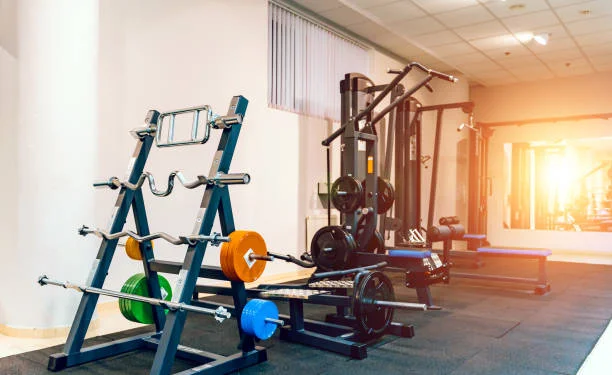
Your gym equipment can be as important as your fitness workouts are when it comes to gaining strength and reaching your fitness objectives. Barbells and dumbbells have their own advantages and disadvantages, and free weights and machines and functional trainers, but they also presuppose a certain impact on the development of your muscles Right Strength Training Equipment, your nervous system, and the safety of your exercises.
The studies indicate that the outcome of training is usually dependent on the nature of the equipment one works with in selecting inadequate tools will either slow down your improvements or restrict your benefits. As an example, the free weights are able to engage the muscles of stabilization and enhance coordination. The machines are able to guide you and reduce the risk of injury; they all have their purpose.
The reason why it matters is to discover the impact of various forms of equipment on strength, hypertrophy, and functional performance so that you can have a training set-up that actually works. Regardless of whether you are starting a home gym, or you are refining your already existing one, or whether you are only beginning to work out, it is important to know which equipment to use according to what goals you have in mind so that every workout matters.
5 Ways to Choose the Right Strength Training Equipment for Your Goals
The first step in equipment is understanding how your body adapts to various types of resistance training. We will give the answer to what needs to be examined by research and how that answer must influence your equipment choices.
Realize Strength Adaptation Differences.
A systematic review and meta-analysis comparing free-weight and machine-based training based on dozens of studies is one of the most extensive studies done on this topic. Researchers discovered that gains in strength are likely to be an indication of the kind of training you carry out. When the strength was assessed through free-weight exercises, the individuals who were trained on the free weights performed better in the free-weight tests. In the case of strength testing, machine-based training would yield higher results compared to the case of machine exercise. But in comparing strength gains in modalities in neutral trials, such as in isometric strength, countermovement jump, or combined indicators, there were no significant differences between the free weight and machine. This informs us that the gains in your strength tend to be movement and modality-specific and not necessarily one tool that is universally the best.
The point in this study is that a basic concept, when it comes to becoming stronger in one very specific lift (say, a barbell squat), the modality that is employed the most frequently will produce the best improvements in that particular pattern.
Understand Muscle Growth (Hypertrophy) Outcomes
The other important result of the same meta-analysis is that there seems to be no significant difference between free-weight training and machine training in terms of muscle hypertrophy ( increase in the size of the muscles ) under the same volume and intensity of work. Among the studies in the research, both the muscle cross-sectional area and thickness increased similarly after time-limited training with either type of resistance training.
It implies that machines and free weights can both help you achieve your desired outcome in case you want to build a body. The most important thing is the intensity of the training, the regularity of your training and whether your programming is a gradual challenge to your muscles.
Muscle Activation and Functional Movement
Although there can be a comparable increase in overall size, studies indicate that free weights tend to cause a higher overall muscle activation during multi-joint compound movement than machines. Repeated measurements of muscle activity through electromyography (EMG) have demonstrated that free-weight exercises like squats and deadlifts involve the activity of muscles known as stabilizers since the load is not directed on a predetermined path. This has the potential to improve neuromuscular coordination and control during complex movement patterns.
More activation will not necessarily cause more growth to the muscles, but at least will indicate that free weights have the capacity to enhance the general movement quality and functional strength, which is especially valuable when one is training to compete in sports or in everyday life to have the ability to balance and coordinate their actions.
Match Equipment to Experience and Safety Needs
The advantage of machines that is practical is that they provide a guiding, steady movement path that decreases the technical requirements of your body. This is why machines come in handy, especially to beginners and individuals who are rehabilitating due to injury or simply to an individual who would prefer to establish confidence with resistance training first before advancing to more advanced movements. With the help of machines, you can concentrate on the work of particular muscles without thinking of balance.
Whereas free weights can have a wider stimulus, they must be performed in proper form, control, and technique to prevent injury, particularly when working with heavy weights. When beginning with resistance training, it is better to begin on the machines or with lighter free weights and build up the strength and confidence before progressing to heavier free weights.
Think Long-Term: Diversity and Development
Free weights are some of the most versatile equipment you can have or use at the gym. These tools can include a pair of dumbbells, a barbell, and plates, which can be used to perform dozens of exercises that strengthen all of the major muscle groups. This not only conserves space and money but also allows you to increase the load slowly and as you become stronger by doing so.
Machines cannot be as flexible as they usually undertake in certain patterns of movement, although they also have a significant role to play. As an example, machines may assist in isolating a weak muscle, regulating joint motion or enabling you to push intensity safely without a spotter. Lots of lifters who have gone through that process have managed to incorporate free weights and machines in their routines, combining the two types of exercises to achieve the desired results.
Conclusion
Studies indicate that free weights and machines serve significant purposes in strength training, and they cannot be considered universal when it comes to their usefulness in different objectives. Adaptation of the body- whether you want to be strong, build muscle and power- depends on how well the training is similar to the movement you are training for.
Free weights are superior in functional strength improvement and use of stabilizer muscles, whereas machines are safe, predictable and accessible, particularly to beginners or injury rehabilitation.
In case you want to achieve better results in certain lifts for Right Strength Training Equipment, base your program on those exercises. Whether or not you are doing muscle growth, you can be sure to use either of the two types of equipment as long as your program pushes your muscles to work. Think about your level of experience, space, budget and your likes, and come up with a balanced method that will ensure that you continue to achieve in a safe and effective manner in the long term.
Continue the story with insights closely tied to this posts at Management Works Media.