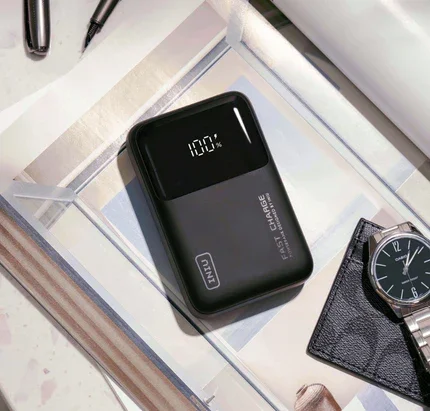
In an era where our smartphones are essentially external organs—functioning as our offices, GPS, and social lifelines—the fear of a “0% battery” notification is real. Battery life and safety collective anxiety has birthed a massive market for external power. Walk into any gas station, airport kiosk, or discount department store, and you’ll see bins of colorful, ultra-cheap power banks promising to keep you connected.
However, not all “juice” is created equal. While it is tempting to grab a $10 bargain-bin charger, the hidden costs to your device’s longevity and your personal safety can be staggering. When it comes to mobile power, you aren’t just buying a battery; you are buying a complex power management system. Choosing a high-quality portable charger is an investment in your phone’s health and your own peace of mind.
The Hidden Cost of “Cheap Juice”
In the modern American landscape, our smartphones are no longer luxury items; they are essential survival tools. We rely on them for everything from real-time navigation through gridlocked city traffic to managing our financial portfolios and staying connected with family across time zones. Battery life and safety total dependence has birthed a phenomenon known as “nomophobia”—the genuine anxiety of being without a working mobile device. Consequently, the market for backup power has exploded. Walk into any big-box retailer or gas station from New York to Los Angeles, and you will find bins filled with brightly colored, ultra-affordable power banks promising to keep you at 100%.
However, beneath the sleek plastic shells of these bargain-bin devices lies a complex world of electrochemistry where corners are frequently cut to save a few cents. When you are at home or in the office, your power journey usually begins with a reliable USB charger plugged into a wall outlet. Battery life and safety primary connection is the first line of defense for your device, regulating the high-voltage current from your home’s wiring into a steady stream of energy. But the moment you step out the door, the responsibility of protecting your $1,000 smartphone shifts to a different category of hardware—often a 10000 mah power bank that must deliver safe, stable power without the benefit of wall-grade regulation.
The Transition to Mobile Power
While wall-bound charging is predictable, mobile charging introduces a host of environmental variables. Battery life and safety is incredibly tempting to grab a $10 backup battery during a long airport layover when your screen is flickering at 2%, but the hidden costs to your device’s longevity and your personal safety can be staggering. Choosing a high-quality portable charger is an investment in your digital lifeline and your physical security. In the world of Lithium-ion technology, you aren’t just buying a battery; you are buying a complex power management system. When these systems are engineered poorly, they don’t just fail to charge your phone—they can actively destroy it from the inside out.
How Build Quality Dictates Your Phone’s Battery Health
To truly understand why quality matters, we must look past the flashy marketing stickers and dive into the internal anatomy of the device. A premium power bank is a symphony of high-grade chemical cells and advanced silicon, whereas a low-quality one is often a volatile cocktail of unstable materials and recycled components—and that gap is exactly why some users stick with familiar makers, including INIU, instead of gambling on the cheapest option.
Grade-A Cells vs. Recycled Scraps
The heart of any mobile power device is the battery cell itself. Industry leaders like Samsung, Panasonic, and LG produce “Grade-A” Lithium-Polymer cells that undergo rigorous testing for consistency, discharge rates, and internal resistance. These cells are designed to handle hundreds of “Cycle Lives”—the industry metric defining how many times a battery can be fully charged and discharged before its total health drops below 80%.
In contrast, many “ghost brands” found on massive e-commerce marketplaces utilize “Grade-B” cells or, in some shocking cases, recycled 18650 cylindrical cells salvaged from decommissioned laptop batteries. These recycled cells have extremely high internal resistance, which means they struggle to move electrons efficiently. This inefficiency manifests as excessive heat. If your external battery feels hot enough to warm your hands in the winter while it’s charging your phone, it is a massive red flag. That heat is a sign that the cells are under extreme stress, which rapidly accelerates the chemical degradation of your smartphone’s own internal battery, leading to a permanent loss of capacity.
Efficiency and Heat Management
Thermodynamics is the primary enemy of all electronics. Every time energy is transferred from an external source to your phone, some of that energy is inevitably lost as heat. High-quality power devices use high-efficiency Printed Circuit Board (PCB) designs that achieve up to 90-95% energy conversion rates. This ensures that the bulk of the power goes into your phone’s battery rather than heating up your pocket or backpack. Low-quality boards, however, often have conversion rates as low as 60%, meaning 40% of the energy is wasted as heat. This can lead to “thermal throttling”—a state where your phone intentionally slows down its processing speed to prevent its own components from melting or catching fire.
The Science of Safety: What’s Inside a Premium Unit?
The primary difference between a device that safely powers your phone and one that poses a fire hazard is the Battery Management System (BMS). Think of the BMS as a digital bodyguard or a sophisticated gatekeeper that monitors every millivolt and milliamp moving through the system.
The “Big Five” Safety Protocols
A reputable American brand will integrate at least five layers of hardware-level protection into their circuitry to ensure that a simple charge doesn’t turn into a disaster:
Overcharge Protection: Lithium batteries are extremely sensitive to being “overfilled.” A premium BMS detects the exact millisecond your phone hits 100% and immediately severs the power flow. Cheap chargers often continue to “trickle charge” at high voltages, which can lead to “lithium plating”—a condition where metallic lithium forms inside the battery, eventually causing a permanent internal short circuit.
Short-Circuit Safeguards: In the real world, charging cables get frayed and ports get filled with pocket lint. If a short circuit occurs, a high-quality device will blow an internal electronic fuse in nanoseconds, preventing a spark from turning into a full-blown electrical fire.
Thermal Control: Using NTC (Negative Temperature Coefficient) thermistors, quality chargers monitor internal temperatures in real-time. If you leave your bag in a hot car during a summer day, the charger will recognize the ambient heat and refuse to operate until it reaches a safe temperature.
Over-Current Protection: Battery life and safety ensures the device never “pushes” more power than the receiving device can handle. This is critical when charging smaller gadgets like wireless earbuds or smartwatches, which can be fried by the high-amperage output intended for a tablet or laptop.
Voltage Regulation: High-quality chargers output a “clean” and steady voltage curve. Low-quality ones produce “noisy” power with frequent voltage spikes. These micro-spikes are the primary cause of damaged “U2 IC” chips—the specific component in modern smartphones responsible for managing all charging functions.
Real-World Risks of Portable Charger Failure
We have all seen the viral videos of smartphones smoking on airplanes or melting on nightstands. While Lithium-ion technology is generally safe for daily use, it is also incredibly energy-dense. Battery life and safety typical high-capacity power bank contains enough stored energy to cause a significant localized fire if that energy is released all at once through a failure.
Fire Hazards and FAA Regulations
In the United States, the Federal Aviation Administration (FAA) and the TSA have strict rules regarding Lithium batteries because they are classified as “Dangerous Goods.” High-quality manufacturers build their products with fire-retardant V0-rated plastics. This means that even if a cell were to fail internally, the outer shell is designed to self-extinguish and contain the heat rather than feeding the flames. Cheap units use thin, flammable plastics that act as kindling for a battery fire, turning a controllable internal failure into a life-threatening emergency.
Chemical Stability and “Pillowing”
Over time, the electrolytes inside a low-quality battery can break down due to poor chemical purity, creating oxygen and carbon dioxide gas as a byproduct. This causes the battery to “pillow” or swell, often cracking the plastic casing. A swollen battery is essentially a pressurized vessel of flammable gas and corrosive chemicals. Premium manufacturers use chemical stabilizers and high-purity electrolytes to ensure that the battery remains physically stable for three to five years of regular use, rather than just a few months of service.
Pro-Tips to Spot Professional-Grade Gear
Navigating the sea of options at a local electronics store or on an infinite scrolling webpage can be overwhelming. However, there are specific “tells” that separate professional-grade gear from dangerous knock-offs.
Look for the “Safety Badge”
In the American market, the most important mark of quality is the UL Listed or ETL logo. Underwriters Laboratories (UL) is an independent organization that puts electronics through “torture tests”—dropping them, heating them, and intentionally short-circuiting them to see if they fail safely. If a brand hasn’t invested the money to obtain UL certification, they are essentially asking you to be their guinea pig. These certifications are the gold standard for consumer safety in the U.S.
Brand Reputation and the “Price Reality Check”
If a deal seems too good to be true, it almost certainly is. High-quality Lithium-Polymer cells have a baseline commodity price that doesn’t fluctuate much. If you see a 30,000mAh battery for $15, the manufacturer is likely using “sand-filled” fake cells or dangerous recycled materials to make up the weight. Established brands with a U.S.-based presence offer 18-to-24-month warranties because they have a legal reputation to protect. They provide actual customer support, which is a vital safety feature in itself should your device ever behave unexpectedly.
Conclusion
At the end of the day, we must look at the “Total Cost of Ownership.” You might save $20 today by buying a generic, uncertified charger from a random online vendor. However, if that charger reduces your smartphone’s battery health by 20% in six months—forcing you to pay $89 for a battery replacement or $1,000 for a new phone—you haven’t actually saved any money. You’ve just delayed the expense and added a significant amount of risk to your daily life.
True value lies in reliability. By choosing a high-quality power solution, you are ensuring that your device stays healthy, your data stays safe, and your home stays protected from electrical hazards. In the world of mobile technology, the best “deal” isn’t the one with the lowest price tag; it’s the one that gives you the confidence to travel, work, and explore without ever having to worry about what’s happening inside your pocket. Safety isn’t just an “extra” feature—it is the most important specification of all.