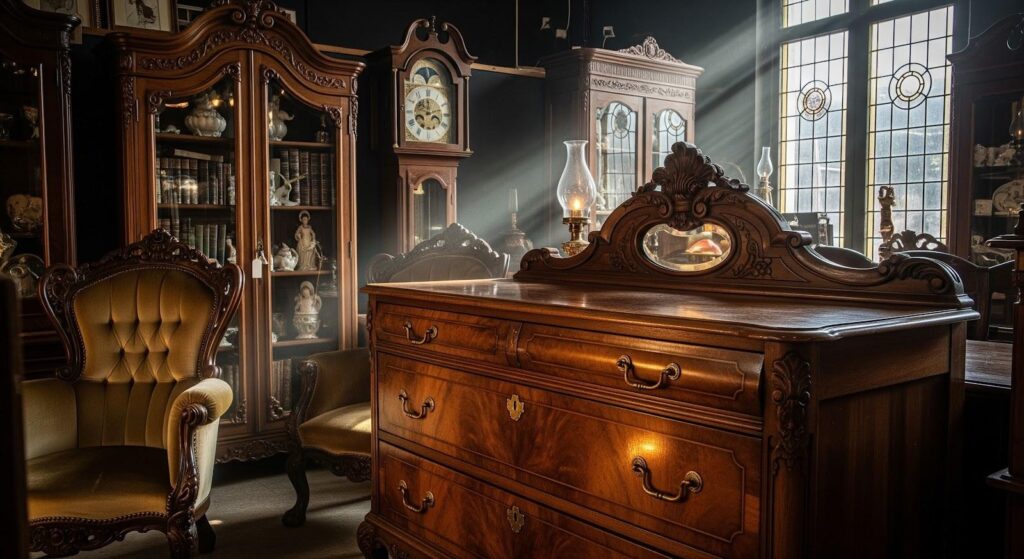
Renovations are messy. They are noisy, dusty and disorganized. When you are preparing to build something, it takes more than a drop sheet to cover a table in order to protect the antique furniture.
The following is a workaround, stepwise approach to the process of preserving your precious furniture in the event you go through it.
Understanding the Risks: Dust, Vibration, and Humidity
When we consider damage we tend to think of a builder who drops a ladder in a cabinet. Although that is a very legitimate fear, the unspoken adversaries are usually more lethal.
- Dust: Renovation dust is composed of silica abrasive, plaster, and sawdust. When this settles into wrought carvings, it acts like sandpaper. Later wiping it off may create micro-scratches dulling the finish.
- Vibration: Knocking down walls vibrates in the house. In the case of old animal glues on antiques, joints can be loosened or the veneers may crack as a result of these vibrations.
- Humidity and Temperature: The interior of a house is prone to unpredictable weather when it is opened up (removal of windows or roofs). Drastic variation in humidity may cause timber to swell and dry periods may lead to shrinkage and splitting.
The “Stay or Go” Decision: What Furniture to Move
You have to triage your furniture before you purchase even a single roll of bubble wrap. Determine what can be maintained and what has to be evacuated.
Products to move out of the store now:
- Any furniture having loose joinery or having wobbles.
- Furniture (sofas, armchairs) which holds dust in the fabric.
- Prices of products are very expensive and damage is devastating.
Things that may possibly remain:
- Big and heavy items (wardrobes, bookcases) which are difficult to transport through narrow halls.
- The furniture that is in the rooms which are totally separated from the renovation area.
Off-Site Storage Solutions for Antique Preservation
In case the risk is excessive, the best choice is to relocate goods.
You may think of the garage of a friend. Garages are usually not insulated resulting in dampness which causes the mould of leather or warping of timber.
The professional path is more secure to many homeowners. If you are in Victoria and need space, then using a Self Storage Facility Melbourne can prove to be a savior as you will have a special, climate-controlled room where your treasures will remain out of the plaster dust.
When you access storage, do it like a house move. Do not place heavy boxes on antique chairs, and raise things off the concrete floor on pallets to allow airflow.
Creating an On-Site Sanctuary Room for Furniture
When you can not move everything out, the Sanctuary Room strategy will work.
Select a room as remote as possible to the construction area. Stuff it in like Tetris, the heavy ones at the back, the light ones at the front. Then, seal the room tight:
- Tape the door: Seal all the openings around the frame of the door with painter tape.
- Seal the vents: Dust travels through ducted heating/cooling. Cover the vents in your sanctuary room with plastic.
- Cover Keyholes: This is pedantical, but tape the keyhole. And you would be surprised at the quantity of dust whistling through that small opening when a power sander is operating nearby.
The Golden Rule of Wrapping Wood and Antiques
The way to wrap furniture on-site or to move it, either way, is important.
Do not wrap timber with plastic. Wood needs to breathe. When you wrap an antique table with a tight plastic wrap and the temperature varies, you may actually have condensation in the inside that will leave white water marks or lifting veneer.
Follow this layering method:
- First Layer (Breathable): Moving blankets, used cotton sheets, or paper pads may be used. This shields against scratches and allows the air to pass through.
- Second Layer (Protective): Now wrap the blankets with the plastic or bubble wrap to form the dust barrier.
- The Feet: Keep the feet covered with plastic to avoid mopping water or spills, but ensure moisture isn’t trapped against the wood for too long.
Navigating Furniture Removal in Heritage Homes
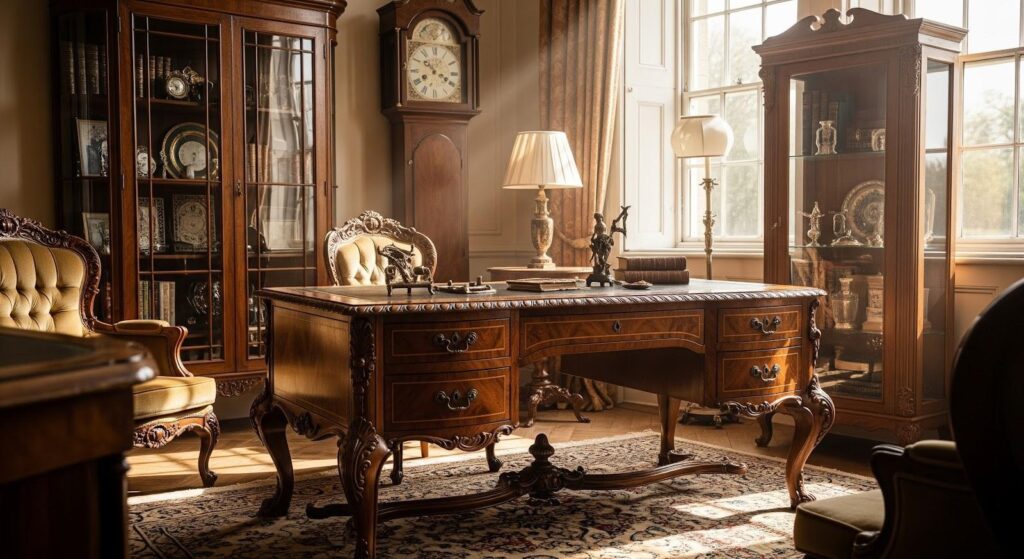
Moving furniture becomes complicated in case of a period home. Older houses are full of tight corners and narrow corridors unlike the modern open-plan constructions.
This is especially essential when it comes to the process of a complex heritage house restoration, where the very house is as delicate as the furniture within it, and thus one has to carefully move around the old architraves and the uneven flooring.
Before you move a large piece:
- Twice measure: Test the piece against the slightest place of each doorway.
- Secure the house: Place wall corner guards and place heavy cardboard on floors.
- Take off projections: Knobs, handles, protruding feet. These are the elements that are most likely to get stuck on a door frame.
Wait one week before returning antiques.
- Dust settles slowly: Even a clean, dust will take days to settle.
- Fumes to be cleared: Fresh floor polish and paint off-gassing fumes. These do not often react with antique waxes, although sometimes they do.
Let the house air out. When you carry things back, wipe them with a soft and dry cloth and make sure that the joints are not wobbling caused by the disruption.