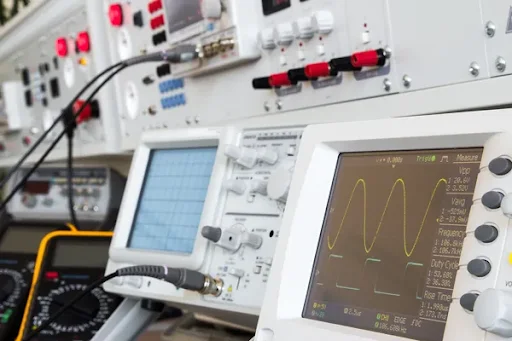
Discover everything you need to know about oscilloscopes, including digital and mixed-signal types, waveform analysis, signal measurement, and essential features for electronics testing and circuit troubleshooting.
Oscilloscopes are essential tools in electronics, engineering, and scientific research. They allow professionals and hobbyists alike to visualize and analyse electrical signals, making them invaluable for diagnosing circuits, testing devices, and performing precise measurements. Understanding the features, applications, and types of oscilloscopes can significantly improve efficiency and accuracy in electronic work. Choosing a reliable used oscilloscope can be a cost-effective way to achieve professional-grade results without compromising on performance.
What is an Oscilloscope?
An oscilloscope is an electronic test instrument that displays voltage signals as waveforms over time. By showing how signals change, it provides a visual representation of electrical activity, allowing users to monitor performance, detect faults, and analyse signal behavior. Oscilloscopes are often used to observe periodic signals, measure voltage levels, and examine complex waveforms in real time.
Modern oscilloscopes combine analogue and digital technologies. Digital storage oscilloscopes (DSOs) have become particularly popular due to their ability to capture, store, and analyse data with high precision. When selecting an oscilloscope, key specifications such as bandwidth, sample rate, and input channels must be considered to match the specific requirements of the task.
How Oscilloscopes Work
Oscilloscopes work by measuring an input voltage and plotting it on a screen as a graph, with time represented on the horizontal axis and voltage on the vertical axis. This allows users to see the amplitude, frequency, and shape of the signal.
Signal acquisition is performed through probes connected to the device under test. These probes transmit the electrical signal to the oscilloscope, where internal circuitry processes it. The oscilloscope then converts the electrical information into a visual waveform, making it easier to identify patterns, fluctuations, and anomalies.
Advanced oscilloscopes offer features such as triggering, which stabilizes repeating signals, and mathematical functions that allow detailed analysis of waveforms. Users can measure parameters such as rise time, pulse width, and frequency, providing in-depth insight into circuit behavior.
Types of Oscilloscopes
Oscilloscopes can be broadly categorized into analogue, digital, and mixed-signal types. Analogue oscilloscopes display real-time signals directly on a cathode-ray tube (CRT), offering smooth waveform visualisation. Although they are less common today, they are still valued for their simplicity and continuous display of rapidly changing signals.
Digital oscilloscopes, on the other hand, convert signals into digital data. This enables storage, manipulation, and advanced analysis of waveforms. Digital storage oscilloscopes are widely used in laboratories and educational settings due to their precision and versatility. Mixed-signal oscilloscopes combine digital and analogue capabilities, allowing simultaneous analysis of both analogue and digital signals. These are particularly useful in embedded systems and complex electronic circuits.
Applications of Oscilloscopes
Oscilloscopes are used in a variety of industries and fields. In electronics engineering, they are essential for testing circuits, diagnosing malfunctions, and verifying designs. Engineers rely on oscilloscopes to ensure components and systems function as intended.
In telecommunications, oscilloscopes help monitor signal integrity, analyse modulation, and troubleshoot network issues. Similarly, in automotive engineering, they are used to examine sensor outputs, ignition systems, and electronic control units (ECUs).
Oscilloscopes are also vital in education, providing students with practical insights into waveform behavior and circuit dynamics. They are used in laboratories for experiments, research, and technical training, bridging theoretical knowledge with hands-on application.
Key Features to Consider
When choosing an oscilloscope, several features are crucial to ensure optimal performance. Bandwidth determines the frequency range the device can accurately measure, while sample rate affects the resolution and clarity of waveforms. Input channels dictate how many signals can be observed simultaneously, which is important for complex circuits.
Other considerations include the display quality, portability, connectivity options, and software capabilities. Some oscilloscopes provide USB or Ethernet interfaces for data export, remote control, and integration with analytical software, enhancing convenience and workflow efficiency.
Tips for Using an Oscilloscope Effectively
Effective use of an oscilloscope requires proper probe connection, signal grounding, and calibration. Ensuring the device is correctly configured prevents measurement errors and protects both the oscilloscope and the circuit under test.
Users should familiarize themselves with the instrument’s controls, including vertical and horizontal scaling, triggering options, and measurement tools. Learning how to adjust settings according to signal type is key to accurate waveform visualization.
Regular maintenance, such as cleaning probes and checking calibration, helps extend the lifespan of the oscilloscope and ensures reliable performance. Additionally, understanding the limitations of the device, such as maximum input voltage and bandwidth restrictions, prevents damage and enhances safety.
Advantages of Digital Oscilloscopes
Digital oscilloscopes offer numerous advantages over analogue models. They provide the ability to store and recall waveforms, apply mathematical analysis, and capture transient events that might be missed by analogue displays. High-resolution screens and advanced triggering features allow for precise examination of intricate signals.
Digital oscilloscopes also support connectivity with computers, enabling data logging, report generation, and integration with other testing equipment. This makes them particularly suitable for research, development, and professional electronics testing.
Common Oscilloscope Accessories
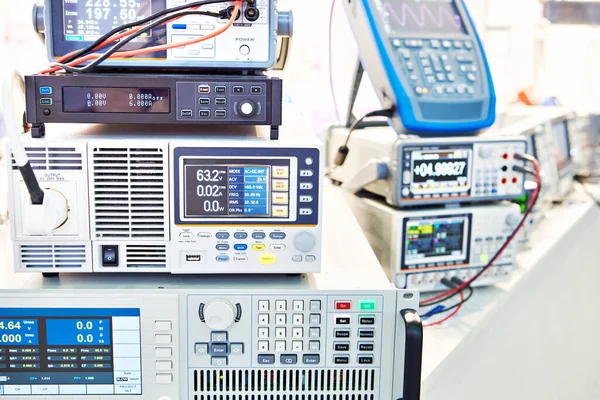
Accessories enhance the functionality and versatility of oscilloscopes. These include probes, differential probes, current clamps, and waveform generators. Probes allow safe and accurate signal measurement, while differential probes help examine signals with voltage differences between two points. Current clamps enable measurement of current without interrupting the circuit, and waveform generators provide test signals for evaluation and troubleshooting.
Using the right accessories ensures accurate results and simplifies complex measurements, making oscilloscopes a more powerful tool for engineers and technicians.
Conclusion
Oscilloscopes are indispensable instruments for anyone working with electronics, telecommunications, automotive systems, or scientific research. They provide visual insights into electrical signals, enabling precise analysis, fault detection, and system optimization. Understanding the types, features, and applications of oscilloscopes allows users to choose the right instrument for their needs.
Whether for professional engineering, educational purposes, or hobbyist projects, oscilloscopes improve efficiency, accuracy, and understanding of complex circuits. By selecting the appropriate model, utilizing proper techniques, and maintaining the device effectively, users can maximize the benefits of this essential testing tool.
Optimizing your knowledge of oscilloscopes ensures better signal analysis, faster troubleshooting, and more effective design verification, reinforcing their role as a cornerstone of modern electronics and scientific research.