Key Takeaways
- Sliding doors are a common source of energy loss due to conduction, convection, and radiation through glass and frames.
- Upgrading to energy-efficient sliding doors with Low-E coatings, double or triple-pane glass, insulated frames, and quality weatherstripping reduces energy bills and improves comfort.
- ENERGY STAR-certified sliding doors can save the average homeowner hundreds of dollars annually while decreasing greenhouse gas emissions.
- Routine maintenance, including cleaning tracks, inspecting weatherstripping, and applying caulk to gaps, ensures long-term efficiency.
- Additional measures such as reflective window films and thermal curtains can further enhance insulation and indoor comfort.
- Professional installation is critical to maximize the energy efficiency and durability of sliding doors.
Introduction
Sliding doors are a beautiful and functional addition to many modern homes, blending indoor spaces with outdoor patios while providing abundant natural light. However, without proper attention to energy efficiency, these expansive glass panels can compromise your home’s comfort and drive up heating and cooling costs. If you are considering upgrading your doors, understanding how sliding patio doors Fort Worth, TX, can impact your energy savings is an important first step. Proactively improving the energy efficiency of your sliding doors can significantly reduce utility costs and help maintain a more comfortable indoor environment, year-round.
Many homeowners find that old or poorly insulated sliding doors are among the leading sources of winter heat loss and summer heat gain. Addressing these issues not only improves comfort but also supports sustainability by reducing energy consumption and limiting your carbon footprint. In many regions, energy-efficient home improvements can also increase property values and appeal to potential future buyers.
Understanding how heat moves through sliding doors and what features to look for can help you make the right choices for your home. Energy loss around glass and frames is a common challenge. Still, modern innovations in glass coatings, glazing, and construction materials offer practical, effective ways to minimize this loss and make your living space more enjoyable year-round.
Understanding Heat Transfer in Sliding Doors
The flow of heat through sliding doors primarily occurs through three main processes: conduction, convection, and radiation. Conduction occurs when heat travels directly through touch between materials, such as glass panes. Convection refers to air movement, where warm air leaks out, or cold drafts get in around the frame or through poor seals. Radiation involves the transfer of heat through invisible rays: sunlight enters and warms the interior, or, conversely, warmth escapes to the outside through untreated glass.
Older or damaged sliding doors amplify each of these heat transfer methods, allowing your climate-controlled air to escape more quickly and forcing your HVAC system to work harder to keep up. Over time, this persistent energy loss can lead to noticeable increases in energy bills and pronounced discomfort during temperature extremes. By targeting these vulnerabilities through specified upgrades, homeowners can dramatically improve both comfort and efficiency.
Key Features of Energy-Efficient Sliding Doors
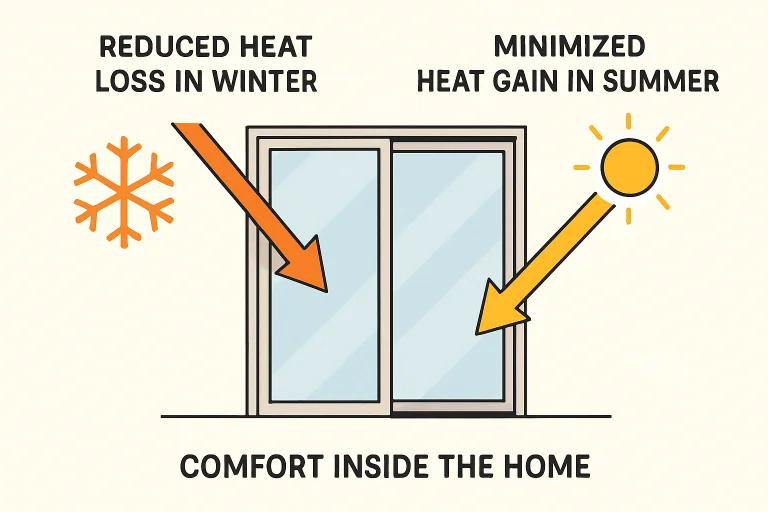
- Low-E Glass Coatings: Special low-emissivity (Low-E) coatings on glass help reflect infrared energy, which means that in the summer, heat from the sun is reflected away from your home, while in winter, indoor warmth is retained. Low-E glass maintains consistent indoor temperatures and protects against UV rays that can fade furniture and flooring.
- Double or Triple-Pane Glass: Insulated glass units with two or three panes and inert gas fills often argon or krypton create a thermal barrier. Multiple panes noticeably outperform single-pane glass, regulating temperatures more effectively and reducing exterior noise.
- Quality Weatherstripping: Tight, durable weatherstripping around the door frame is essential for preventing drafts, minimizing air leaks, and controlling humidity. Over time, weatherstripping can degrade and should be checked frequently and replaced as necessary.
- Insulated Frames: Frame materials make a substantial difference. While aluminum transfers heat easily, modern vinyl or fiberglass options offer superior insulation and increased resistance to thermal flow, making them a smart choice for energy efficiency.
Benefits of Upgrading to Energy-Efficient Sliding Doors
Replacing outdated sliding doors with energy-efficient models offers practical advantages beyond lower monthly bills. For example, ENERGY STAR-certified sliding doors can save the average homeowner up to $465 per year, depending on local climate and home size, according to the Environmental Protection Agency (EPA). These performance-based products offer exceptional insulation and have been rigorously tested to meet national energy efficiency standards.
- Reduced Energy Bills: Enhanced glass and frames reduce energy waste and lower heating and cooling costs. Reliable EPA data support these savings across a range of home styles and climate zones.
- Enhanced Comfort: Better insulation reduces fluctuations in indoor temperature by keeping warm or cool air where it belongs.
- Environmental Impact: Lowering overall energy demand curbs greenhouse gas emissions and promotes sustainability, which is a growing concern among homeowners nationwide.
Maintenance Tips for Optimal Performance
After upgrading to energy-efficient sliding doors, routine maintenance is crucial to keep them working at their best. Begin by keeping the tracks and rollers clean; dirt accumulation can hinder smooth operation and jeopardize the integrity of the seal. Thoroughly clean these areas several times each year to ensure doors close tightly.
- Clean Tracks and Rollers: Debris can reduce the effectiveness of the door seal and make doors harder to open and close.
- Inspect and Replace Weatherstripping: Look for areas of wear or gaps. Replacing weatherstripping that has become compromised is one of the easiest ways to improve energy efficiency.
- Apply Caulking: Check the frame for any visible cracks and seal them using a high-quality caulk. This prevents unwanted drafts and moisture intrusion.
Additional Measures to Enhance Energy Efficiency
To further reduce energy loss, families should consider adding reflective window films, which can reduce solar heat gain by 30 to 70 percent. These films reflect a large percentage of the sun’s rays while still allowing visible light to pass through. Adding thermal curtains is another simple yet powerful way to boost insulation on particularly cold or hot days. Heavy, insulated drapes trap indoor air and act as a barrier between the glass and your living space.
Finally, even the most advanced doors can perform poorly if installed poorly. Ensuring professional installation guarantees a proper fit and long-lasting weatherproofing.
Final Thoughts
Proactively addressing the energy efficiency of your sliding doors delivers immediate and long-term rewards: lower utility costs, greater indoor comfort, and meaningful environmental benefits. By using proven strategies such as upgrading to modern glass and frames, maintaining key seals, and adding simple insulation measures, you will enjoy more consistent indoor temperatures and a greener home year-round.