Ever walk into your home after a long day in Huntington Beach and think, “This place could use a refresh—but I really don’t want to deal with drywall dust or contractors camped in my kitchen?”
You’re not alone. With everything from labor shortages to supply chain delays, major home renovations have gone from inconvenient to borderline impossible. But most people don’t actually need to tear down walls to love their space again. In this blog, we will share ways to update your home without major renovation, using practical upgrades that fit real-life routines.
Fix the things that quietly drive you nuts
The sink that drips even when turned off. The toilet that runs just long enough to make you second-guess whether it stopped. These are the small, persistent issues that make a home feel older than it is. What they also do, quietly, is erode your patience. So before painting cabinets or rearranging furniture, start with function.
Plumbing problems in particular can’t be glossed over with decor. For anyone in Orange County who’s tired of dealing with low water pressure or leaky fixtures, working with a trusted local provider like Benjamin Franklin Plumbing of Huntington Beach can be the smartest first move. Their team doesn’t just patch things—they actually diagnose root issues and fix them right. No gimmicks, no upsells. In a region where hard water is notoriously rough on pipes and appliances, keeping the system running right is one of the most underrated updates you can make. You don’t see it, but you definitely feel it—every time you shower, wash dishes, or run laundry.
Once those foundational annoyances are handled, the whole space opens up. You start noticing what you can change, not just what’s broken.
Switch up surfaces without swinging a hammer
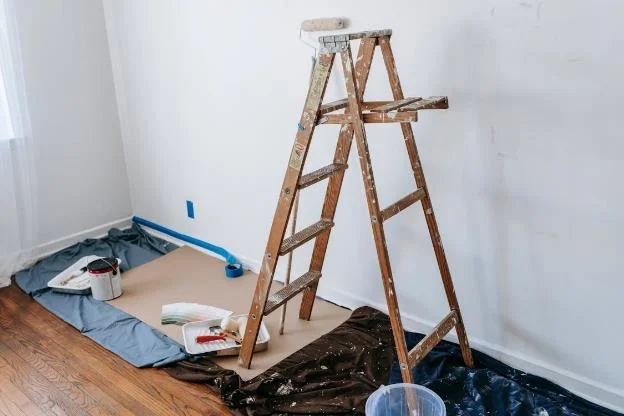
Paint is the most obvious surface upgrade, but it’s also one of the most powerful. Changing a room’s color—especially switching from something dark and dated to something lighter or more neutral—can make the entire space feel larger and cleaner without moving a single piece of furniture.
But it doesn’t have to stop at walls. Painting built-ins, kitchen cabinet doors, even tile backsplashes with the right materials gives the illusion of a total overhaul at a fraction of the cost. Swapping laminate countertops for butcher block or stone remnant slabs can add texture and contrast. Even just sanding and resealing wood floors instead of replacing them creates a sense of freshness that holds up.
The common thread is altering what your eye touches first. That’s where perceived value lives. You don’t need new everything—just new visual cues.
Hardware and lighting are low-cost power moves
Some homes are stuck in the 90s because of one thing: brass hardware and weird light fixtures. Replacing knobs, hinges, pulls, and faucets with black, brushed nickel, or matte finishes modernizes a space without needing to replace cabinets or counters. It’s the same principle as switching out shoelaces to update a pair of sneakers. Nothing structural changes, but the feel does.
Lighting upgrades matter just as much. Swapping a frosted-glass dome for a clean pendant fixture or adding a dimmer switch gives instant control over how a room feels at different times of day. Table lamps and sconces also reduce dependence on harsh ceiling lights, letting you shape the mood without touching the wiring.
And while you’re at it, make the switch to LED bulbs with warmer color temperatures. You’d be surprised how many homes still use cold white lighting that makes the living room feel like a waiting room.
Work with what you already have
Some of the best updates come from subtraction, not addition. Decluttering isn’t about chasing a minimalist aesthetic. It’s about making the space feel less anxious. The pandemic lockdowns made a lot of people look around their homes and ask, “Do I even like any of this?” Removing furniture that’s too bulky for the room, donating pieces you no longer use, or rearranging what’s already there to open up pathways makes a room feel bigger and more livable.
Refinishing or reupholstering furniture you already own is another powerful move. A scratched-up coffee table becomes a midcentury focal point with a sanding block and some stain. An old armchair turns luxe with new fabric. These small projects don’t just save money—they personalize your space in a way that new-store purchases can’t.
And let’s be honest: half the joy in updating your home is seeing what you can make better without replacing everything.
Embrace smart tools that don’t scream ‘smart home’
You don’t need to go full Jetsons to make your house function better. A few subtle tech upgrades can take the pressure off your day-to-day routine without turning your space into a blinking robot.
A smart plug can automate your lamps on a timer. A programmable thermostat can keep your place comfortable and energy-efficient. Video doorbells offer real security—not just the appearance of it. These tools aren’t flashy, but they work. And they don’t require pulling wire through drywall or installing complicated hubs.
Technology, when it’s chosen carefully, solves problems. It doesn’t exist just to flex in front of guests. The goal is simplicity, not spectacle.
The broader shift: refresh over rebuild
In the current market, full remodels don’t always make sense. With material costs still fluctuating and labor stretched thin, people are starting to look at their homes through a different lens. It’s no longer about making things new—it’s about making them work. The obsession with blowing out walls and gutting kitchens is being replaced by a quieter, smarter approach: take what’s there, and make it better.
This trend isn’t just about budgets. It’s about control. Small updates give you the power to change your space without waiting six months for permits or risking surprise costs. It’s responsive. It adapts to your needs now, not five years from now.
You don’t have to start over to feel like you live somewhere new. You just have to pay attention to the details—and choose changes that reflect how you live today, not how someone else lived twenty years ago.