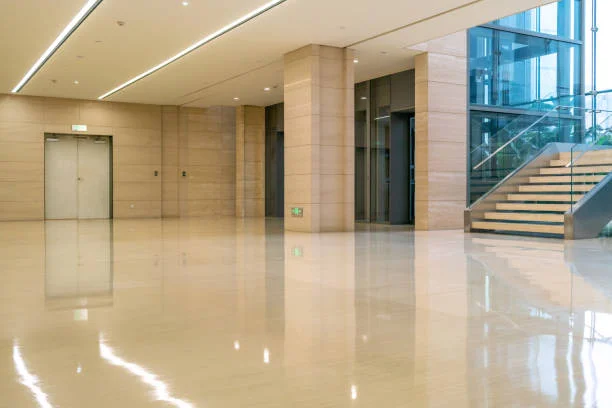
When customers walk into a business, they begin making judgments before anyone greets them. The floors beneath their feet, the countertops they lean against, and the walls that surround them all contribute to an immediate impression. Surface consistency across a commercial space might seem like a minor detail, but it plays a significant role in shaping how people perceive a business and how smoothly daily operations run.
Think about the last time you visited a restaurant where some booths had pristine tabletops while others showed chips, stains, or mismatched repairs. Even if the food was excellent, that inconsistency likely registered somewhere in your mind. You may have wondered about the overall care the establishment takes with its operations. This reaction happens automatically, often without conscious thought, and it affects everything from customer comfort to their willingness to return.
Commercial spaces face unique challenges that residential properties simply do not encounter. Foot traffic alone creates wear patterns that develop unevenly across different zones. A hotel lobby might see thousands of footsteps near the entrance while corners remain relatively untouched. Retail stores experience heavy use around checkout areas and fitting rooms while other sections stay pristine. Over time, these patterns create visual inconsistency that makes spaces look older and less maintained than they actually are.
The psychology behind surface perception runs deep. Humans evolved to notice irregularities in their environment as a survival mechanism. While we no longer need to spot predators hiding in the brush, our brains still flag inconsistencies as potential concerns. When surfaces within a commercial space vary noticeably in condition, color, or texture, customers pick up on these differences even when they cannot articulate exactly what feels off. This subtle discomfort can influence purchasing decisions, length of stay, and overall satisfaction.
From an operational standpoint, maintaining surface consistency simplifies cleaning and maintenance routines. When all floors share the same finish and condition, staff can apply uniform cleaning protocols without adjusting techniques for different areas. This standardization saves time, reduces training complexity, and produces more predictable results. Employees know what to expect, and managers can more easily identify when something needs attention.
Consider a medical office where examination rooms feature countertops in varying states of wear. Some appear factory fresh while others show years of use. For patients already anxious about their health, these differences can amplify concerns about cleanliness and professionalism. Healthcare environments demand particularly high standards because surface appearance directly connects to perceptions of hygiene and competence. Even when every surface meets strict sanitation requirements, visual inconsistency can undermine patient confidence.
The hospitality industry understands this principle well. Hotels invest heavily in maintaining uniform appearances across rooms because guests compare their experience to others. A guest who sees a neighbor’s room with newer fixtures or better-maintained surfaces will feel shortchanged, even if their own room meets all promised standards. This comparison effect drives hospitality businesses to prioritize consistency across their entire inventory of spaces.
Many business owners recognize this need when planning renovations or updates. Rather than replacing surfaces entirely, some explore restoration options that can bring older installations up to match newer ones. Services focused on Commercial Refinishing in Waco and similar markets often describe their work in terms of achieving uniformity across entire facilities, acknowledging that matching appearance matters as much as individual surface quality. This approach allows businesses to address consistency without the disruption of complete replacement.
Daily operations benefit from surface consistency in ways that extend beyond aesthetics. When flooring varies across a facility, equipment like rolling carts, pallet jacks, and cleaning machines may perform differently in different zones. Wheels designed for smooth surfaces struggle on textured areas, while equipment tuned for rougher floors may glide too freely on polished sections. These operational friction points add time to routine tasks and increase equipment wear.
Employee morale connects to workspace appearance as well. Staff members who work in well-maintained environments with consistent surfaces report higher job satisfaction than those surrounded by visible deterioration. The message that management cares about the workspace translates into a sense that management cares about the people who work there. This perception influences retention, productivity, and the pride employees take in their roles.
Safety considerations also favor consistency. Uneven surfaces, whether from patching, wear patterns, or mismatched materials, create tripping hazards and complicate emergency evacuation. When surfaces maintain uniform condition and traction, both customers and employees navigate spaces more confidently. Insurance considerations and liability concerns add financial incentive to these safety benefits.
The long-term value of maintaining surface consistency shows in property valuations and lease negotiations. Commercial real estate assessments consider condition carefully, and spaces with well-maintained, uniform surfaces command better terms. Prospective tenants touring available properties notice these details immediately, and their perception of space quality influences their willingness to pay premium rates.
Achieving and maintaining this consistency requires ongoing attention rather than occasional intervention. Small repairs made promptly prevent the accumulation of visible differences that eventually demand major restoration. Regular assessment helps identify areas falling behind the overall condition of a space, allowing targeted maintenance before gaps become obvious to customers.
The investment in surface consistency pays returns across multiple dimensions. Customer perception improves, operational efficiency increases, employee satisfaction rises, and property value holds steady or grows. While the work involved may seem purely cosmetic, the effects ripple through every aspect of how a commercial space functions and how people experience it.
Business owners who understand this connection between surface appearance and commercial success prioritize consistency as part of their overall strategy. They recognize that the physical environment communicates values, standards, and attention to detail more immediately than any marketing message. In competitive markets where customer choice abounds, these silent signals often determine which businesses thrive and which struggle to attract and retain the people they need to succeed.