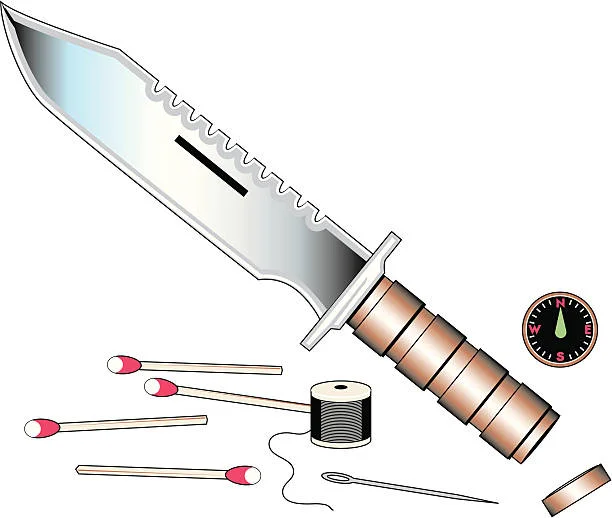
Knife skills in the wild are really about staying safe and reducing effort while thinking ahead.
They help you build, prepare, repair, and adapt without rushing or forcing outcomes. Out in the backcountry, good knife use isn’t just impressive – it’s practical Survival Knife Tips. It keeps you organised, capable, and better able to look after yourself when there’s no shortcut and no backup.
Below are five survival knife tips every hunter should practice.
Carry Tips
Carrying your knife in the wild is about feeling settled and capable, not loaded down or tense.
Keep it where your hand goes without searching, so reaching for it feels natural instead of awkward. That sense of familiarity becomes important when conditions turn demanding, or your focus is split between several tasks at once.
Whether your knife sits on your belt, your pack strap, or near your chest, picking one position and keeping it consistent builds trust through habit.
- Keep It Sharp
Keeping your knife sharp while out in the Great Smoky Mountains is really about respect, for the tool and for your own energy.
You don’t wait until it’s useless, you check it the way you check your boots or the weather. Small touch-ups become part of camp life, done slowly and without problems.
You’re gentle with the edge, avoid damaging surfaces, and fix little issues before they grow. A few passes on a belt or sharpener smooth the edge and bring it back to life.
- Building Shelter
Building a shelter is one of the most practical uses for a knife, and it requires a calm, steady approach.
Each careful cut turns rough materials into something dependable. As the shelter takes shape, there’s a quiet confidence that settles in. You haven’t rushed or wasted effort. You’ve worked with clear focus and intention, and the result feels solid and reassuring.
Turning raw materials into something protective and dependable Survival Knife Tips is where real confidence in the backcountry comes from.
- Self Defense
Carrying a knife for self-defense on a hunting trip is less about action and more about responsibility.
It’s there as a backup, not a macho plan. Out in remote places, comfort comes from awareness – noticing animal behavior, reading terrain, and giving situations the space they deserve.
A knife can offer peace of mind simply because it’s dependable and familiar, something you know how to handle calmly if fear spikes. The real aim is never confrontation; it’s creating distance, staying composed, and getting yourself to safety.
- Fishing
Good knife skills make fishing smoother from start to finish.
It starts with a relaxed grip and a bit of patience. You’re not hacking or rushing – you’re guiding the blade with light pressure and clean angles, letting sharp steel handle the effort.
Even simple tasks like scaling or bleeding a fish benefit from patience and precision.
In Summary
Knife skills shape how smoothly everything else works in the backcountry.
They turn obstacles into quick fixes and long tasks into manageable ones. Good technique helps you read materials, choose smart approaches, and keep momentum through long hours outdoors.
Don’t miss this highlighted post that’s trending with readers just like you.