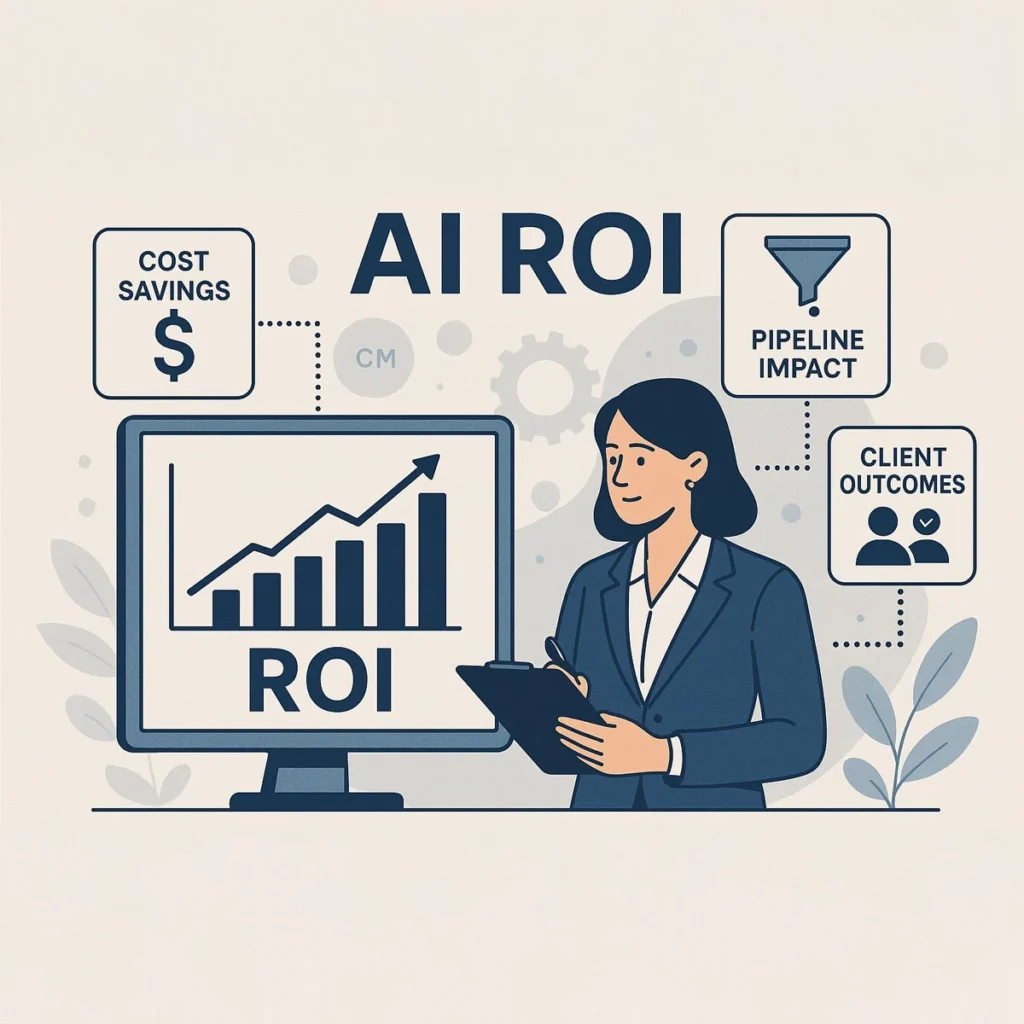
In 2026, the business decision-making process emphasizes speed, accuracy, and accountability. Analysts in a particular sector are no longer measured by the accuracy of the reports they submit, but by the results they deliver. The development of market changes centers on analytics, which involves managing information effectively. It should be noted that AI does not downplay the role of analytics; rather, it elevates it. This explains the reason behind the assessment of the ROI on the analytics of AI in organizations to fuel business decision-making.
It is necessary, for understanding the return on investment of AI in analytics, that attention must shift away from automation alone and toward its impact on decision quality, decision speed, and measurable business outcomes.
AI as an Accelerator for Analytics
The logic of analytics has always been simple. Analysts formulate business queries, analyze related data, identify patterns, and then come up with recommendations. The traditional method of conducting business in a world of Analytics means the data has to be processed manually, a static dashboard exists, and typically, historical reporting.
AI analytics speeds up the analysis process by accelerating all its steps. Although it benefits the preparation of data, the identification of patterns in big data, and the explanation of shifts in metrics, it also strengthens the role of analytics, increasing its significance rather than reshaping the boundaries of what analysis means. This is significant in delivering the return on investment value of decision intelligence AI applications.
Where the Real ROI Actually Comes From
The return on AI analytics is not generated solely by technology; it stems from tangible improvements in decision-making and execution.
1. Faster Time to Insight
One of the clearest drivers in ROI is speed. AI reduces the time analysts spend cleaning data, building reports, and investigating anomalies. Insights that used to take days or weeks can now surface in minutes. Faster insight cycles enable leadership teams to act while opportunities are still relevant.
2. Better Decision-Making Accuracy
AI supports more effective decision-making by checking a far larger range of variables than can be handled manually. It finds correlations, outliers, and trends that might otherwise not have become apparent. This leads to better forecasts, stronger risk assessments, and more reliable strategic recommendations.
3. Better Resource Utilization
When decisions improve, resource allocation improves along with them. Enterprises using AI analytics also report a clearer prioritization of budgets, initiatives, and operational efforts. Analysts can quantify which actions drive the highest impact, strengthening the business case for AI decision-making at scale.
AI Analytics and Forecasting ROI
Forecasting is one of those areas where the application of AI analytics provides a significant return on investment. Traditional forecasting is highly dependent on averages, assumptions, and trends based on the past. This creates gaps in fluctuating markets.
With every passing day, new information becomes available, automatically updating AI-assisted forecasting models. This helps analysts evaluate as many scenarios as possible, understand the driving factors, and make informed forecasts with probable outcomes. In this way, it reduces expensive misinterpretations.
So, better foresight for a financier would mean less wastage, better demand forecasting, or better revenue predictability- all of which have a direct bearing on the return on investment.
Decision Intelligence AI & Strategic Impact
It also brings in better strategic alignment for ROI. Decision intelligence AI links data analysis with decision results, enabled through AI that allows understanding not only what is happening but also why it happens. It, therefore, allows improved communication of data analysis to business stakeholders.
By having transparency into the reasoning behind recommendations, leadership is more likely to quickly and confidently adopt a decision. This eliminates barriers between the analytics team and decision-makers, increasing the business value of analytics investments.
Making Analytics Scalable While Maintaining Analytical Rigor
Another important aspect of ROI that needs consideration is scalability. AI makes analytics accessible to various teams without necessarily growing the workforce. Natural language processing and automated insights ensure that analytics are available to everyone.
Yet, scale should not be achieved to the point where analysis loses its precision. It is upon analysts to verify, check if their hypotheses are valid, and integrate their business perspectives. If AI can support and not substitute analysts in their work, scale and trust would be achieved.
AskEnola’s Impact on Analysts’ Return on Investment
AskEnola has been designed keeping in mind the demands of analysts who demand speed without compromising on the clarity of the data. The main aim of the platform is to develop observable data from the enterprises and convert it into meaningful insights. AskEnola ensures the development of meaningful insights by automating the process of generating them.
It can directly contribute to enterprise ROI by minimizing the time required for analysis, ensuring more reliable forecasts, and facilitating data alignment between data teams and enterprise executives.
The ROI of AI analytics is not hypothetical; it is achieved by providing faster insights, better decision-making, more accurate forecasts, and optimal resource utilization. The role of analytics in decision-making has not diminished, and AI is more like a catalyst that amplifies this process. By 2026, responsible AI decision-making techniques, combined with best practices in analytics, will not be a choice but a necessity in a competitive business setup.
Platforms like AskEnola show how decision intelligence AI helps improve analytical decision-making capabilities rather than replacing them. By integrating analytics and AI resources within enterprises, they are able to deliver returns in terms of both efficiency and decision-making.