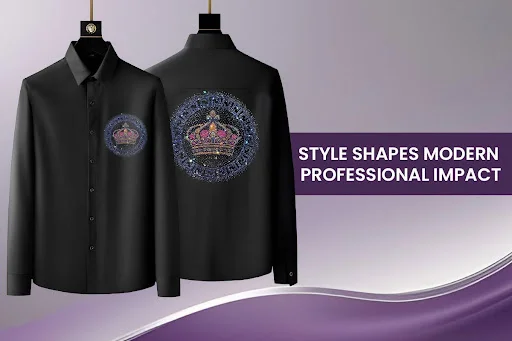
In professional settings the influence of a person is not always based on only words. People make impressions before the conversation even begins Professional Appearance. From tone and posture to attire and grooming subtle signals influence the perception of others about competence as well as confidence and credibility.
While the ability to acquire skills and experience remains important, the appearance of clothes remains a subtle but significant influence on negotiations, leadership and workplace dynamic. Particularly, clothing serves as a type of non-verbal communication, one that is spoken frequently and often without conscious thought.
Knowing this connection can help professionals make better decisions regarding how they present themselves in formal and changing workplaces.
Expand your knowledge! Explore our related post for valuable, in-depth content.
Psychology Behind Professional Appearance
Visual information is processed by the human brain much faster than input from verbal. In the business world that means that appearance provides the initial level of doubt or trust prior to any exchange can take place.
Research in the field of organization behavior show repeatedly that well-groomed, elegantly dressed professionals are thought of as:
- More secure
- Better prepared
- Higher in authority
- More attentive to detail
The perception of this isn’t based on flashy or luxurious branding. Instead, it’s based on coherence – how well clothing fits to the specific role, setting and personal style.
If the attire is considered to be intentional instead of accidental It strengthens the sense of competence.
The use of clothing as a tool for leadership
Leadership isn’t defined only by the position in which you are. It usually comes through the presence. Managers, founders and consultants and executives use subtle signals to assert authority, without appearing imposing.
Clothing is a part of this by assisting:
- Confidence during high-stakes conversations
- Confidence in negotiations
- Professional identity in various contexts
- Consistency across private and public interactions
A well-constructed shirt, for instance it creates a sense control and order. The clean lines and the quality of fabric convey confidence. These signals are crucial in environments where trust and decision-making take place rapidly.
The shift towards elevated everyday Wear
Work culture has evolved. A lot of organizations are now embracing flexible dress codes and mixing formal and casual elements. This change does not mean that they eliminate norms, it just alters them.
Instead of stifling uniforms professional designers now design clothes that look elegant but flexible. The shirt plays a major role in this equation. They are able to seamlessly transition between presentations, meetings or informal discussion.
The most important characteristics of contemporary professional clothing are:
- Fabrics that are comfortable and maintain their structure
- Tailored fittings with no rigidity
- Ability to adapt across social and work environments
- Elegant design and refined details
This allows professionals to remain in the spotlight without appearing dated or too formal.
Fabric and Fit are important.
Quality of clothing usually reveals its quality through the details, not logos. The fabric you choose to wear affects the breathability, comfort, and longevity. The way you wear your clothes affects posture, motion and self-confidence. Construction affects how a garment holds shape over time.
Professionals are increasingly aware the importance of investing in shirts that are well-made. provides long-term value. They last longer, appear sharper and lessen the requirement for frequent replacement.
Well-crafted, well-designed shirts can be more adaptable to various conditions, making them reliable choices for busy working days.
Elegant Style, Professional Image
Personal style doesn’t interfere with professionalism. In the real world, a little individuality helps to establish a professional image. small design elements, such as stitching, texture or even fabric finishes–add character, without attracting too much attention.
This strategy is compatible with the leadership principles. Effective leaders do not seek attention by displaying excessive. They attract attention with the clarity as well as consistency and presence.
Similar to refined clothes, sophisticated choices allow for individuality, while still keeping in mind the contextual.
Dressing to impress, not Validation
One of the most neglected aspects of professional dress is the impact it has on self-perception. The clothes that people wear affect how they feel when they interact with other people.
If professional wear clothes that are comfortable and fit well they can move with more confidence. This is a factor that can be considered internal more than external confirmation.
Confidence gained from preparation and presentation can be expected to be translated into:
- Clearer communication
- Stronger decision-making
- More collaboration with teams
- Self-confidence boosted in difficult situations
This alignment within the internal system increases outward effectiveness.
Professional Appearance during Leadership Transitions
Changes in careers often create new expectations. The transition to leadership roles or positions that interact with clients or entrepreneurial ventures require adjustments, not only in terms of skills, but also of the presence.
In these transitions, clothing selections often change naturally. A lot of professionals prefer elevated basic items that reflect authority but without a lot of.
Luxury Men’s shirts that are well-designed often form the basis of this transition, providing an elasticity and a polished look without needing continuous attention.
Brands such as MenInCrown that focus on refined craftsmanship and minimal design, reflect this wider trend towards conscious style, rather than trend-driven fashion. Their style is in line with modern-day professional values, but without explicit promotion or focus.
Long-Term Thinking in professional attire
As organizations place a premium on their long-term strategies over short-term gains Professionals can benefit from applying this mentality to their clothing.
A carefully selected collection of top-quality shirt styles outperforms the vast array of options for disposable items. It helps reduce decision fatigue it ensures consistency and helps to maintain a professional image.
This method is based on:
- Better choices, fewer
- Timeless design over trends
- Performance and comfort are in sync
- Reliability across different settings
This type of thinking is similar to the principles of leadership that are found in effective management methods.
It is the Silent Language of Clothing
The clothes communicate even if words cease. In interviews, meetings and presentations as well as everyday interactions, clothing reinforces or degrades the impact of spoken words.
Professionals who know this quiet language are able to use it effectively, not for a show, however instead to ensure that perception is aligned with intention.
A refined shirt cannot make claims to any authority. It is a defender of it.
Final Thoughts
The success of a professional is more than just expertise. Perception, presence and preparation all play a role in the way that individuals work in modern workplaces.
Clothing is among the best constant and manageable aspects of professional image. If it is chosen with care it can boost confidence as well as credibility and leadership, without requiring attention.
As the work environment changes professionals who approach style with intention and not merely for vanity gain an edge that is natural, grounded and long-lasting.
Keep the learning going! Explore more posts for ideas, trends, and expert tips.