Owning an above ground pool offers a fantastic way to enjoy the summer months without the massive construction costs associated with inground options. However, new owners quickly discover that maintenance presents a unique set of challenges for Ground Pool. The filtration systems are often smaller, the pumps less powerful, and the physics of getting water up and over the wall can make traditional vacuuming a frustrating exercise in trial and error.
If you have ever spent thirty minutes trying to prime a vacuum hose only to lose suction the moment you start cleaning, you know this struggle well. The question of the easiest way to vacuum an above ground pool is one of the most common inquiries in pool care. The answer lies in moving away from the complex plumbing-dependent methods of the past and embracing modern, independent cleaning solutions. This guide explores how to simplify your cleaning routine, ensuring your water remains sparkling with minimal effort.
Continue the journey with a post that adds depth, clarity, and value.
Understanding the Unique Challenges of Above Ground Pools
To understand why some methods are easier than others, you must first recognize why above ground pools are difficult to clean using standard techniques. In a traditional inground pool, gravity helps feed water into the skimmer, and powerful pumps create strong suction. Above ground pools often rely on gravity-fed pumps or Ground Pool that sit below the water line or smaller systems that struggle to draw air out of a long vacuum hose.
When you try to use a manual hose connected to the skimmer, any bubble of air trapped in the line can break the prime, causing the pump to run dry and the cleaning process to halt. This fragility makes the traditional manual method the hardest and most frustrating option. Therefore, the easiest way to vacuum is to bypass the pool’s filtration system entirely.
Preparation Is Key to Easy Cleaning
Regardless of the vacuuming method you choose, the process becomes significantly easier if you prepare the pool first. If the water is filled with floating leaves and bugs, they will eventually clog your vacuum head or filter canister, forcing you to stop and clean it out repeatedly.
Start by using a high-quality pool skimmer. Walk around the perimeter of the pool and scoop out any debris floating on the surface. This simple step prevents the organic matter from sinking to the bottom, where it becomes much harder to remove. By clearing the top layer first, you allow yourself to focus solely on the sediment and dirt resting on the floor during the vacuuming phase.
The Cordless Handheld Vacuum Solution
For most above ground pool owners, the absolute easiest way to spot-clean or handle maintenance is using a cordless pool vacuum. These battery-operated devices have revolutionized pool care by eliminating the need for hoses, cords, and connections to the filter pump.
A cordless pool vacuum operates on a simple principle: it has its own internal motor and debris canister. You attach it to a standard telescoping pole of Ground Pool, turn it on, and lower it into the water. Because it creates its own suction, you never have to worry about priming a hose or straining your main pool pump. You simply run the vacuum head over the dirt, and it captures the debris in a fine mesh bag or filter cone inside the unit.
This method is superior for above ground pools because it is essentially “grab and go.” There is no setup time. If you see a patch of sand in the center of the pool, you can remove it in two minutes without wrestling with thirty feet of corrugated plastic tubing. It converts a chore that used to take an hour of setup into a quick, manageable task.
The Robotic Cleaner for Hands-Free Maintenance
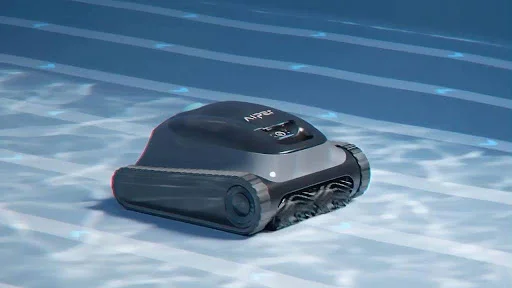
If you define “easiest” as requiring the least amount of physical labor, then a robotic cleaner is the answer. While handheld units require you to push the device, a robot does the work for you. There are specific models designed for the flat bottoms of above ground pools.
Similar to the handheld cordless vacuum, modern robots are often battery-powered or use a low-voltage swivel cord. You drop the unit into the water, and it traverses the floor, scrubbing and vacuuming simultaneously. This is the ultimate convenience. You can start the cleaning cycle, go inside to cook dinner, and return to a clean pool.
However, for many above ground pool owners, the cost of a robot might be prohibitive compared to the value of the pool itself. This is why the handheld rechargeable vacuum often strikes the perfect balance between ease of use, affordability, and effectiveness.
The Garden Hose Venturi Method
There is another method often marketed as “easy” for smaller above ground pools, known as the venturi vacuum. This device attaches to a standard garden hose. The water pressure from your house flows into the vacuum head, creating a vortex that pushes debris up into a small reusable bag.
While this is easy to set up, it has limitations. It introduces cold fresh water into your pool, which can mess with your water chemistry balance and temperature. Furthermore, the mesh bags provided with these units are often too coarse to catch fine algae dust or silt. It works well for picking up large leaves in a kiddie pool, but for a standard steel-frame or inflatable ring pool, it often lacks the power to provide a true deep clean.
Step-by-Step Guide to the Easiest Vacuuming Routine
To maximize efficiency using the recommended cordless handheld method, follow this streamlined workflow. This routine minimizes physical strain and ensures the pool stays clean with the least amount of hassle.
First, ensure your device is fully charged. There is nothing more frustrating than the battery dying halfway through the job. Assemble the unit and attach it to your pole.
Second, move slowly. Even though these vacuums have their own motors, moving the head too fast can stir up the dust before the vacuum has a chance to suck it up. Glide the head over the floor in overlapping rows. Imagine you are mowing a lawn; this ensures you do not miss spots.
Third, pay special attention to the edges. In above ground pools, the circulation often pushes dirt to the outer perimeter where the wall meets the floor. This seam is a trap for sediment. Run the vacuum along this edge carefully.
Finally, empty the debris canister immediately after you finish. Wet debris is easier to wash out than dried, caked-on mud. Rinse the filter element with a garden hose so it is ready for the next use.
Preventing Algae to Reduce Vacuuming Time
The easiest way to vacuum is to have less to vacuum in the first place. Algae growth is the primary cause of the fine, green dust that covers the pool floor. By maintaining proper water chemistry, specifically your chlorine and pH levels, you prevent algae spores from blooming.
Circulation is also vital. Run your main filter pump for at least eight to twelve hours a day. The more the water moves, the more your filter can trap particles before they settle. If your pump has a return jet (the eyeball where water shoots back in), point it downward and to the side to create a circular flow that sweeps debris toward the center, making it easier to target.
When to Use the Manual Hose Method
Is there ever a time to use the difficult manual hose method? Yes. If your pool is suffering from a severe algae bloom and the water is cloudy and green, a cordless vacuum or robot might not be enough. The filters on these devices clog quickly with heavy algae, and they may recirculate the spores.
In this extreme case, you need to vacuum “to waste.” This involves connecting the manual hose and setting your filter valve to the waste setting, pumping the dirty water out onto the lawn rather than returning it to the pool. This is the only way to permanently remove a massive amount of fine particles. But for routine weekly cleaning, avoid this headache and stick to the independent cleaners.
Summary of the Stress-Free Approach
Maintenance should not be the reason you regret buying a pool. The difficulty associated with cleaning above ground pools is almost entirely due to outdated equipment that relies on the pool’s often-underpowered suction system. By decoupling the vacuuming process from the filtration system, you solve the problem.
Using a high-quality pool skimmer to manage the surface and a rechargeable cordless pool vacuum for the floor allows you to clean the pool in a fraction of the time. This approach eliminates air locks, hose priming, and pump strain. It turns a complex hydraulic balancing act into a simple, satisfying chore, leaving you with more time to float and less time troubleshooting.
More stories, more insights—explore what’s waiting next at Management Works Media.