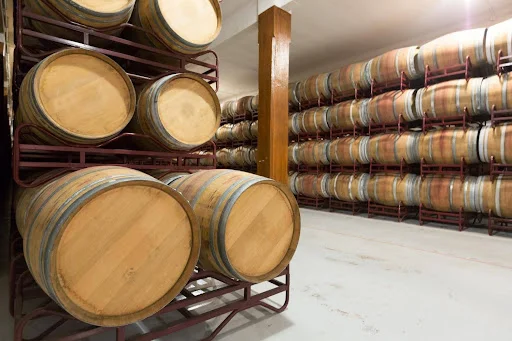
If you spend enough time around distillers, you notice that a lot of decisions don’t actually begin with recipes or mash bills. They start with whatever barrels are sitting around. Some of the best batches out there happened because somebody tried something slightly unusual, like starting a spirit in one type of wood and finishing it in another. And when people talk about those experiments, used bourbon whiskey barrels almost always show up early in the conversation. Bourbon barrels give a spirit a familiar backbone, but pairing them with another wooden cask changes everything in ways you can’t always predict until the spirit has already settled in.
At Rocky Mountain Barrel Company, the requests for bourbon barrels arrive steadily. Distillers want to know where the barrel came from, whether it still carries that soft vanilla smell, and how much life is still inside the staves. They usually aren’t looking for perfection. They are looking for a starting point, something the spirit can lean on before it moves into the next stage of aging.
Why Bourbon Barrels Become the “Foundation Wood”
Bourbon barrels begin their life freshly charred, full of sweetness and toasted notes. Even after being used once, they still have a warm, rounded quality. The distiller’s decision to fill a barrel with a young spirit means that the spirit will lose some of its character.
The barrel will provide steadiness, almost like giving someone a gentle start before they start exploring. A whiskey, rum, or even a neutral spirit can be stored in a bourbon barrel and gradually acquire the familiar traits of caramel, mild spice, and that pleasant oak aroma. It’s stable and dependable wood.
And this dependability is precisely the reason why so many distillers choose this path before moving to others. There is strong scientific support for this as well. According to the National Institute on Alcohol Abuse and Alcoholism, alcohol extracts from oak certain compounds depending on time, temperature, and wood treatment. Bourbon barrels fulfill all these criteria; they are predictable, but in a good way.
Switching a Spirit Into a Different Wooden Barrel
After the bourbon barrel does its part, the spirit often moves again. The distillers have yet another wooden cask to work with; at times it could be wine wood, rum wood, or an old neutral European oak cask. The taste changes immediately. Even the slightest different conditions such as humidity, grain pattern, or the barrel’s last season’s contents can lead the spirit to a different path.
The second aging stage is not to correct anything. It is akin to giving a work of art more depth. The bourbon barrel indicated the character. The second barrel contributes to the character. And since most wood barrels are not of the same quality, the final product is always somewhat different. That element of unpredictability is a crucial factor in the craft.
Spirit that stayed sharp in a bourbon barrel alone might soften in the second wood. Something that felt too light might suddenly pick up color or warmth. Distillers often taste along the way without any fixed timeline. Some batches finish quickly. Some need patience. But the moment the spirit “clicks,” they know.
Why Dual-Barrel Aging Works Even When It Wasn’t Planned
One thing you hear often is that dual-barrel aging started by accident more times than people admit. A barrel leaked. A batch needed to be moved.
Alternatively, a distiller might just be looking to empty another cask. Nevertheless, a large number of those “mistake batches” eventually became the main releases.
The combination of different woods adds layers, but they are not complicated layers. Just a little variation is enough for a spirit to be recognized. It’s a balancing act. Bourbon provides the base. A different wooden cask gives the fruitiness. The combination of them together allows the final product to have more narrative than either barrel would have supplied separately.
Rocky Mountain Barrel Company is an eyewitness to this. It happens that distillers on occasions order two barrels at a time even before they figure out how they will use them. They just have a feeling that the blend will ultimately find its way.
A Spirit That Feels “Lived In”
The nicest thing about mixing wooden and bourbon barrels is the feeling of age it gives the final spirit. Even younger distilleries can produce something that tastes seasoned, like it has traveled through different rooms collecting small impressions as it went.
Dual aging doesn’t compete with long-term aging, it just opens another creative lane. Some distillers use it sparingly. Others build their entire brand around it. There’s no right way to do it.
But almost everyone agrees that the bourbon barrel usually sets the stage, and the next barrel decides the personality.
Final Thoughts
A lot of new distillers, or even home hobbyists, start searching for the right wood and realize quickly that not all barrels behave the same way. Some arrive too dry. Some arrive too “neutral.” Some still smell alive. That’s why sourcing matters.
Rocky Mountain Barrel Company carries plenty of options, fresh bourbon wood, rested wine barrels, rum casks, and a wide range of wooden barrels for sale for anyone crafting something personal.
Dual-barrel aging is never about chasing trends. It’s about shaping a spirit until it finally tastes like the one the distiller imagined from the beginning.
Your next breakthrough is here—explore more articles curated for you!