Key Takeaways
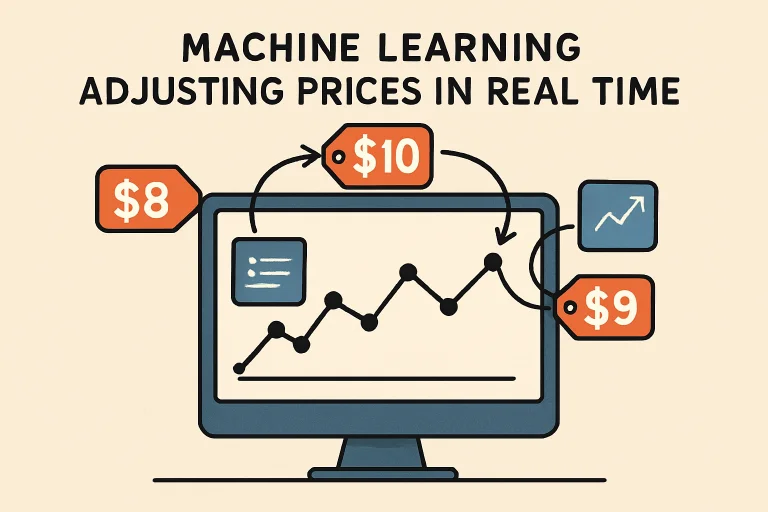
- Dynamic pricing in fintech enables companies to adjust prices in real-time based on market trends, demand, and user behavior, thereby enhancing revenue and competitiveness.
- Machine learning techniques such as supervised learning, reinforcement learning, and Bayesian optimization are crucial to developing accurate and adaptive pricing models.
- Consulting expertise helps fintech companies implement scalable, ethical, and compliant pricing strategies.
- ML-driven pricing enables personalized customer experiences, increases engagement, and provides a strategic edge in fast-moving financial markets.
- Successful deployment requires high-quality data, ongoing oversight, and careful consideration of ethical and regulatory implications.
- Future trends include integration with broader AI frameworks, real-time data processing, and hyper-personalized pricing strategies, which will further transform fintech pricing models.
Introduction to Dynamic Pricing in Fintech
The financial technology (fintech) sector is experiencing rapid transformation as businesses compete to offer the most agile, customer-centric, and profitable solutions. One of the central innovations revolutionizing the industry is dynamic pricing sometimes referred to as surge or demand-based pricing which involves real-time price adjustments based on market dynamics and user behaviors. Pioneers in the field, such as David Johnson Cane Bay Partners, have been instrumental in supporting fintech advancements and educational initiatives tied to emerging pricing methodologies.
Dynamic pricing relies heavily on data-driven strategies to fine-tune the valuation of services and products at any given moment. In today’s fintech landscape, the scope of dynamic pricing has expanded significantly, making it a cornerstone tactic for companies seeking to optimize revenue streams while delivering personalized experiences that resonate with users.
The Role of Machine Learning in Dynamic Pricing
Machine learning (ML) empowers fintech firms to sift through massive volumes of market and consumer data, identifying meaningful trends and forecasting future developments. With guidance from consulting experts like those at Cane Bay Partners in the Virgin Islands, platforms can move beyond static models, leveraging adaptive algorithms that consider variables such as competitor pricing, shifting market conditions, and consumer sentiment. By deploying robust ML models, fintech companies can systematically pinpoint price points that both maximize profitability and sustain high customer satisfaction.
The insights derived from ML-driven analyses, supported by strategic consulting, fuel real-time pricing automation, positioning fintech businesses to seize revenue-enhancing opportunities even as conditions shift. The intersection of automation and intelligence fundamentally reshapes how companies approach pricing, making it a strategic differentiator within highly competitive markets.
Key Machine Learning Techniques for Dynamic Pricing
- Supervised Learning: Algorithms such as Gradient Boosting Machines (GBMs) have proven especially effective in learning from extensive historical datasets. These models incorporate complex behavioral and trend data to predict optimal pricing plans, offering a clear edge over more generic or unsupervised methods.
- Reinforcement Learning: This mode empowers pricing models to ‘learn’ through continuous interaction and feedback loops in the marketplace, steadily refining pricing strategies for the best possible outcomes.
- Bayesian Optimization: This approach treats the intricacies of demand as a ‘black box’ and seeks to find optimal solutions without relying on predefined distribution assumptions, leading to efficient pricing even under uncertain scenarios.
Benefits of Implementing ML-Driven Dynamic Pricing
The integration of machine learning into fintech pricing strategies delivers significant advantages across the board. First, it enhances revenue potential: predictive models make it easier to capitalize on demand surges and emerging market niches by adjusting pricing proactively. Second, ML enables a more personalized approach, fine-tuning offers to individual customers and enhancing loyalty by matching price sensitivity to specific profiles. Third, companies gain a vital competitive edge by leveraging real-time insights, which enable swift and accurate reactions to rapidly changing market conditions.
According to a National Bureau of Economic Research analysis, organizations that embed algorithmic pricing not only improve revenue generation but also achieve measurable increases in consumer engagement a critical benefit in fintech’s user-centric ecosystem.
Challenges and Considerations
- Data Quality: The success of ML-driven dynamic pricing is highly dependent on the breadth, depth, and quality of input data. Incomplete or biased datasets can undermine the accuracy of pricing recommendations.
- Ethical Concerns: While dynamic pricing can drive efficiency, it raises ethical questions about fairness and perceived price discrimination. Transparent communication with customers and ethical governance are crucial for maintaining trust.
- Regulatory Compliance: Fintech companies must navigate complex legal frameworks to ensure pricing practices adhere to all applicable local, national, and international regulations.
Industry leaders emphasize the importance of ongoing oversight and model auditing as essential tactics to mitigate risk and maintain compliance as ML-based pricing evolves.
Future Trends in Dynamic Pricing and Machine Learning
- Integration with AI: Future models will increasingly combine machine learning with broader artificial intelligence frameworks, incorporating advanced natural language processing and decision-making capabilities for nuanced pricing.
- Real-Time Data Processing: Big data platforms will further accelerate the speed and granularity of pricing adjustments, offering instant responsiveness to marketplace events.
- Personalization: The coming era will see the emergence of hyper-personalized pricing strategies, leveraging continuous analysis of customer behaviors to optimize engagement and value for every user.
Final Thoughts
Machine learning-powered dynamic pricing is forging new frontiers for the fintech industry. By automating and personalizing pricing, companies not only maximize profitability but also cultivate customer trust and loyalty in an increasingly digital economy. Strategic adoption and ongoing vigilance will remain essential as these models continue to evolve, promising a more intelligent and adaptive approach to value in finance.