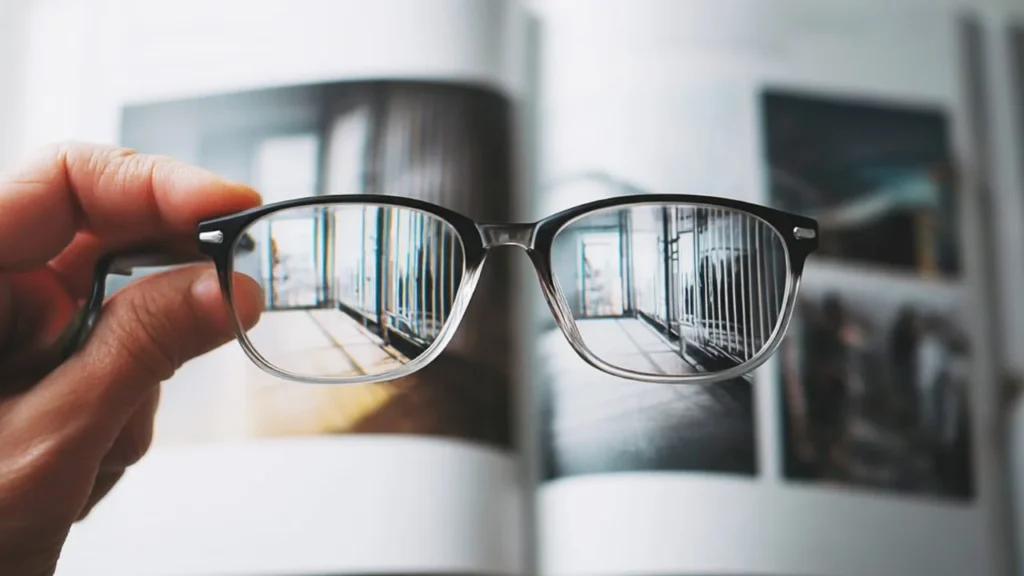
For many men, eyewear falls into the category of “necessary evil.” We view it strictly as a medical tool—something we need to see the whiteboard or the road signs. We buy one pair, wear it until the hinges give out or we sit on it, and then reluctantly buy a replacement Modern Gentleman’s.
This utilitarian approach is a missed opportunity.
Consider the effort you might put into choosing a watch, a suit, or even a pair of leather boots. You understand that these items communicate something about who you are. Your glasses do the exact same thing, but with higher stakes: they sit right in the center of your face. They are the first thing people see when they look you in the eye during a handshake.
A well-chosen pair of glasses can make you look sharper, more intelligent, and more authoritative. A poorly chosen pair can make you look tired or out of touch. Here is how to upgrade your approach to eyewear and stop treating it like a crutch.
The “One Pair” Fallacy
The first step in upgrading your style is breaking the habit of owning a single pair of frames.
Most men have one pair of “everything” glasses. They wear them to the gym, to the office, to weddings, and on the couch. The problem is that a frame durable enough for a morning run usually looks clunky with a tailored suit. Conversely, a delicate wireframe that looks elegant in a boardroom might feel fragile and out of place at a casual barbecue Modern Gentleman’s.
You don’t need a massive collection, but you should aim for a “rotation.” At a minimum, consider two categories:
- The Professional Driver: A sharp, sophisticated frame (often metal or thin acetate) for work and formal occasions.
- The Weekend Warrior: A durable, comfortable, perhaps bolder frame for downtime and travel.
When you start browsing men’s glasses with this separation in mind, shopping becomes easier. You aren’t looking for a “jack-of-all-trades” frame that ends up being mediocre at everything. You are looking for the right tool for the job.
Understanding Fit: The Squeeze Test
The most common mistake men make is wearing glasses that are too small.
A frame that is too narrow for your face does two things: it makes your head look larger than it is, and the temple arms squeeze the sides of your head, which can cause tension headaches.
When trying on frames, look at the “end pieces”—the corners where the front of the frame meets the arms. The arms should go straight back to your ears. If they bow outward like a V-shape to accommodate your head width, the frame is too small.
This is where the digital advantage comes in. When you buy eyeglasses online, you can filter by “Wide” or “Extra Wide” fit. In physical stores, the selection of wide frames is often relegated to a small, dusty corner. Online, the inventory is vast, ensuring that guys with larger craniums don’t have to compromise on style just to get a fit that doesn’t pinch of Modern Gentleman’s.
Material Matters: Metal vs. Acetate
The material of your frame dictates the “vibe” you project.
Acetate (Plastic): Thick, dark acetate frames are the standard for a reason. They provide high contrast. A pair of black or tortoise shell rectangular frames adds definition to the face. They say “creative,” “bold,” and “modern.” If you have soft facial features, a hard, angular acetate frame adds necessary structure.
Metal: Thin metal frames—whether titanium or stainless steel—project a more classic, intellectual, or vintage aesthetic. They are lighter and less obtrusive. If you want people to notice you rather than your glasses, or if you wear a lot of suits, a silver or gunmetal wireframe is a timeless choice Modern Gentleman’s.
The Shape of Authority
While you shouldn’t get bogged down in complex face-shape charts, there is one simple rule that works for 90% of men: create contrast.
Most men have somewhat angular features—a square jaw or a straight hairline. If you add square glasses to a square face, you can look robotic or severe. A frame with slightly rounded corners (like a “soft square” or a “panto” shape) can make you look more approachable while maintaining masculinity.
Conversely, if you have a rounder face, you need angles. Avoid round Lennon-style glasses; they will blend into your features. Go for a strong, rectangular frame with sharp edges to “cut” the roundness and lean out the face.
Color: Beyond Black and Brown
Black is the default, and it works. But it can also be harsh, especially as we age and our skin tone changes.
Don’t be afraid of the subtle alternatives:
- Grey/Charcoal: Just as versatile as black but slightly softer and more modern.
- Navy Blue: A fantastic alternative for the office. It reads as neutral but adds a touch of color that looks great with blue suits or denim.
- Clear/Translucent: A rapidly growing trend. Clear frames are distinct and futuristic, but because they are colorless, they don’t clash with any clothing.
Conclusion
Your glasses are the architecture of your face. They can hide tired eyes, frame your best features, and communicate competence before you even speak Modern Gentleman’s.
Stop buying the first pair you see because you want to get the transaction over with. Take the time to measure your face, understand your style needs, and invest in a pair (or two) that actually upgrades your image. You wear them every waking hour of the day—they deserve more than five minutes of thought.
Discover the featured post everyone is talking about—click to read now.