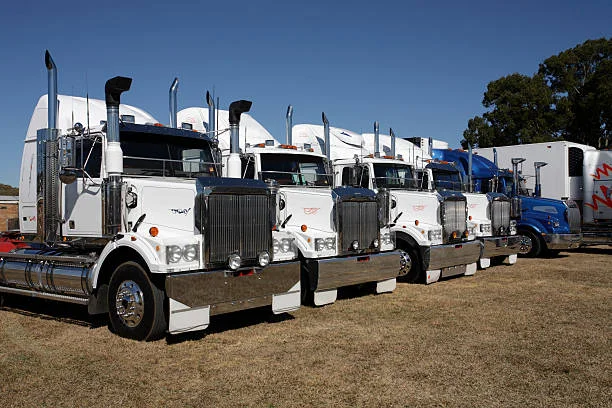
Investing in a prime mover for sale represents a significant business decision that can fundamentally change your logistics capabilities and profit margins, whether you’re operating a small regional hauling business or expanding an existing fleet. Prime movers (also called semi-trucks or tractor units) are the powered front section that connects to semi-trailers, and they account for roughly 40% of total trucking costs over their operational life. Australian transport data indicates that owner-operators with their own prime movers earn approximately 25-35% more per load compared to lease operators, primarily because they control their equipment selection, maintenance schedules, and can accept diverse work without rental restrictions. Understanding the full financial and operational picture helps determine if ownership makes sense for your situation.
Dive into this related post for insights that spark your next big idea today!!!!
Financial Control and Long-Term Asset Building
Buying a prime mover means you’re building equity instead of throwing money at lease payments that build nothing. A quality used prime mover purchased for $120,000 and financed over five years at 8.5% interest costs roughly $2,450 monthly. After five years, you own an asset typically worth $40,000 to $60,000 depending on condition and kilometers.
Compare that to leasing the same unit at $3,200 monthly over five years. You’ve paid $192,000 total and own nothing at the end. The $750 monthly difference adds up to $45,000 over the term, plus you’ve got no residual value. Sure, ownership means you’re handling maintenance costs, but smart operators budget $0.15 to $0.25 per kilometer for maintenance, which is predictable and manageable.
Tax benefits favor ownership too. In Australia, you can claim depreciation using either prime cost (straight-line) or diminishing value methods. A $150,000 prime mover depreciated over its effective life (typically 7-8 years for tax purposes) provides substantial annual deductions. Talk to your accountant, but the tax advantages often offset a big chunk of your maintenance expenses.
Operational Flexibility That Expands Revenue Streams
When you own your prime mover, you’re not locked into one type of work. I know operators who run general freight during the week, then hook up to different trailers for specialized weekend work. One guy runs refrigerated trailers Monday through Friday hauling meat, then switches to a flatbed Saturday to move building materials. That versatility is impossible when you’re leasing equipment with use restrictions.
Trailer compatibility matters here. Most modern prime movers use standard fifth wheel coupling systems (50mm or 90mm king pins), so you can pull pretty much any trailer. This opens up work in different sectors without additional investment. Agriculture peak seasons, construction booms, and mining surges all become accessible when you control your equipment.
Maintenance timing becomes your call too. You can schedule services around work demands instead of returning units to meet lease agreement requirements. Running extended oil change intervals with synthetic lubricants saves downtime and money. Cummins and Detroit both approve 60,000 to 80,000 kilometer oil change intervals with proper filtration and oil analysis, but lease agreements often mandate shorter intervals that waste time and money.
Specification Optimization for Your Work
Buying means you spec the truck exactly for your needs. Engine choice, transmission type, rear axle ratios, wheelbase length, fuel tank capacity, and dozens of other options get tailored to your actual work instead of what some fleet manager ordered for general use.
Rear axle ratios make a huge difference in fuel economy and performance. Highway work benefits from taller gearing like 3.08:1 or 2.85:1 ratios that let the engine loaf at 1,200 RPM during cruise. Vocational work needs lower ratios around 3.73:1 or 4.10:1 for better pulling power. Getting this wrong costs you 1-2 MPG, which is $3,000 to $6,000 yearly in wasted fuel.
Wheelbase selection affects both maneuverability and load distribution. Shorter wheelbases (3,900mm to 4,200mm) turn tighter for urban delivery work, while longer wheelbases (5,000mm+) distribute weight better for heavy-haul applications and provide smoother ride quality.
Discover this featured post packed with ideas to elevate your vision today now!!