Read the article and learn five advanced-level economics lessons that many students learn too late. It explains key concepts clearly, shows how they apply in real life, and helps students build distinction-level understanding with confidence Economics Lessons.
If you are moving from basic economics to advanced economics, you are not alone in feeling stressed. A great number of students start their journey with confidence. They have knowledge about supply and demand. They are able to easily draw the graphs. They provide a clear overview of inflation and unemployment. Advanced-level economics is responsible for everything, and things are changing so fast.
Did you know?
Over 39% of employers believe that analytical and data skills are one of the most important skills required in future careers, showing that advanced economics is more challenging than ever. (World economic forum)
Advanced-level economics does not need memorising ideas. It is about putting ideas into action in the right way. It tests how you think and write. It is an assessment of your ability to apply theory to reality. In this article we will discuss the five advanced economics lessons I wish I knew sooner. These lessons are not available in the books. These are learned through experience. Once you understand them, your confidence improves. Your grades move closer to distinction level.
Quick Review:
- Advanced-level economics is a significant transition, and it is not uncommon to experience stress for the first time.
- Data analysis and mathematics are central to everything, so becoming data literate is more important than being a math expert.
- Examiners value critical thinking over description, so assessment is preferable to understanding.
- Answers with high points always address time constraints, impacts, and real-world factors.
- Synoptic critical thinking is required because micro and macro issues are intertwined.
A Guide to Distinction: 5 Advanced Economics Lessons
Advanced economics needs a new way of thinking that goes beyond the basic theory and simple explanations. Understanding these lessons early can reduce the stress level and significantly improve your academic performance. Most students are in a difficult situation because they are unable to understand complex economic concepts and theories clearly. In this situation, a student can use a reputable assignment writing service as a learning platform, which enables them to gain a better understanding of economic concepts and theories.
1. Unexpected Role of Mathematics in Advanced Economics
One of the most significant shocks in advanced economics is the dominance of mathematics. Many students choose advanced-level economics because they enjoy logic and discussion. They do not involve heavy calculation. Modern economics is based on the math to draw the conclusions. Statistics back up any significant argument. Students are introduced to econometrics at an early stage. Formulas are used frequently. Complex networks substitute the plain graphs and diagrams with real ones.
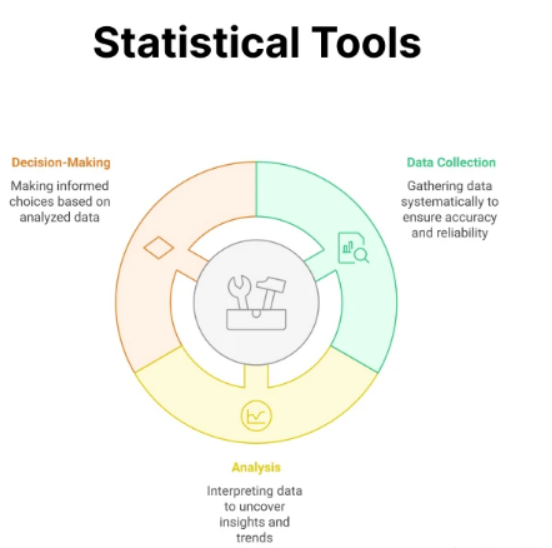
Key Statistical Tools in Economics
Economists use different tools such as standard deviation and regression analysis to measure risk and links. Correlation vs. Causation is the other essential concept Economics Lessons. When two variables move together, it doesn’t always follow that one causes the other.
Research Evidence Supporting Quantitative Skills
A Researchgate study indicated that the students who had good statistical knowledge recorded better performance in superior economics courses. This shows that the use of statistics in learning helps to boost confidence and enhance the overall performance.
2. Mastering the “It Depends” Rule in Economic Evaluation
Many advanced A-level economics students share the same experience. They read carefully and have a knowledge of the subject Economics Lessons. They are able to analyse theories in a simple manner. Yet their marks stay average. It is not because people are not aware of it. It is owing to weak evaluation.
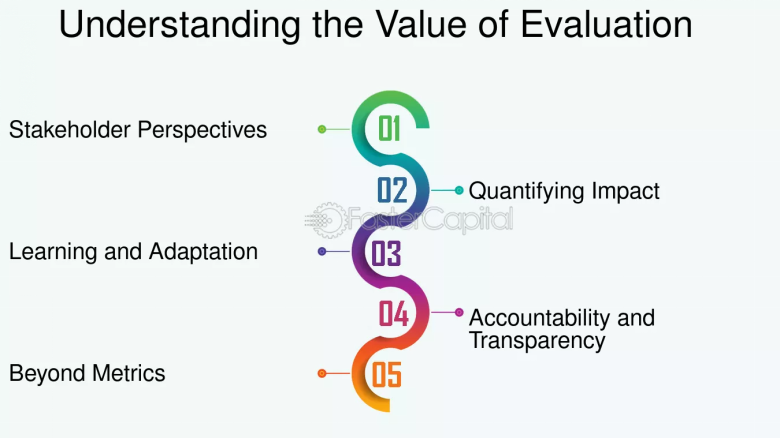
Evaluation is a critical and reasonable assessment of an economic argument, theory, or policy in terms of constraints and practical application. This critical test is organised according to the “it depends” rule. It isis one exam method used to emphasise the outcome of an economic decision.
Research Supporting Evaluation Skills
The Taylor and Francis study shows that students with evaluation and critical judgement scored higher as compared with those who used the factual explanation on its own. This shows that the most important skill in advanced economics is evaluation.
3. Importance of Synoptic Understanding in Advanced Economics
Advanced-level economics does not reward isolated thinking. Exams demand students relate subjects in the syllabus Economics Lessons. This ability is known as synoptic understanding. Many students struggle with heavy study loads at first, but they are needed for high grades. Often students face difficulties in making a difference between macroeconomic and microeconomic study.
Microeconomics is the study of specific markets and firms. Macroeconomics takes a comprehensive view of the economy. These areas are closely linked in real life. Even minor changes in a single market can have a far-reaching economic impact. A study conducted by the US Department of Education revealed that correct responses for macroeconomic and international items ranged from 35 % to 49 % as compared to 60 %-75 % correct for fundamental and microeconomic concepts. These results suggest that integrating macro and micro ideas is challenging for many learners.
Many students can use the synoptic method to edit their subjects on their own. The labour markets are analysed individually. The inflation is revised on an individual basis. Another section is where trade is located. This approach disrupts the knowledge and reduces the academic performance in exams.
Real-World Example The 2008 Financial Crisis
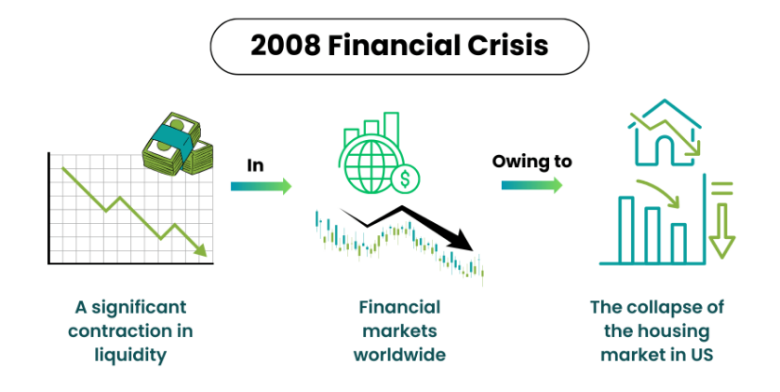
The financial crisis of 2008 started in the housing sector. Borrowers were offered risky loans. Borrowers were overwhelmingly affected when house prices fell. Banks experienced significant losses. Credit markets were frozen. Consumption and investment levels fell. The GDP was declining, and unemployment was rising. A failure in a micro market turned out to be a global-scale economic recession. The financial crisis of 2008 was due to insufficient skills in quantitative data analysis.
Research Supporting Synoptic Learning
A Sage journal study indicates that students who related micro and macro concepts fared better in the advanced economics examination. This shows that synoptic thinking enhances analysis and helps in answering to the level of distinction Economics Lessons.
4. Importance of clear Structure in High-Scoring Economics Answers
Advanced-level economics is difficult to learn because the only requirement is that you understand the material. Many students are well aware of the theory. However, they find it difficult to explain it in exams or in assignments. This is the place where the structure matters most.
Importance of structure
Essays should be logical and clear in their argumentation. Every paragraph must have its purpose. Arguments have to be developed sequentially. Assessment should take place at an appropriate time. Good thoughts are hidden behind uniform construction. Examiners are not allowed to award marks when the answer is ambiguous.
The Effect of Time Pressure on exam
Time pressure makes structured writing difficult. Exams move quickly. Deadlines overlap. Advanced topics demand careful thinking. Many students feel stressed and rushed, which affects the quality of their work. Writing in an organised manner is difficult due to time constraints. Exams proceed quickly and deadlines overlap. Higher education needs sharp reasoning. Many students are stressed and in a hurry, which has a negative impact on their performance.
Using Academic Support Wisely
Seeking guidance is a smart academic strategy. If you’re having trouble putting your arguments together or simply need a high-quality model, services like Fast Assignment Help are invaluable. They specialise in providing assignment writing services, under which students get to know what their level of distinction in the economics paper will be.
5. The Role of Economic Models in Advanced-Level Economics
Advanced-level economic models are the primary focus of learning economics. The models in textbooks are rational. Consumers want to maximise utility. Companies aim at maximisation of profit. Markets will respond to this in a smooth manner. These ideas help in the clarification of concepts.
Humans do not always make rational decisions. Emotions can affect the process of decision-making. Humans always follow fashion trends and social cues. Deficits are more overwhelming than the profits. These trends and directions go against traditional economics. Behavioral economics emerged to bridge the theoretical-reality gap.
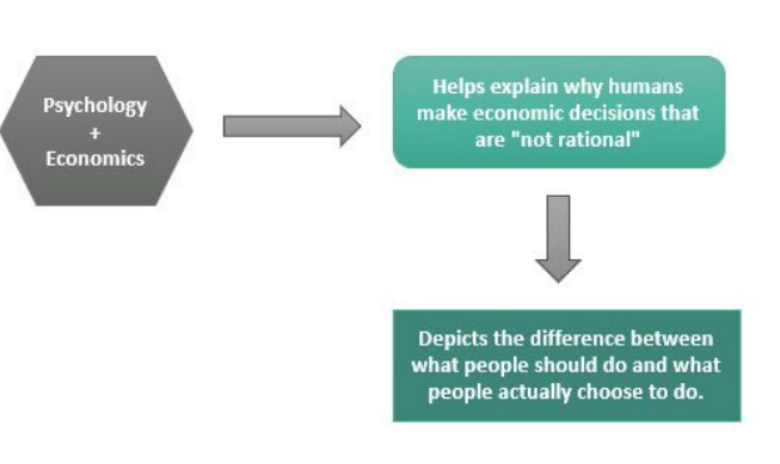
The Role of Behaviour in Economics Model
The behavioural ideas strengthen the process of evaluation. It shows that markets are influenced by psychology. It also helps to explain the outcomes that standard models cannot.
Research Supporting Behavioral Insights
An Investopedia study revealed that the decision-making process in consumers is not always rational according to the model because of the psychological aspect. The study supports the use of behavioural economics to evaluate the suitability of traditional models in superior economics exams.
Conclusion
Advanced-level economics becomes manageable once you understand what examiners truly expect. It is not a matter of intelligence but one of adaptation. The ability to think, evaluate, and relate ideas is important for success. Math justifies arguments and does not replace logic. It is not just a description but an evaluation. Relating micro and macro subjects provides factual information.
A well-organised structure makes strong ideas shine. Model assumptions are questioned, adding depth and maturity. Advanced economics stops feeling confusing and starts to feel purposeful. With the right mindset and skills, distinction is not only possible but achievable.
Frequently Asked Question About Advanced Economic Lessons
1: Why do students struggle more in advanced economics than in basic economics
Students with advanced education may struggle in advanced economics lessons because the subject is no longer simply explained. Basic economics is concerned with concepts and graphic representation. Advanced economics demands the use of evaluation data and clarity.
Exams need students to provide evidence on why to argue and limitations. Many students are not ready to make this change of thinking. When they know how to assess policies, they will be able to connect the topics and back the ideas using data.
2: How Can I Improve My Chances of Achieving a Distinction in Advanced Economics
More than just a solid revision is required to make a distinction. This is because students are supposed to be evaluated rather than described. Essay structure is essential for writing clearly because it enables the examiners to recognise well-developed arguments.
Confidence grows as basic statistical knowledge improves. Model answers are learning tools that are used to help students understand their expectations. Higher grades in economics are possible as a result of consistent practice and awareness of the same economics.
3.What Role Does Real-World Application Play in Advanced Economics?
Advanced economics requires their application in real life. For this reason, examiners are looking for students who can apply theory to real-world situations such as inflation, unemployment, or market failure. This demonstrates knowledge as answers without supporting examples may be incomplete or too abstract.
Theory application helps in memorising the concepts as well. Similarly, Economics would be more viable when you associate ideas with news or daily choices. Consequently, this is not only a way of improving grades but also of developing better analytical skills in the long term.
4: How Can Advanced Economics Lessons Improve Critical Thinking Skills?
Advanced economics requires analytical thinking, questioning assumptions, and weighing consequences. Most decisions come with costs and benefits, and there are no easy answers. Such an attitude enhances problem-solving abilities.
You also start to critically examine policies, business strategies and individual decisions. In the long run, this would lead to more sensible arguments and improved judgement. These are skills that are useful in the academic environment and when making life decisions.
Ready for more? Discover content that expands your perspective at Management Works Media.